
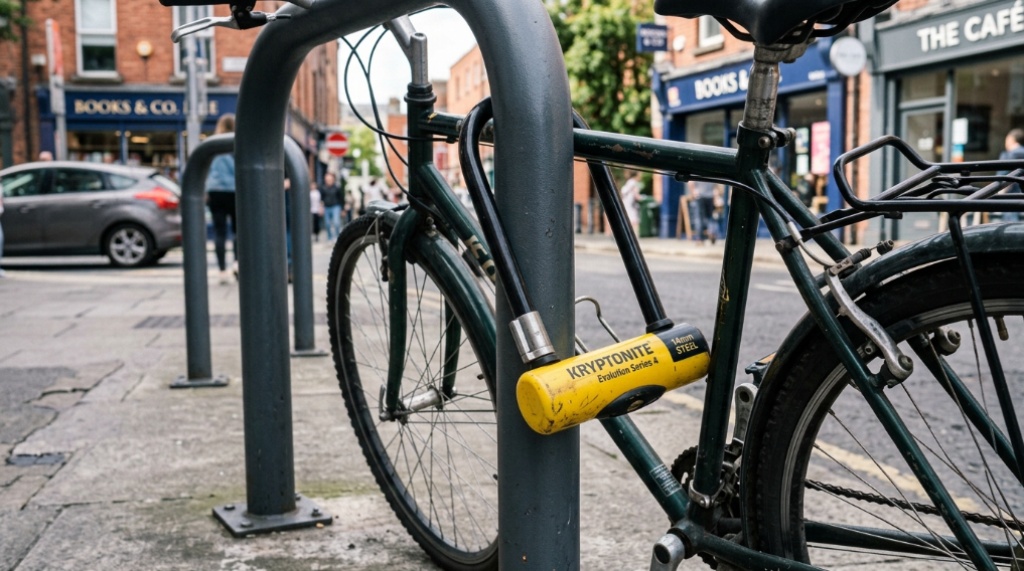
You lock your bike outside a café, run in for five minutes, and come back to an empty rack. It is a scenario every urban cyclist wants to avoid, yet the difference between a bike that survives the city and one that disappears often comes down to one purchase. Selecting the right lock is not about buying the heaviest option or the most expensive brand. It is about matching the lock to your route, your parking habits, and your risk level. If you want to see how a practical urban option performs in a demanding environment, find out more here before you commit. This guide breaks down the real factors that matter so you can lock with confidence.
Quick Answer
Choose a lock based on where you park, for how long, and how much your bike is worth. For short stops in low-risk areas, a quality U-lock or thick chain works well. For long or overnight parking in high-theft cities, combine a sturdy U-lock with a secondary cable or chain. Prioritize hardened steel, a reliable locking mechanism, and a secure locking technique over brand names or gimmicks.
Key Takeaways
- Match security level to parking duration and location, not just to bike price.
- U-locks offer the best strength-to-weight ratio for most urban riders.
- Chain locks provide more flexibility but are heavier for the same security level.
- How you lock your bike matters as much as which lock you buy.
- Two different lock types together defeat most common theft tools.
What Actually Determines a Lock’s Security
Security comes down to three things: the material and thickness of the shackle or chain, the quality of the locking mechanism, and how difficult the lock is to attack with common tools. A thick hardened steel shackle resists cutting and prying far better than a thin cable, which can be snipped with basic hand tools in seconds. The locking cylinder should resist picking and drilling. Beyond the hardware itself, a lock only performs as well as the way it is used, so technique is part of the security equation.
Materials and Construction
Hardened steel is the standard for serious locks because it resists cutting and sawing better than mild steel or aluminum. Look for shackles that are at least 13mm thick for high-security use, though thinner options can still work for lower-risk situations. Cables are convenient and light but should be treated as a secondary measure rather than a primary defense.
Locking Mechanisms
Disc-detent and pin-tumbler cylinders are common in quality locks. The keyway should be protected against drilling, and the mechanism should feel solid without excessive play. A lock that is easy to pick or drill offers little protection regardless of how thick the shackle is.
U-Lock vs Chain Lock vs Folding Lock
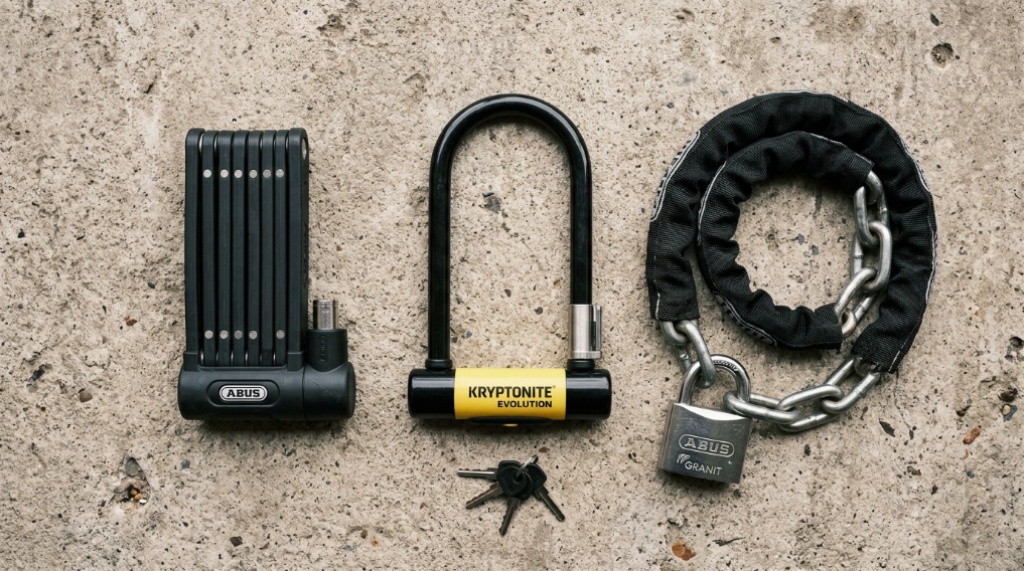
Each lock type trades off security, weight, and convenience differently. Understanding these trade-offs helps you pick the right tool for your routine.
| Lock Type | Security | Weight | Best For |
|---|---|---|---|
| U-lock | High | Moderate | Short to medium stops, dense urban areas |
| Chain lock | High | Heavy | Flexible locking points, overnight parking |
| Folding lock | Medium to high | Moderate | Riders who want flexibility and portability |
| Cable lock | Low | Light | Quick stops, secondary security only |
U-locks are the most popular choice for urban cyclists because they offer strong protection without excessive weight. Chain locks are harder to cut with bolt cutters and can wrap around awkward objects, but their weight becomes noticeable on longer rides. Folding locks sit between the two, offering more flexibility than a U-lock but generally less resistance to cutting than a thick chain. Cable locks are best reserved for low-risk situations or as a supplement to a stronger lock.
How to Match Your Lock to Your Risk Level
Risk depends on where you ride, how long you leave your bike, and how attractive it is to thieves. A commuter locking a modest bike outside an office in a low-crime area has different needs than someone parking an expensive e-bike overnight in a major city.
Short Stops in Low-Risk Areas
A solid U-lock is usually sufficient for a quick errand in a relatively safe area. The goal is to deter opportunistic theft, not to withstand a determined attack.
All-Day Parking in Busy Areas
Use a high-security U-lock or chain and lock to a fixed, immovable object. If your bike has quick-release wheels or an expensive saddle, secure those components too, either with a secondary cable or by removing them.
Overnight or High-Theft Environments
Combine two different lock types. A U-lock through the frame and rear wheel plus a chain or cable through the front wheel and frame makes the bike much harder to steal. Thieves generally look for the easiest target, so added complexity works in your favor,if your bicycle has taken a beating on rough city streets and needs quick maintenance, check out our guide on how to straighten a bike wheel without tools.
Locking Technique Matters as Much as the Lock
A high-quality lock used poorly offers less protection than a mid-range lock used correctly. The most common mistake is locking only through a wheel or a removable component, which allows a thief to walk away with the rest of the bike.
- Lock the frame and at least one wheel to a fixed object.
- Keep the lock tight so tools cannot be inserted for leverage.
- Position the lock so the keyway faces down or is hard to access.
- Use a secondary lock or cable for the second wheel and remove valuables.
- Choose a well-lit, high-traffic location when possible.
Locking to a weak or temporary object, such as a thin signpost or a loose railing, undermines even the best lock. Always check that the anchor point cannot be lifted, cut, or unscrewed.
Common Mistakes That Lead to Theft
Many bike thefts happen because of avoidable errors rather than sophisticated attacks. Using a cheap cable lock as the only protection is one of the most common. Leaving the bike unlocked for just a minute outside a shop is another. Locking to a rack that is not bolted down, or to a pole that can be lifted over, gives a thief an easy opportunity. Failing to secure removable parts and accessories also makes a bike more attractive to steal piece by piece. Finally, using the same lock in the same place every day can make your bike a predictable target.
Portability, Weight, and Everyday Practicality
The best lock is one you will actually carry. A lock that stays at home because it is too heavy offers no protection. Consider how you will transport it: frame-mounted brackets, holsters, or a bag. U-locks can usually be mounted on the frame, while chain locks often need to be carried in a backpack or pannier. If you use multiple bikes or lock in different places, a versatile locking system may save you hassle. Balancing security with convenience is key to consistent use.
Frequently Asked Questions
Is a U-lock better than a chain lock?
Neither is universally better. U-locks are lighter and easier to carry for the same level of security, while chain locks offer more flexibility around awkward anchor points. For most urban cyclists, a high-quality U-lock is the primary recommendation, with a chain as an option for overnight or high-risk parking.
How much should I spend on a bike lock?
Spend in proportion to your bike’s value and your risk level. A lock that costs a fraction of the bike’s price may not provide adequate protection. Generally, investing in a reputable, hardened-steel lock is more cost-effective than replacing a stolen bike.
Can I use a cable lock as my only lock?
Cable locks are not recommended as a primary lock in urban areas. They are easy to cut and should be used only for low-risk situations or as a secondary measure to secure wheels and accessories.
Where should I lock my bike in the city?
Choose a fixed, immovable object in a visible, well-lit area. Avoid isolated spots, weak poles, and racks that are not securely anchored. High-traffic locations reduce the time a thief has to work unnoticed.
Do I need a lock for each wheel?
If your wheels are quick-release, securing them is important. A single U-lock through the frame and rear wheel plus a cable through the front wheel is a common and effective setup. Alternatively, remove the front wheel and lock it alongside the frame.
Conclusion
The right bike lock is the one that matches your parking reality and that you will use every time. Focus on hardened steel, a reliable mechanism, and proper locking technique rather than marketing claims. For most urban riders, a quality U-lock covers daily needs, while a second lock or cable adds protection for higher-risk situations. Assess where you park, how long you leave your bike, and what it is worth, then choose accordingly. A thoughtful lock choice is one of the simplest ways to keep your bike yours.