
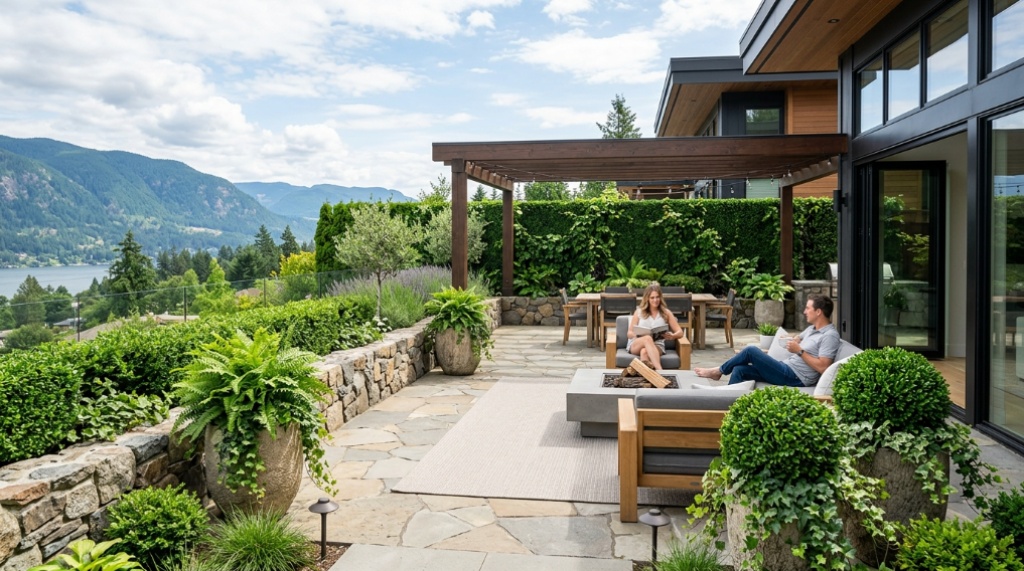
Silk ferns that shimmer in direct sunlight, fake boxwoods that never move in the breeze, and plastic flowers potted in bare soil—these are the telltale signs that separate convincing outdoor greenery from the kind neighbors notice immediately. The good news is that most of these problems come down to a handful of fixable details, not the plants themselves. Whether you are styling a patio, a porch, or a hanging display, this helpful guide covers the specific techniques—from UV protection and potting tricks to pruning and placement—that make artificial plants read as living. The result: greenery that holds up to weather and close inspection alike.
Quick Answer
To make artificial plants look natural outdoors, focus on five things: choose UV-resistant foliage, mix real and fake plants together, repot faux plants in real soil with a decorative topdressing, reshape and prune them so they do not look uniform, and place them where their stillness is least noticeable—against walls, in shaded corners, or mixed into garden beds. Avoiding direct midday sun, glossy plastic finishes, and identical repeated plants matters more than any single product choice.
Key Takeaways
- UV resistance is the single most important factor outdoors; unprotected plastic and silk fade, crack, or turn chalky within a season.
- Real soil, mulch, or gravel in the pot does more for realism than the plant itself—bare foam or faux dirt is an instant giveaway.
- Grouping artificial and real plants together camouflages the stillness and sheen of faux foliage.
- Asymmetrical pruning and slight variation between plants prevent the “catalog display” look.
- Shade, walls, and height placement reduce the two biggest outdoor tells: sun glare and zero movement.
Why Artificial Plants Look Fake Outdoors in the First Place
Indoors, artificial plants mostly fail for one reason: dust and stiffness. Outdoors, the problems multiply. Sunlight exposes the waxy sheen on plastic leaves, wind reveals that nothing moves, rain leaves water spots that real leaves shed differently, and UV radiation slowly bleaches color out of cheap materials. Understanding which of these is causing the problem tells you which fix to apply.
The most common outdoor giveaways, in rough order of how quickly people notice them:
- Glossy, uniform leaves that reflect light the way real foliage does not
- Bare foam or faux soil visible in the pot
- Identical plants repeated side by side with no variation in angle or height
- Faded or chalky color from UV damage
- Straight, untrimmed stems that never branch organically
Fix the top three and most people walking past will not look twice. Fix all five and even close inspection becomes difficult.
Start With UV-Resistant Plants, Not Just Attractive Ones
No amount of styling rescues a plant that fades in six weeks. If you are buying new faux greenery for an outdoor space, UV resistance should be your first filter, ahead of color and shape. Look for labels that specifically mention UV protection or outdoor use; many indoor-only artificial plants are treated with nothing.
Materials matter here. Polyester fabrics and polyethylene blends generally hold color longer outdoors than cheap PVC. UV-stabilized plastic can last multiple seasons in direct sun; untreated plastic may visibly lighten within one summer. This is one place where spending more upfront genuinely reduces replacement costs.
Protecting Plants You Already Own
If your artificial plants are not UV-rated, you have two realistic options. The first is to relocate them to shaded areas—under a porch roof, on a north-facing wall, or beneath a tree canopy—where direct sun exposure is limited to a few hours at most. The second is to apply a UV-protective spray designed for outdoor fabrics and plastics. These sprays slow fading but do not stop it entirely, and they need reapplication through the season. Neither option makes a non-UV plant truly sun-proof, so treat them as damage-reduction measures rather than permanent fixes.
Potting: Where Most Fake Outdoor Plants Give Themselves Away
A convincing pot does more work than the plant inside it. Bare foam, plastic soil discs, and the thin layer of faux moss that comes glued into many bargain plants all read as fake from several feet away.
How to Repot an Artificial Plant for Realism
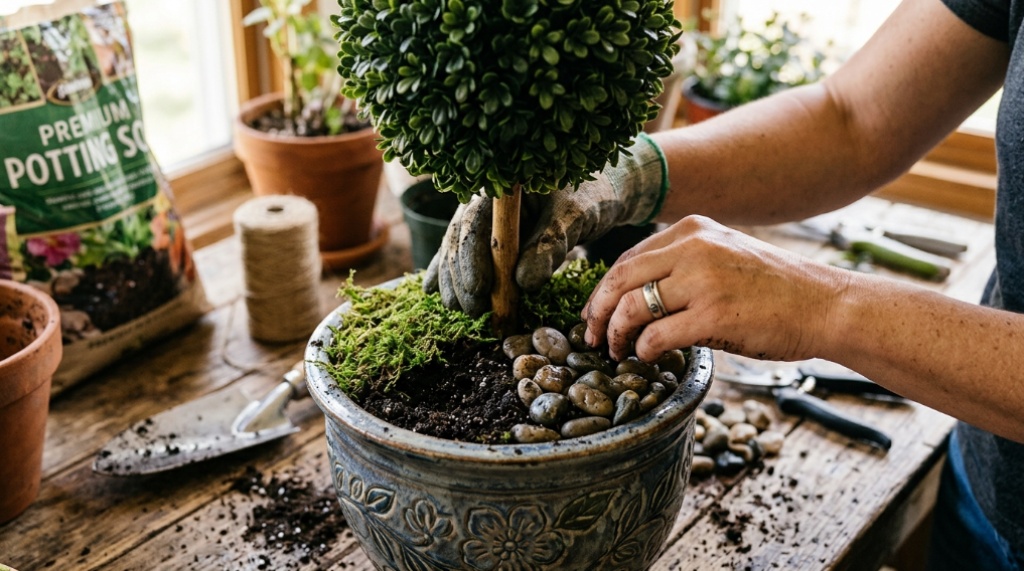
- Remove the plant from its original pot and knock off any attached faux soil or foam base. Many plants are anchored with a hard foam block that needs to be cut or broken away.
- Choose a pot with real weight. Lightweight plastic pots tip in wind, which real plants rarely do. Terracotta, ceramic, or heavy resin planters stay put and feel more authentic.
- Anchor the stem. Set the plant base in the pot and fill around it with actual potting soil, packing it firmly so the stem does not wobble. A wobbly plant is an obvious fake.
- Top with a realistic surface. Bark mulch, pea gravel, polished stones, or moss all work; matching whatever you use in nearby real planters creates visual consistency.
- Water once. A light watering settles the soil and darkens the surface slightly, which reads as “alive” rather than freshly staged.
This process takes ten minutes per plant and is the highest-return realism upgrade you can make. For hanging baskets specifically, the same principle applies: real liner material and slightly uneven trailing stems matter as much as the flowers.
Reshaping and Pruning to Break the Uniformity
New artificial plants arrive shaped for shipping, not for looking alive. Stems are often packed straight, leaves are flattened against each other, and multiple plants of the same model are identical. Real plants are never identical.
Take a few minutes with each plant:
- Bend wired stems into gentle curves rather than straight lines. Most faux stems contain wire and hold a bend.
- Rotate and spread leaves so they face different directions and slightly overlap naturally.
- Vary the height of grouped plants by trimming a few stems shorter or propping some higher in the soil.
- Remove a few leaves near the base to mimic natural die-back and open up the silhouette.
- Slightly reposition each plant in a group so no two sit at the same angle.
If you own several of the same model, customize each one differently. Repetition between identical plants placed close together is one of the fastest ways to signal “store display” rather than “garden.”
Placement Strategies That Reduce the Fake Factor
Where you put an artificial plant matters as much as how it looks. Two physical realities undermine faux greenery outdoors: sun glare and stillness. Smart placement minimizes both.
| Placement | Why It Works | Best For |
|---|---|---|
| Shaded walls and corners | Reduces harsh light that reveals glossy surfaces | Ferns, boxwoods, topiary |
| Mixed into real garden beds | Real plants move and cast shadows that distract from stillness | Flowering shrubs, grasses |
| Elevated positions (shelves, hooks, tall planters) | Distance from eye level hides detail flaws | Hanging baskets, trailing vines |
| Areas with natural movement nearby | Wind in adjacent real foliage reduces the “frozen” look | Any faux plant |
| Direct midday sun | Accelerates fading and highlights plastic sheen | Avoid when possible |
The most effective single trick is mixing real and artificial. Place a fake fern behind a real one, or tuck faux blooms into a live planter. Your eye reads the whole grouping as alive because part of it is, if you want to expand your indoor greenery as well, check out our guide on how beginners can start with floating aquarium plants.
Maintenance Habits That Keep the Illusion Alive
Artificial plants outdoors collect dust, pollen, spider webs, and water spots. Each of these slowly erodes the illusion, and none of them are fixed by ignoring the plant.
A quick routine every few weeks keeps things convincing:
- Rinse leaves with a hose on a gentle setting and let them air dry.
- Wipe glossy leaves with a damp cloth and a drop of mild soap to cut dust film.
- Check for fading, especially on the sun-facing side, and rotate plants that are still intact.
- Fluff crushed or flattened leaves back into shape.
- Refresh mulch or gravel topdressing if it has shifted or blown away.
One caution: do not use leaf-shine products on outdoor artificial plants. They amplify the glossy look that sunlight already exaggerates, making the plant read as more plastic, not less.
When Artificial Plants Are the Wrong Choice Outdoors
Faux greenery is not always the right answer, and being honest about the limits saves money and frustration. Artificial plants struggle in:
- Fully exposed, high-wind locations where constant motion makes stillness obvious and physical wear is fast
- Positions where people brush against them regularly—real plants bend and recover; plastic ones crack and shed leaves
- Close-up focal points at eye level and within arm’s reach, where individual leaf detail is scrutinized
- Full-sun climates with intense UV year-round, where even UV-rated plants may need replacing every couple of seasons
For those situations, real low-maintenance plants—succulents, ornamental grasses, hardy shrubs—usually work better and cost less over time. Artificial plants shine in shaded porches, seasonal displays, hard-to-water spots, and locations where real plants repeatedly fail.
Frequently Asked Questions
How long do artificial plants last outdoors?
It depends heavily on UV rating and sun exposure. UV-stabilized outdoor plants can hold their color for two to three seasons or longer in partial shade, while untreated artificial plants may fade noticeably within a single sunny summer. Shaded placement significantly extends lifespan.
Can I put indoor artificial plants outside?
You can, but they will likely fade, crack, or become brittle quickly if exposed to direct sun and rain. Indoor plants placed on a covered, shaded porch may survive longer, but they are still vulnerable to UV damage and moisture. Treat them as temporary outdoor décor only.
How do I stop artificial plants from blowing over in wind?
Use heavier pots, fill the base with real soil or gravel to add weight, and set plants in sheltered spots where possible. For tall plants, placing a few stones on top of the soil around the stem also helps stabilize them without looking artificial.
Does mixing real and fake plants actually help?
Yes, it is one of the most effective realism tricks. Real plants provide movement, natural shadows, and irregular texture that distract from the stillness and uniformity of artificial ones. Even one real plant in a group of three fakes noticeably improves the overall impression.
What is the most obvious sign that an artificial plant is fake?
For most people, visible foam or fake soil in the pot is the giveaway, followed by glossy plastic leaves and perfectly uniform shape. Repotting in real soil and reshaping the plant fixes the two biggest problems at once.
Should I use leaf shine on outdoor artificial plants?
No. Leaf shine products emphasize the glossy surface that already makes artificial plants look plastic under sunlight. A simple rinse and occasional wipe with mild soapy water is enough to keep them looking clean and natural.
Conclusion
Realism outdoors comes down to three things: plants that can survive the sun, pots that look like someone actually planted them, and shapes that are not perfectly symmetrical. UV-resistant greenery is non-negotiable for sun-exposed spots, real soil and mulch do more than any styling trick, and small asymmetries—bent stems, varied heights, mixed real and fake—carry the illusion the rest of the way. Start with the pot, work through the shape, then choose placement that hides stillness and glare. Do those in order and most guests will not know the difference.