
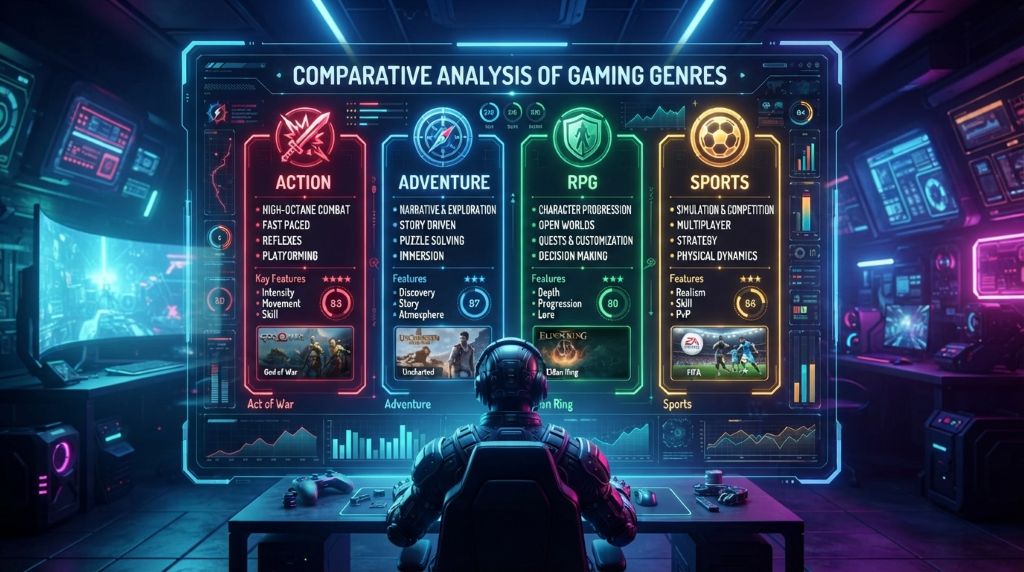
I still remember the first time I picked up a controller as a kid. My cousin handed me a platformer, and I spent hours jumping over obstacles; years later, I stayed up all night leveling a character in my first RPG. That early contrast was my first glimpse into how vastly fragmented gaming genres actually are. As an industry analyst watching modern studios churn out copy-paste titles and predatory monetization loops, I’ve learned that these classifications aren’t just gameplay styles—each one demands a radically different investment of your time, reflexes, and money. Understanding the mechanics behind different gaming genres is the only real defense players have against deceptive marketing and buyer’s remorse.
Gaming is now one of the biggest entertainment industries on the planet. According to Newzoo’s Global Games Market Report, there are over 3 billion gamers worldwide. Additionally, the industry generates more than 180 billion dollars each year. With so many players and games, genres help us sort through thousands of options. Therefore, this guide will walk you through the major gaming genres, explain what makes each one special, and help you find your perfect match.
Key Takeaways
- Gaming genres group games by how you play them, not just how they look.
- Action games test reflexes, while RPGs focus on story and character growth.
- Strategy games reward planning, and simulation games copy real life.
- Hybrid genres now blend elements from multiple categories.
- Knowing genres helps you pick games you will actually enjoy.
What Are Gaming Genres and Why Do They Matter?
Gaming genres are categories that group games based on their gameplay mechanics. In other words, a genre describes what you actually do in a game. For example, in a shooter, you aim and fire weapons. In a puzzle game, you solve problems. However, genres do not always describe the setting or story. A game about space can be a shooter, a strategy game, or a simulator.
Genres matter for several reasons. First, they help players find games they will enjoy. If you loved one farming simulator, you will probably enjoy another. Second, genres help developers communicate what kind of experience they are creating. Third, genres shape expectations. When you buy a fighting game, you expect fast-paced combat and precise controls.
The Entertainment Software Association (ESA) reports that around 66% of Americans play video games. That means millions of people navigate this market every year. Without genres, choosing a game would feel overwhelming. Furthermore, genres evolve constantly. New genres emerge when developers mix ideas from existing ones. Battle royale games, for instance, combined shooting with survival mechanics. As a result, understanding genres gives you a map of the gaming world. My own journey proved this. Once I learned what RPGs offered, I stopped wasting money on games that did not match my taste. Genres save you time, money, and frustration.
Action Games
Action games are one of the oldest and most popular genres in gaming. These games test your reflexes, hand-eye coordination, and quick thinking. The gameplay is fast, and you must react to events in real time. If you hesitate, you lose. Therefore, action games keep players on the edge of their seats.
This genre includes several subcategories. First-person shooters, or FPS games, put you behind the eyes of the character. Games like Call of Duty and Counter-Strike dominate this space. Third-person shooters show the character from behind, like in Fortnite. Platformers, such as Super Mario, focus on jumping and running through levels. Beat ’em up games let you fight waves of enemies with fists or weapons.
Action games appeal to players who want excitement and challenge. The rewards come from mastering controls and improving your reaction time. Additionally, many action games include multiplayer modes. These let you compete against other players worldwide. According to Statista, shooter games consistently rank among the best-selling genres in the United States.
I learned this lesson firsthand in college. My friends played competitive shooters every evening. At first, I lost every match badly. However, after weeks of practice, my reflexes sharpened, and I started winning. That improvement felt incredibly rewarding. Action games build skills over time, and that growth keeps players coming back. If you enjoy adrenaline and fast decisions, this genre will suit you perfectly.
Role-Playing Games (RPGs)
Role-playing games, or RPGs, focus on story, character growth, and immersion. In these games, you play as a character who improves over time. You gain experience points, learn new abilities, and collect better equipment. Therefore, your character becomes stronger the more you play. This progression system is the heart of every RPG.
RPGs split into two main types. Western RPGs, like The Witcher and Skyrim, give you freedom to make choices. Your decisions shape the story and its ending. Japanese RPGs, or JRPGs, like Final Fantasy, often follow linear stories with memorable characters. Both types share core elements. You manage stats, equip gear, and explore rich worlds.
What makes RPGs different from other genres? The answer is depth. Action games reward quick reflexes, but RPGs reward time and strategy. You plan your character’s build, manage resources, and invest hours in the story. Additionally, RPGs often feature dozens of hours of content. Some games, like Baldur’s Gate 3, offer over 100 hours of gameplay.
My first RPG changed how I saw gaming forever. I played it during a summer break and became attached to the characters. When the story ended, I genuinely missed them. That emotional connection is something only RPGs have given me. If you love stories, exploration, and watching your character grow, RPGs will captivate you for hundreds of hours.

Strategy Games
Strategy games challenge your brain rather than your reflexes. These games require planning, resource management, and long-term thinking. You often command armies, build cities, or manage economies. Therefore, patience and careful decision-making matter more than speed. A single wrong move can cost you the entire game.
The genre divides into two main categories. Real-time strategy games, or RTS, force you to act while the game keeps moving. StarCraft and Age of Empires are classic examples. You gather resources, build bases, and fight opponents simultaneously. Turn-based strategy games, on the other hand, let you take your time. Games like Civilization give you unlimited time to plan each move. The game waits until you finish your turn.
Strategy games differ from other genres in one key way. They reward thinking several steps ahead. You must predict your opponent’s moves and prepare counters. Additionally, these games teach skills that apply to real life. Players learn resource allocation, risk assessment, and adaptation.
I discovered strategy games during a slow winter. A friend recommended Civilization V, and I was hooked instantly. I remember telling myself “one more turn” at midnight, then playing until sunrise. The mental challenge felt different from any action game I had tried. If you enjoy puzzles, planning, and outsmarting opponents, strategy games offer endless mental stimulation. They prove that gaming can be a genuine workout for your brain.
Simulation and Sports Games
Simulation games aim to copy real-world activities as closely as possible. These games let you experience jobs, hobbies, and situations you might never try in real life. For example, flight simulators teach you to fly planes. Farming simulators let you run an entire farm. City builders, like SimCity, put you in charge of urban planning. Therefore, simulation games appeal to curious minds who enjoy detailed, realistic systems.
Sports games form their own massive category within this space. Titles like FIFA and NBA 2K recreate professional sports with real teams and players. Racing games, such as Forza and Gran Turismo, simulate driving physics with stunning accuracy. These games let you experience professional sports from your couch.
What makes simulation games different? The answer is authenticity. Developers spend years perfecting realistic physics, weather, and mechanics. Additionally, simulation games often serve educational purposes. Flight schools use simulators to train pilots. Medical students practice surgeries through simulation software.
My personal favorite is a farming simulator I picked up on a whim. I never expected to enjoy virtual farming. However, watching my crops grow and my farm expand became strangely relaxing. After stressful workdays, tending digital fields calmed my mind. Many players report similar relaxing experiences with simulation games. If you want calm, methodical gameplay without pressure, simulations are perfect. They offer a peaceful escape from fast-paced action games.
Frequently Asked Questions
What is the most popular gaming genre?
Shooter games and action games consistently rank as the most popular genres worldwide. According to industry reports, shooters like Call of Duty and Fortnite generate billions in revenue each year. However, popularity varies by region and platform. Mobile gamers favor puzzle and casual games, while console players often prefer action and sports titles.
Can a game belong to multiple genres?
Yes, many modern games blend elements from several genres. For example, Fallout combines RPG mechanics with first-person shooting. These hybrid games create fresh experiences by mixing proven formulas. Therefore, genre lines continue to blur as developers experiment with new combinations.
Which genre is best for beginners?
Puzzle and casual games suit beginners best. These games move at a slower pace and teach mechanics gradually. Additionally, simulation games offer relaxed gameplay without time pressure. However, the best genre depends on your personal interests and preferred pace of play.
What is the difference between RPG and action games?
RPGs focus on character growth, story, and decision-making. Action games emphasize reflexes and real-time combat. However, many modern games combine both. Action RPGs blend fast combat with leveling systems and story choices.
Are strategy games harder than other genres?
Strategy games require different skills, not necessarily harder ones. They demand patience, planning, and critical thinking. Action games require quick reflexes instead. Therefore, difficulty depends on your natural strengths and preferences.
Conclusion
Gaming genres are more than simple labels. They are gateways to entirely different experiences. Action games deliver adrenaline and fast reflexes. RPGs offer deep stories and character growth. Strategy games challenge your mind. Simulation games provide calm, realistic worlds to explore. Each genre serves a different mood and a different type of player.
My gaming journey across these genres taught me something valuable. There is no single “best” genre. There is only the best genre for you at this moment. Sometimes I crave the excitement of a shooter. Other times I want the slow satisfaction of building a city. Therefore, I encourage you to step outside your comfort zone and try a genre you have never played before. Just as choosing the right game can depend on your interests, exploring thoughtful and sustainable options can make a difference in other areas too, such as finding zero waste kid gift ideas that are fun and sustainable.
Did this guide help you understand gaming genres better? Have you discovered a new genre to try? Share your thoughts in the comments below, and tell us which genre is your favorite. If you found this guide useful, share it with fellow gamers who might benefit from it. Let us keep the conversation going and help each other find amazing games.