
Key Takeaways
- Low-maintenance landscaping starts with site planning, not with cutting maintenance visits.
- Plant choices, soil, drainage, irrigation, and traffic patterns should be planned as one system.
- Durable materials can reduce repeated repairs in heavily used locations.
- Seasonal inspections help identify small problems before they affect access, appearance, or plant health.
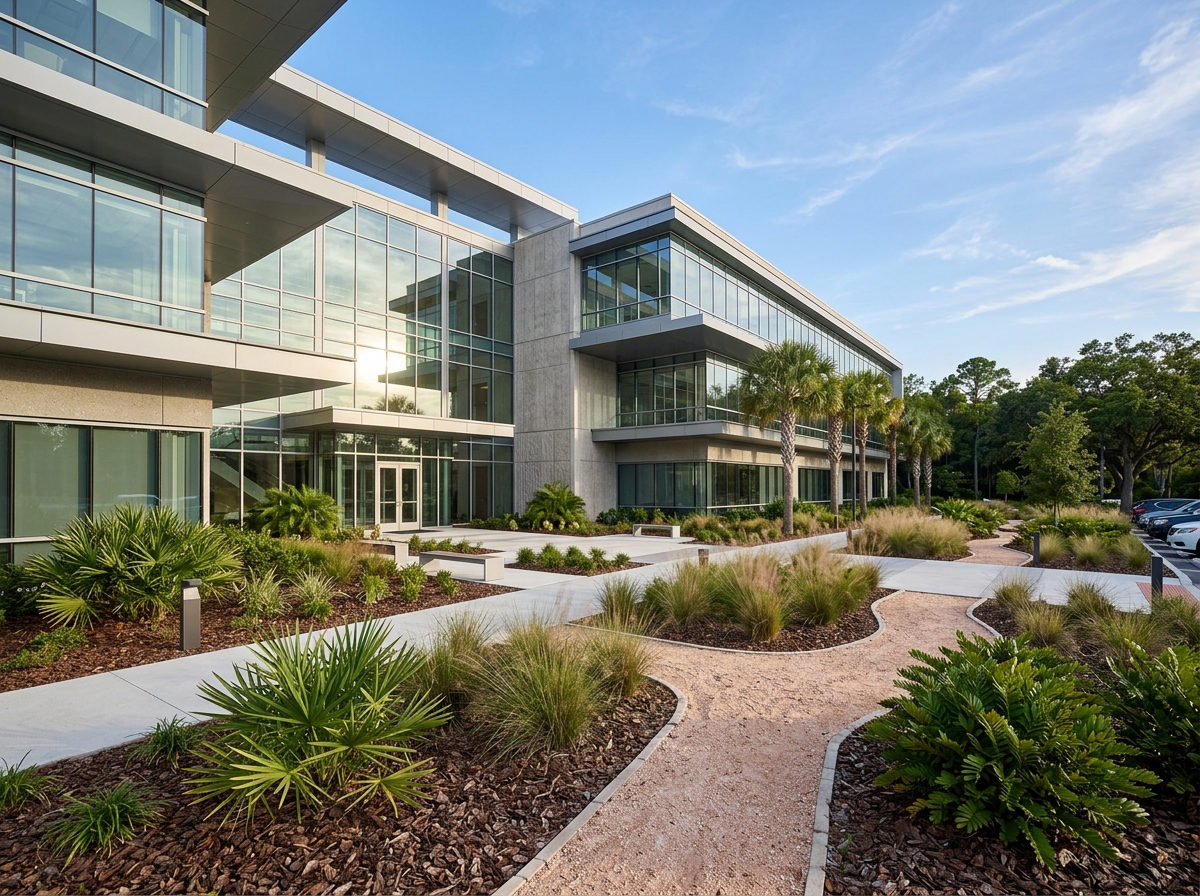
Commercial properties in Jacksonville need outdoor spaces that remain orderly, safe, and functional through heat, humidity, heavy rain, and frequent daily traffic. A thoughtful plan matters more than simply reducing mowing or installing fewer plants. Property teams researching landscape management can work with a Commercial Landscaper to evaluate the practical decisions that shape long-term landscape upkeep. Low-maintenance design does not mean a bare site. It means choosing plants, surfaces, drainage features, lighting, and watering methods that fit the property’s conditions. When those elements work together, managers can spend less time responding to worn turf, standing water, overgrown beds, and avoidable repairs.
Why Low-Maintenance Planning Matters for Commercial Properties
Entrances, walkways, parking areas, and common spaces influence how visitors move through a property. They also create recurring maintenance demands. For example, turf installed beside a busy entry may repeatedly thin from foot traffic, turning what appeared to be an inexpensive choice into a cycle of repair, watering, and replacement. Planning for actual use helps avoid that pattern.
Start With a Clear Site Assessment
Before selecting plants or materials, review the site in different weather conditions. Map full-sun and shaded areas, wind exposure, slopes, compacted soil, low spots, and places where water collects after rain. Note drive lanes, sidewalks, loading areas, emergency access, utilities, existing lighting, Irrigation lines, and locations where maintenance crews need room to work.
Choose Plants That Fit the Site
Plants should be selected for available light, soil conditions, drainage, mature size, and expected exposure to vehicles or pedestrians. Climate-adapted plants can be a practical choice because they are selected for conditions similar to those they will experience after establishment. Avoid relying on appearance alone, particularly when a plant’s mature spread could block signs, narrow a walkway, or reduce sightlines near driveways and intersections.
Design Irrigation Around Real Plant Needs
Effective irrigation planning separates areas with different water needs. Turf, trees, shrubs, and planted beds often perform better when they are not placed on the same schedule. Drip or micro irrigation can direct water toward roots in beds, while properly adjusted spray equipment may suit turf areas. Clock-based controllers run on preset schedules, while weather-based controllers and soil-moisture controls can adjust watering decisions using local conditions or measured soil moisture. The EPA recommends inspecting systems monthly for leaks, damaged or clogged heads, uneven coverage, and water reaching pavement. Its water-efficient irrigation practices also emphasize adjusting schedules as seasons and weather change.
Plan for Drainage Before Problems Appear
Puddles, muddy paths, eroded soil, and declining plants can all point to a drainage issue. More irrigation will not correct water that cannot move through or away from the landscape properly. Grading, swales, catch basins, drains, permeable surfaces, and well-positioned planting areas can help guide runoff away from buildings and high-use paths. Soil preparation, drainage, and irrigation should be reviewed together because each affects the others.
Use Hardscaping in High-Traffic Areas
Delicate planting beds and turf often struggle beside entrances, sidewalks, parking spaces, and delivery zones. In these areas, durable surfaces may be more practical.
- Turf: Soft appearance, but may require mowing, irrigation, and repair where traffic is heavy.
- Mulch: Defines beds and suppresses some weeds, but needs periodic replenishment and can shift during heavy rain.
- Gravel: Can suit selected low-traffic spaces, although it may migrate and needs edging.
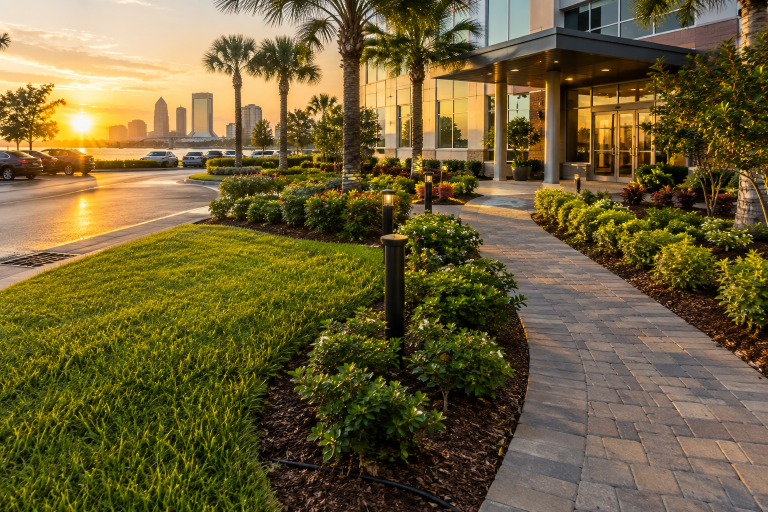
- Pavers or concrete: Can create stable walking surfaces when installed on a properly prepared base with appropriate drainage.
Make Landscape Lighting Useful and Efficient
Landscape lighting should support safe movement rather than overwhelm the site. Useful locations include entrances, stairs, pathways, changes in pavement elevation, signs, and transitions between parking and pedestrian areas. Low-voltage LED fixtures, timers, photocells, and motion controls can help limit unnecessary operation. Fixtures should be aimed at reducing glare and avoiding directing light toward neighboring properties.
Build a Seasonal Maintenance Plan
- Winter and early spring: Clear debris, inspect storm damage, review drainage, and prepare irrigation equipment.
- Late spring: Refresh mulch where needed, manage weeds, inspect plant growth, and adjust watering schedules.
- Summer: Watch for heat stress, irrigation coverage problems, pests, and weeds.
- Early fall: Repair worn areas, prune selectively, clean beds, and address drainage concerns.
- Late fall: Remove leaf buildup, protect sensitive plant material, and prepare equipment for cooler weather.
Track Performance With Simple Property Data
Keep records of water use, repair calls, replacement plants, labor hours, and recurring trouble spots. Photos taken after major rain events, extended heat, or periods of high foot traffic can show where the design is not performing as intended. Larger properties can use the EPA’s landscape water budget tool to compare estimated water use across planting and irrigation zones.
Questions to Ask Before Approving a Landscape Project
- How much routine maintenance will each area require?
- Where will rainwater travel during a major storm?
- Which plants will outgrow their allotted space?
- How will irrigation zones separate plant types and sun exposure?
- Which surfaces can tolerate frequent foot traffic?
- How will crews reach utilities, planting beds, and equipment?
Conclusion
Low-maintenance commercial landscaping in Jacksonville starts with designing the property around its actual conditions and daily demands. Heat, humidity, heavy rain, foot traffic, drainage, irrigation, and plant growth can all affect the level of ongoing care a landscape requires. By choosing suitable plants, durable surfaces, practical irrigation zones, effective drainage, and useful lighting, property managers can reduce recurring maintenance problems without sacrificing appearance or functionality. Seasonal inspections and simple records of water use, repairs, and problem areas can also help teams identify patterns and make adjustments before small issues become costly. A well-planned landscape is not necessarily one with fewer plants or less maintenance. It is one where each element has a practical purpose and works together to support a cleaner, safer, and more manageable commercial property year-round.