
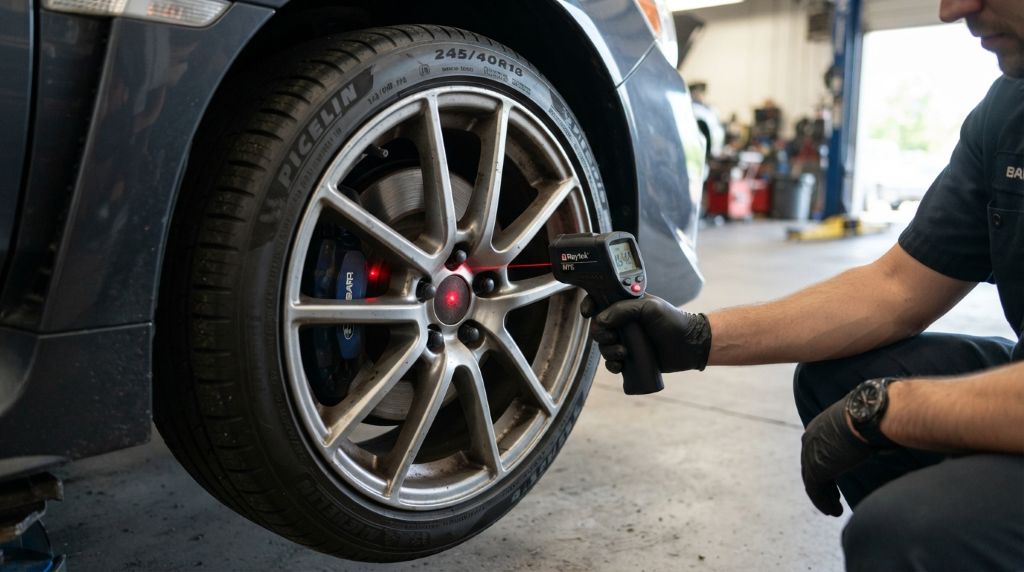
Key Takeaways
- Normal rotors run between 200 and 400 degrees during daily driving.
- Hard stops, towing, and mountain roads can push them past 600 degrees.
- Racing rotors can exceed 1,200 degrees and actually glow red.
- Brake fade begins when heat boils the fluid inside your brake lines.
- Downshifting on long descents protects rotors better than riding the pedal.
Brakes talk to us, and most of us ignore the conversation. Mine started talking on a mountain road in Colorado two summers ago. My family was dropping down a long pass after a hiking trip. Halfway down, I noticed a sharp, burning smell. Then the brake pedal felt soft, and the car needed more distance to stop than usual—the exact warning signs the automotive experts at https://tradecarhub.com/ caution drivers never to dismiss. I pulled into a scenic overlook and watched smoke drift off my front wheels.
Nothing was broken, thankfully. However, the rotors were screaming hot, and the brake fluid had started to boil. A mechanic later explained that I had experienced classic brake fade. I had ridden the pedal for eight straight miles, and the rotors paid for it.
That morning taught me more about brakes than any manual ever did. Therefore, this guide answers the question, how hot do brake rotors get, with real numbers. You will learn what is normal, what is dangerous, and how to spot overheating before it becomes a safety problem.
How Hot Do Brake Rotors Get in Normal Driving?
Every stop turns motion into heat, and the rotors absorb most of it. During gentle daily driving, rotors typically reach 200 to 400 degrees Fahrenheit. City driving with frequent lights lands near the middle of that range. A single hard panic stop can spike temperatures quickly, even on an otherwise calm drive.
Normal highway cruising keeps rotors much cooler. Without braking, airflow carries heat away and rotors settle between 100 and 200 degrees. That is why rotors last for years under easy conditions. Heat is the enemy, and easy driving creates very little of it.
Here is a useful way to think about it. Water boils at 212 degrees, so even mild braking already makes rotors too hot to touch. That sounds alarming, however, it is completely normal. Brake pads and rotors are designed for exactly this workload.
The design margins matter too. According to NHTSA, brakes are among the most safety-critical systems on any vehicle, and Federal Motor Vehicle Safety Standards require strong braking performance at full vehicle weight. Therefore, a street rotor handles daily heat comfortably when everything works correctly. Problems start when heat builds faster than airflow can remove it. That balance between heat and cooling decides everything, as you will see next.
When Temperatures Climb: Hard Use, Towing, and Mountains
Demanding driving changes the math fast. Rotors under heavy stress routinely reach 500 to 800 degrees. Prolonged mountain descents, towing a trailer, and carrying full loads all create this heat. Repeated hard stops without cool-down time stack heat upon heat.
Performance driving pushes even further. Track cars and race cars routinely exceed 1,000 degrees. At around 1,200 degrees, iron rotors visibly glow red. Motorsport engineers design special rotors and pads for exactly this reason. A street setup cannot survive those temperatures for long.
Why does heat stack up so quickly on descents? Because gravity never stops pushing. On a six-mile downhill, each stop adds heat, and the next stop starts from a hotter baseline. Airflow helps, however, slow corner speeds reduce it. Meanwhile, the driver keeps covering the brake pedal. This is exactly how my Colorado scare happened.
Weight multiplies the problem. A truck towing a trailer carries far more energy, and every bit of it must become heat to stop. Therefore, the same hill that barely warms an empty car can overheat a loaded one. The NHTSA braking resources page reminds drivers that loaded vehicles need longer stopping distances.
So, how hot do brake rotors get before trouble starts? Most experts place the danger zone above 600 degrees for street setups. Beyond that point, damage begins in several ways at once.
What Happens When Rotors Overheat
Overheating is not one problem. It is a chain reaction that attacks several parts at once. Here is what excessive heat does:
- Brake fade: the pads lose grip as heat changes their surface
- Fluid boiling: steam bubbles form in the lines, and the pedal goes soft
- Glazing: the pad surface turns shiny and hard, which reduces friction
- Warping: uneven heating and cooling bend the rotor surface
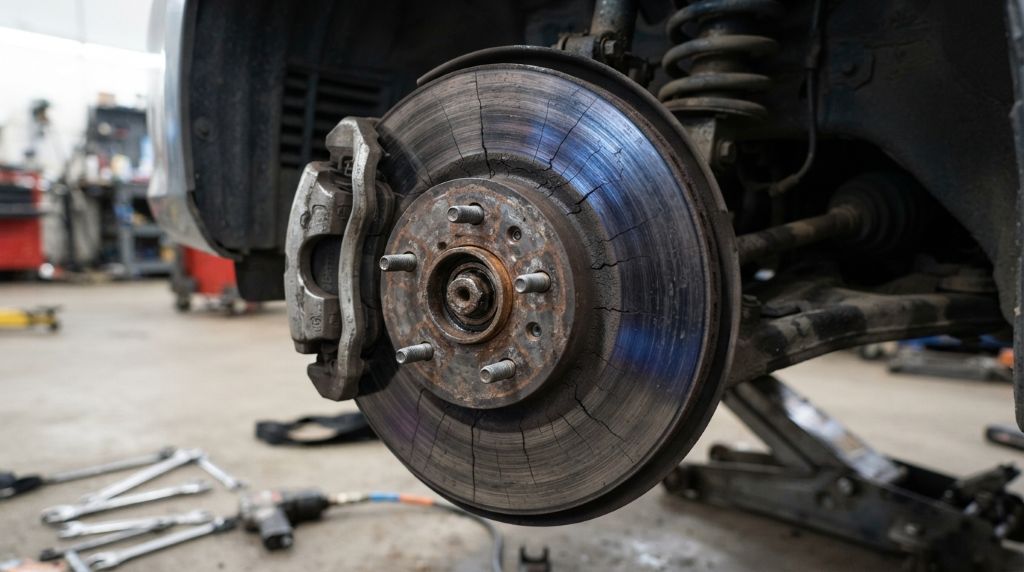
- Heat spots: dark blue or purple patches mark areas permanently hardened
Brake fade deserves the most attention, because it removes your ability to stop. Pads work within specific temperature ranges. Push them past that range, and friction drops sharply. The pedal feels normal, however, the car simply slows less. Additionally, hot fluid boils and creates compressible steam. Therefore, the pedal sinks toward the floor even though nothing is leaking.
Glazing and heat spots cause long-term damage. A glazed pad squeals and grabs unevenly. Heat spots create thick and thin zones on the rotor face. Therefore, you feel pulsation through the pedal at every stop afterward.
Here is the good news. Mild overheating often heals itself. Cooling down usually restores fade-free braking within minutes. My Colorado scare resolved during a twenty-minute overlook stop. However, repeated overheating causes permanent damage. Warped rotors and glazed pads need replacement, and neglect turns a free cool-down break into a repair bill.
Warning Signs Your Rotors Are Running Too Hot
Your car signals rotor trouble early, if you know the language. Watch and listen for these warnings:
- A sharp, burning smell after braking, often compared to burning carpets
- A brake pedal that feels soft, spongy, or slowly sinks under steady pressure
- Pulsation or shaking through the pedal or steering wheel when stopping
- Squealing, grinding, or new noises during normal braking
- Blue, purple, or dark heat spots visible on the rotor face
- Longer stopping distances than the car normally needs
- Smoke rising from a wheel after hard use
The burning smell is the classic signal, so never ignore it. It means the pads are cooking right now. Additionally, a soft pedal after a descent means fluid is boiling. That condition is genuinely dangerous on a mountain road.
Visual checks help too. Remove a wheel, or peer through the spokes, and inspect the rotor face. An even, silver-gray surface is healthy. Blue or rainbow discoloration marks past overheating. Therefore, check rotors whenever you rotate your tires.
One more habit deserves mention. After any hard braking session, avoid parking immediately with the pedal pressed. A hot rotor parked against one pad spot cools unevenly. That uneven cooling is a leading cause of warping. Instead, drive gently for a few minutes first. Consequently, the rotors cool evenly, and the surfaces stay true.
How to Keep Rotor Temperatures Under Control
Preventing heat damage costs nothing but attention. These habits keep temperatures in the safe zone:
- Downshift to a lower gear on long descents and let the engine brake.
- Apply brakes firmly for short moments instead of dragging the pedal.
- Leave extra following distance, so you brake less often.
- Lighten your load when possible, especially before mountain trips.
- Match trailer weight to your vehicle’s rated towing capacity.
- Upgrade to performance pads if you tow or drive mountains regularly.
- Flush brake fluid every two to three years, since old fluid boils sooner.
- Consider vented or slotted rotors for repeated heavy use.
Engine braking is the single biggest win. Lower gears let the engine absorb the car’s energy, therefore the rotors barely work. On my Colorado pass, third gear would have saved me entirely. Now I downshift before every descent, and the burning smell has never returned.
Brake fluid maintenance matters more than drivers realize. Fluid absorbs moisture over time, and wet fluid boils at much lower temperatures. According to the brake fluid standard FMVSS 116, fresh DOT 3 fluid must withstand roughly 401 degrees when dry. Moisture-contaminated fluid can boil well below that. Therefore, regular flushes raise your fade threshold significantly.
Finally, match your parts to your driving. A commuter needs standard rotors. A towing setup or canyon driver benefits from vented, slotted, or drilled designs. Therefore, be honest about your usage, then buy accordingly.
Final Thoughts
So, how hot do brake rotors get? Expect 200 to 400 degrees in daily driving, 500 to 800 under heavy use, and over 1,200 in racing. Normal heat is fine. Stacked heat causes fade, glazing, and warping. Therefore, watch for smells, soft pedals, and pulsation, then act early. For drivers who regularly maintain their vehicles, having the right equipment can also make a difference, so check out these car tools for RV and camper maintenance for practical maintenance needs.
Remember my Colorado lesson. Eight miles of riding the pedal nearly cost me my stopping power. One downshift would have prevented everything. Consequently, I now brake in bursts, downshift on descents, and flush fluid every two years.
Check your rotors this weekend, and feel how your pedal behaves after a long hill. Have you ever smelled hot brakes or felt brake fade on a mountain road? Share your story in the comments below. Additionally, share this guide with a friend who tows a trailer or drives mountain roads often.
Frequently Asked Questions
What is the normal temperature range for brake rotors?
Daily driving keeps rotors between 200 and 400 degrees. Highway cruising without braking stays near 100 to 200.
Is it normal for brake rotors to glow red?
Only in racing or extreme use. Street rotors that glow red are dangerously overheated and need inspection.
What does an overheated rotor smell like?
Drivers describe a sharp, burning smell, often compared to burning carpets or hot metal.
Can overheating warp my brake rotors?
Yes. Repeated hard heating and uneven cooling creates thick and thin spots, which cause pedal pulsation.
How do I cool my brakes on a long downhill?
Downshift to a lower gear and brake in firm, short bursts. Never drag the pedal continuously.