

Recreational vehicles and campers require regular maintenance to ensure safe and enjoyable travels. Many RV owners discover that standard automotive tools work perfectly for maintaining their mobile homes. Automotive Smart Solutions provides comprehensive guidance for selecting the right equipment for various vehicle maintenance tasks.
Understanding how to select driving tools becomes crucial when maintaining larger vehicles like RVs and campers. These vehicles share many components with regular cars but often require specialized approaches due to their size and complexity. Therefore, having the right tools makes maintenance tasks more manageable and cost-effective.
Regular maintenance prevents costly repairs and ensures your RV remains roadworthy for years. Additionally, proper tool selection saves time and reduces frustration during repair work. However, many RV owners feel overwhelmed by the variety of tools available in the market.
Essential Hand Tools for RV Maintenance
Basic hand tools form the foundation of any RV maintenance toolkit. Socket sets with various sizes accommodate different bolt configurations found throughout your vehicle. Additionally, combination wrenches provide versatility for tight spaces where sockets cannot reach effectively.
Screwdrivers in multiple sizes and types handle various fasteners on RV components. Phillips head, flathead, and Torx screwdrivers cover most maintenance scenarios. Furthermore, magnetic tip screwdrivers prevent dropped screws in hard-to-reach areas.
Pliers serve multiple purposes in RV maintenance work. Needle-nose pliers excel at gripping small components and working in confined spaces. However, standard pliers handle larger items and provide better leverage when needed.
Power Tools That Simplify RV Repairs
Electric drills speed up many maintenance tasks significantly. Cordless models offer greater mobility around large RVs without extension cord limitations. Therefore, investing in quality batteries ensures consistent power throughout extended maintenance sessions.
Impact drivers provide extra torque for stubborn bolts and screws. These tools prevent stripped fasteners that commonly occur with manual tools. Additionally, quick-change chuck systems allow rapid bit changes during complex repairs.
Angle grinders help with metal fabrication and rust removal tasks. RVs often develop rust spots that require careful removal and treatment. However, proper safety equipment becomes essential when using these powerful tools.
Specialized RV Maintenance Equipment
Leveling tools ensure your RV sits properly at campsites and during maintenance. Digital levels provide accurate readings for optimal positioning. Additionally, wheel chocks prevent accidental movement during repair work.
Water system tools maintain plumbing components unique to RVs. Pipe wrenches, tube cutters, and fitting tools handle fresh water and waste systems. Furthermore, pressure testing equipment helps identify leaks before they cause damage.
Electrical testing equipment diagnoses RV electrical problems effectively. Multimeters check voltage, continuity, and resistance in 12-volt systems. However, understanding basic electrical principles improves safety when working with RV power systems.
Safety Equipment and Protective Gear
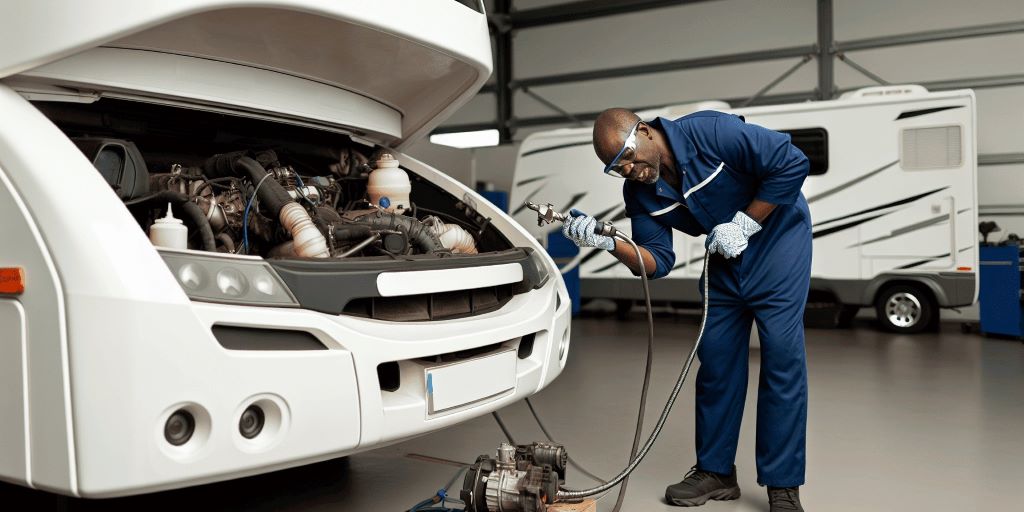
Safety glasses protect eyes from debris and chemicals during maintenance work. Quality glasses provide clear vision while filtering harmful particles. Additionally, side shields offer protection from unexpected projectiles.
Work gloves prevent cuts and improve grip on tools and components. Nitrile gloves resist chemicals while maintaining tactile sensitivity. Therefore, having both heavy-duty and precision gloves covers various maintenance scenarios.
First aid kits address minor injuries that occur during maintenance work. Properly stocked kits include bandages, antiseptic, and basic medications. However, serious injuries require immediate professional medical attention.
Tool Organization and Storage Solutions
Toolboxes keep equipment organized and easily accessible during maintenance tasks. Rolling tool chests provide mobility around large RVs while offering substantial storage capacity. Additionally, drawer organizers prevent tools from shifting during travel.
Magnetic tool holders attach to RV frames and keep frequently used items within reach. These holders work particularly well for metal tools like wrenches and screwdrivers. Furthermore, magnetic bowls collect small fasteners during disassembly work.
Tool belts and aprons keep essential items close at hand during repairs. Quality belts distribute weight evenly and reduce fatigue during extended work sessions. However, overpacking belts can impede movement and create safety hazards.
Preventive Maintenance Schedule and Tools
Regular inspections prevent major problems from developing unnoticed. Visual checks require good lighting and inspection mirrors for hard-to-see areas. Therefore, LED flashlights and telescoping mirrors become essential diagnostic tools.
Fluid checking tools monitor various RV systems effectively. Dipsticks measure oil levels while hydrometers test battery electrolyte conditions. Additionally, pressure gauges verify tire inflation and hydraulic system performance.
According to the Recreation Vehicle Industry Association, proper maintenance extends RV lifespan significantly while reducing operating costs. Their guidelines emphasize regular inspections and preventive maintenance practices.
Budget-Friendly Tool Acquisition Strategies
Quality tools represent long-term investments that pay dividends over time. However, building a complete toolkit gradually spreads costs over several seasons. Therefore, prioritizing essential tools first ensures basic maintenance capabilities.
Used tool markets offer quality equipment at reduced prices for budget-conscious buyers. Garage sales, estate sales, and online marketplaces frequently feature professional-grade tools. Additionally, tool rental services provide access to expensive specialized equipment.
Tool sharing arrangements with fellow RV enthusiasts reduce individual costs while building community relationships. Many campgrounds and RV clubs organize tool libraries for members. Furthermore, experienced RVers often mentor newcomers and share equipment knowledge.
Digital Tools and Modern Maintenance Technology
Diagnostic scan tools read error codes from modern RV engine and transmission systems. These devices identify problems quickly and accurately without extensive troubleshooting. However, understanding code meanings requires additional research and knowledge.
Mobile apps provide maintenance schedules, part numbers, and repair procedures for specific RV models. Many manufacturers offer official apps with detailed service information. Additionally, community-driven apps share real-world maintenance experiences and solutions.
Online parts catalogs help identify correct replacement components for aging RV systems. Digital exploded diagrams show part relationships and assembly sequences. Therefore, smartphones and tablets become valuable shop tools during complex repairs.
Conclusion
Proper tool selection significantly impacts RV maintenance success and enjoyment. Essential hand tools, power equipment, and specialized RV tools form a comprehensive maintenance arsenal. Additionally, safety equipment protects owners during repair work while organization systems keep tools accessible and secure.
Preventive maintenance schedules combined with quality tools extend RV lifespan and reduce operating costs. However, budget-friendly acquisition strategies make tool ownership accessible to all RV enthusiasts. Therefore, investing in appropriate maintenance tools pays dividends through years of reliable service and memorable adventures.
Modern technology enhances traditional maintenance approaches through diagnostic tools and information resources. The combination of proven hand tools and digital assistance creates powerful maintenance capabilities for today’s RV owners.
Frequently Asked Questions
What are the most essential tools for basic RV maintenance? A socket set, combination wrenches, screwdrivers, pliers, and a quality flashlight handle most basic maintenance tasks. Additionally, a multimeter helps diagnose electrical issues common in RV systems.
How often should I perform maintenance on my RV? Follow manufacturer recommendations, typically including pre-trip inspections, monthly checks during use, and comprehensive annual servicing. However, usage patterns and storage conditions may require more frequent attention.
Can I use regular automotive tools on my RV? Yes, most automotive tools work perfectly for RV maintenance since many components are similar. However, larger RVs may require longer handles or specialized access tools for hard-to-reach areas.
What safety precautions should I take during RV maintenance? Always wear safety glasses and appropriate gloves, ensure proper ventilation when working with chemicals, and use wheel chocks to prevent movement. Additionally, disconnect power sources before electrical work.
How much should I budget for RV maintenance tools? A basic toolkit costs $200-500, while comprehensive setups range from $1000-3000. However, acquiring tools gradually and buying quality used equipment reduces initial investment significantly.
Read More:
When Was the Classic Car Era: A Journey Through Automotive Time