
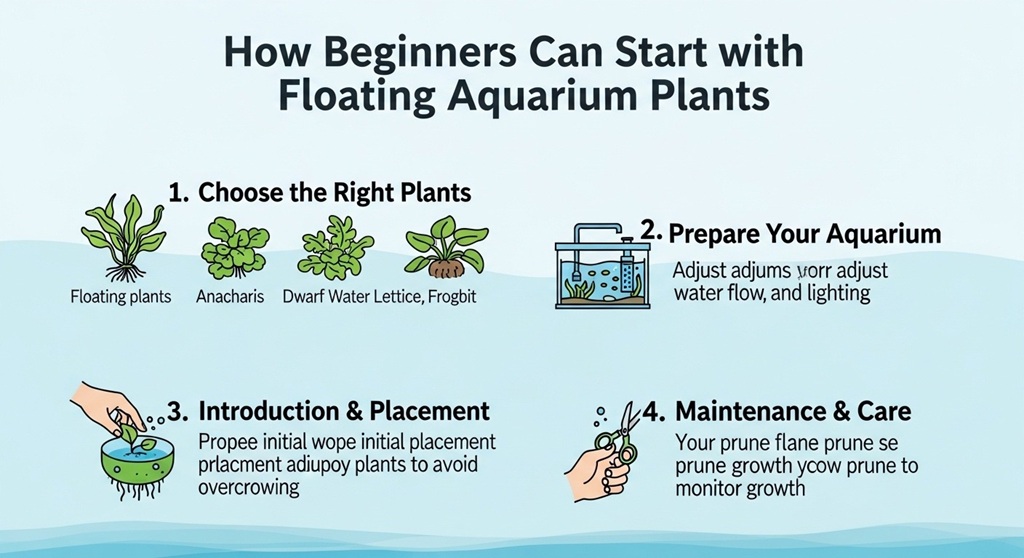
Floating aquarium plants are aquatic plants that grow on the water’s surface without being rooted in substrate. They absorb nutrients directly from the water column and provide shade, shelter, and natural filtration inside the tank.
Many new aquarists struggle with cloudy water, algae growth, and stressed fish. The tank looks artificial. Maintenance feels constant. That’s the problem.
Floating plants solve multiple issues at once. They consume excess nitrates, reduce light intensity, and create hiding spots for fish and fry. According to aquarium hobbyist case discussions published by experienced aquascapers, tanks with live plants often show measurable nitrate reduction within weeks when compared to non-planted systems. This helps stabilize water chemistry and supports healthier fish behavior.
If you are starting your first aquarium, adding easy aquarium plants—especially hardy floaters—can dramatically simplify your setup.
They are low maintenance. They grow fast. And they correct common beginner mistakes naturally.
Why Do Beginners Struggle With Aquarium Stability?
Most beginner problems come from excess nutrients, poor lighting balance, and unstable water parameters.
New tanks often go through a cycle. Fish produce waste. Uneaten food decays. Ammonia converts to nitrites and then nitrates. Without plants, nitrates accumulate. Algae blooms follow.
Here’s what typically happens:
- Green water or surface algae appears within weeks.
- Fish hide more due to bright lighting.
- Water changes become frequent and stressful.
- Beginners consider quitting.
This pattern is documented across multiple beginner aquarium forums and community case studies. In controlled hobbyist experiments, tanks with floating plants showed visibly reduced algae growth compared to identical tanks without plants under the same lighting conditions.
The agitation is real. You spend money on filters and chemicals. Results are temporary.
Floating plants change that equation.
How Do Floating Aquarium Plants Solve These Problems?
Floating plants act as natural nutrient absorbers, light diffusers, and biological support systems.
1. They Absorb Excess Nutrients
Floating plants feed directly from the water column. This allows them to absorb nitrates efficiently. Fast-growing species are particularly effective in nutrient uptake.
2. They Reduce Algae Growth
By blocking excess light and competing for nutrients, floating plants limit algae’s growth conditions.
3. They Create Shelter
Fish such as bettas and guppies prefer shaded areas. Surface cover reduces stress and encourages natural behavior.
4. They Improve Oxygen Exchange
During daylight, photosynthesis increases dissolved oxygen levels, benefiting fish and beneficial bacteria.
The result? Cleaner water. Calmer fish. Fewer emergency fixes.
Which Floating Aquarium Plants Are Best for Beginners?
The best beginner floating plants are fast-growing, low-demand species that tolerate varied water conditions.
Top Easy Floating Plants
| Plant Name | Light Requirement | Growth Rate | Difficulty |
|---|---|---|---|
| Amazon Frogbit | Low to Moderate | Fast | Easy |
| Salvinia | Low to Moderate | Very Fast | Very Easy |
| Water Lettuce | Moderate | Fast | Easy |
| Duckweed | Low | Extremely Fast | Very Easy |
These are considered hardy floaters because they tolerate beginner mistakes such as fluctuating water parameters or irregular fertilization.
If you want detailed comparisons and visuals, check this guide on the best floating aquarium plants.
How Much Light Do Floating Plants Need?
Most floating aquarium plants thrive under low to moderate LED lighting for 6–8 hours daily.
Too much light causes rapid overgrowth and can increase algae if nutrients are unbalanced. Too little light slows growth.
Beginner tip:
- Start with 6 hours of light per day.
- Adjust gradually based on plant growth.
- Use a timer for consistency.
Consistency matters more than intensity.
Do Floating Aquarium Plants Need Fertilizer?
They often do not need additional fertilizer in a stocked tank because fish waste provides nutrients.
However, in low-stock tanks or shrimp-only setups, growth may slow. In such cases:
- Use liquid fertilizer in small doses.
- Avoid overdosing, as floaters absorb nutrients quickly.
- Monitor nitrate levels with test kits.
Case study insight: Hobby tanks with moderate fish stocking and floating plants typically maintain nitrate levels under 20 ppm with weekly water changes.
How Do You Add Floating Plants to a New Tank?
Simply place them gently on the water surface after acclimation.
Step-by-Step:
- Float the plant container in your tank for 15–20 minutes to equalize temperature.
- Rinse plants gently in dechlorinated water.
- Place them on the surface without burying roots.
- Turn off strong surface agitation if needed.
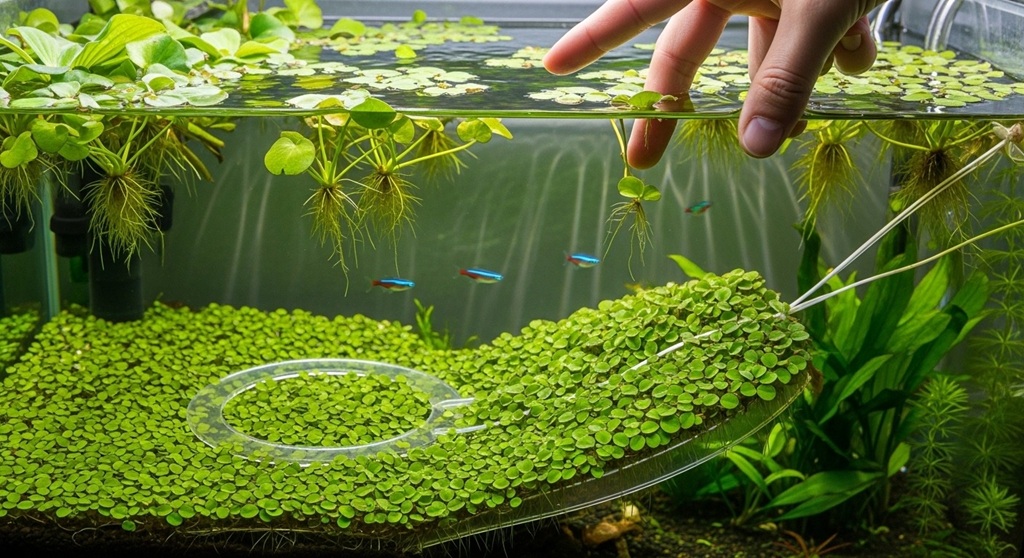
High flow can push plants into corners. Use a floating ring if necessary to control spread.
What Mistakes Should Beginners Avoid?
The most common mistakes are overgrowth neglect, excessive light, and strong filter flow.
- Do not let plants cover 100% of the surface. Fish still need open air exchange areas.
- Trim weekly. Fast growers multiply quickly.
- Avoid direct filter spray hitting the leaves.
- Do not mix aggressive surface feeders that disturb roots.
Balance is key.
Are Floating Plants Safe for All Fish?
Yes, most community fish benefit from floating plants.
Especially suitable for:
- Bettas
- Guppies
- Tetras
- Rasboras
- Shrimp
They provide spawning support and reduce stress.
However, goldfish and large cichlids may damage delicate floaters.
How Fast Do Floating Plants Grow?
Growth depends on light, nutrients, and water temperature.
Under balanced conditions, some species double in coverage within 1–2 weeks.
This rapid growth is why they are effective nitrate reducers. But it also means you must trim regularly.
Can Floating Plants Replace a Filter?
No, but they enhance filtration efficiency.
They complement mechanical and biological filtration by removing dissolved nutrients. They are part of a balanced ecosystem—not a replacement for hardware.
Conclusion: Should Beginners Start with Floating Aquarium Plants?
If you are new to fishkeeping, floating aquarium plants are one of the smartest additions you can make.
They reduce nitrates. They limit algae. They create shelter. And they require minimal effort.
Instead of chasing water problems with chemicals, build a natural balance from the start.
Begin with hardy floaters. Monitor growth. Trim weekly. Keep lighting consistent.
Want a deeper comparison of the best beginner options? Explore this guide to easy aquarium plants and choose the right species for your tank setup.
Start simple. Stay consistent. Let nature support your aquarium.
Frequently Asked Questions (FAQ)
Do floating aquarium plants need CO2?
No. Most beginner-friendly floating plants grow well without CO2 injection.
How often should I trim floating plants?
Once per week is ideal to prevent full surface coverage.
Will floating plants block too much light?
They can if overgrown. Maintain 50–70% surface coverage.
Can I mix multiple floating plant species?
Yes, but monitor growth rates. Fast growers may dominate slower species.
Are floating plants good for shrimp tanks?
Yes. They provide biofilm and cover for shrimp.
Do floating plants increase oxygen?
During daylight, yes. At night, oxygen consumption increases slightly, so surface agitation helps maintain balance.
Related Topic: How to Choose a Ceramic Heater That’s Safe for Babies
Read Next: How to Choose Zero Waste Kid Gift Ideas That Are Fun and Sustainable