
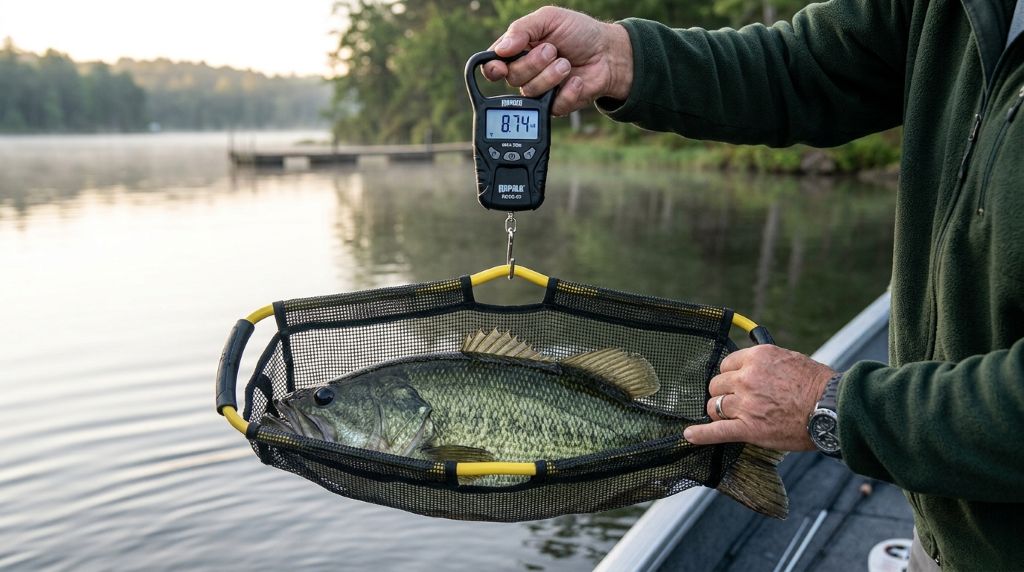
Key Takeaways
- Accurate weighing depends on proper scale setup and handling.
- Taring your gear scale removes the weight of bags or slings.
- Steady, vertical lifting produces the most reliable readings.
- Regular calibration keeps your scale trustworthy over time.
- Quick, careful weighing protects fish meant for release.
Weighing your catch accurately takes more than just hanging a fish. However, as CrazyFishingGear warns, small technique errors often lead to wrong numbers. This guide explains how to use a fishing gear scale correctly. You will get reliable readings on every trip.
Why Accurate Catch Weighing Matters
Precise weight readings matter for more reasons than bragging rights. Tournament results often depend on exact, verified numbers. Therefore, small errors can change final standings significantly.
Accurate weighing also helps anglers track personal progress over time. Recording true catch weights builds a useful fishing journal. This record reveals patterns in your best fishing locations and seasons.
Weight data supports better decisions during catch-and-release fishing too. Some anglers judge fish health partly by weight and condition. A wrong reading could lead to a poor release decision.
According to the U.S. Fish and Wildlife Service, accurate catch data helps support healthy fish population management nationwide. While this applies mainly to research surveys, the same principle helps individual anglers. Careful habits with personal gear contribute to better record-keeping overall.
Beyond data, accurate weighing simply feels more satisfying. Knowing your exact catch weight adds real value to the moment. Therefore, learning proper scale technique benefits every angler, from beginner to expert.
Types of Fishing Gear Scales
Several scale types exist, each suited to different fishing situations. Understanding these options helps you pick the right tool.
- Hanging digital scales for larger fish and higher capacities
- Handheld spring scales for basic, low-cost weighing
- Platform scales for smaller catches like panfish
- Boga-style grip scales that combine holding and weighing
- Waterproof scales built for boat and dock environments
Hanging digital scales suit anglers targeting larger species regularly. They often support higher weight capacities than handheld models. Many include backlit screens for early morning or evening trips.
Spring scales remain popular due to their low cost and simplicity. However, they generally offer less precision than digital models. Mechanical wear can also affect accuracy over years of use.
Platform scales work well for smaller fish like panfish or trout. Anglers place the fish directly on a flat surface. This method avoids handling stress from hanging or gripping.
Boga-style scales combine a lip gripper with a built-in scale. This design allows quick weighing during hook removal and photos. Many tournament anglers favor this style for its efficiency.
Preparing Your Scale Before Weighing
Proper preparation ensures your scale gives accurate readings from the start. Skipping these steps often leads to unreliable numbers.
- Check the battery level before heading out on the water.
- Turn on the scale and confirm the display reads zero.
- Attach a weigh bag, sling, or hook attachment securely.
- Press the tare button to remove the container’s weight.
- Confirm the display shows zero again after taring.
- Keep the scale in a dry, protected case until needed.
Battery checks prevent frustrating failures during an important catch. A dying battery often causes flickering or inaccurate displays. Replace batteries before every trip if you notice any warning signs.
Taring matters more than most anglers realize during setup. Skipping this step adds the container’s weight to your fish. As a result, your final reading becomes inaccurate and unreliable.
Keep your scale protected from moisture whenever possible. Even water-resistant models benefit from a dry storage case. This habit extends your scale’s working lifespan significantly.
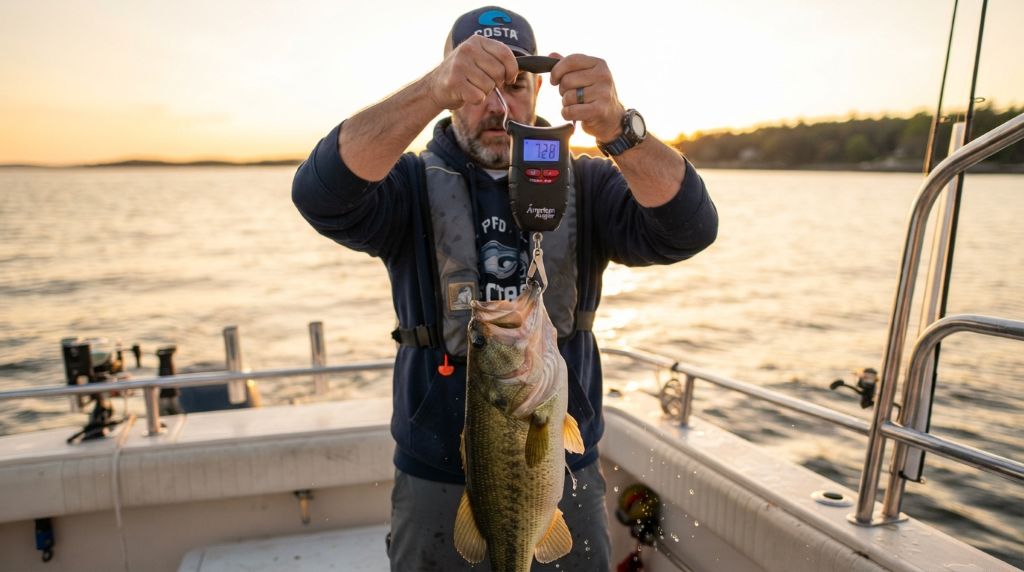
Step-by-Step Weighing Process
Follow these steps for consistent, accurate results with any fishing gear scale.
- Secure the fish gently in a weigh bag, sling, or gripper.
- Attach the container to the scale’s hook or platform.
- Lift the scale slowly and steadily until the fish hangs freely.
- Hold the scale directly overhead, avoiding any angled position.
- Wait until the display number fully stops changing.
- Record the final weight shown on the screen.
- Lower the fish gently and remove it from the container.
- Return the fish to the water quickly for release.
Step four deserves extra attention during every weigh-in. Angled lifting introduces inaccurate readings from uneven pressure. Holding the scale straight overhead lets gravity work correctly with the sensor.
Patience matters most during step five of this process. Digital displays often fluctuate before settling on a final number. Rushing this step risks recording an inaccurate, temporary reading.
Throughout this process, prioritize the fish’s well-being above all else. Quick, gentle handling reduces stress and improves survival after release. Speed and accuracy can work together with practice.
Calibrating and Testing Your Scale
Regular calibration checks keep your scale accurate across an entire season. Skipping this step allows small errors to grow over time.
- Use a known weight, such as a labeled dumbbell plate
- Compare your scale’s reading to the object’s listed weight
- Adjust calibration settings if your scale model allows it
- Retest with a second known weight to confirm accuracy
- Repeat this process every few months with regular use
Calibration testing takes only a few minutes but offers real value. Comparing readings against a known weight reveals drift quickly. Catching small errors early prevents bigger problems during important trips.
Not every scale allows manual calibration adjustments. In these cases, note any consistent offset you discover. Some anglers simply add or subtract the known difference manually.
Testing with two different known weights improves your confidence further. This method confirms accuracy across a range of values. Therefore, your scale performs reliably for both small and large fish.
Common Mistakes That Affect Accuracy
Even careful anglers sometimes make errors that skew scale readings. Recognizing these mistakes helps you avoid them going forward.
- Forgetting to tare the weigh bag or sling before use
- Weighing fish during windy or unstable conditions
- Reading the display before the number fully settles
- Using a scale with a low or failing battery
- Letting the fish or bag swing during the reading
- Storing the scale in damp or humid conditions long term
Wind causes more inaccurate readings than anglers often expect. Gusts swing the hanging fish and confuse the internal sensor. Sheltering the scale with your body often solves this problem quickly.
Swinging containers create similar issues, even without wind present. Steady the bag or sling gently before taking a final reading. This small adjustment produces a more stable, accurate number.
Long-term damp storage damages internal electronics over months and years. Always dry your scale fully before placing it in storage. This habit prevents corrosion and extends your scale’s overall lifespan.
Conclusion
Using a fishing gear scale accurately takes just a few careful steps. Prepare your scale properly, tare your container, and lift with steady control. You can also explore top-rated fishing accessories to complement your fishing setup and improve your overall experience. Calibrate regularly and avoid common mistakes like wind or rushed readings. These habits keep your numbers trustworthy every time you fish.
Accurate weighing protects your records, your tournament results, and your fish. Practice proper technique on your next trip to build good habits. Grab your scale, calibrate it today, and prepare for reliable readings on the water.
Frequently Asked Questions
How do I know if my fishing scale is accurate?
Test it against a known weight, like a dumbbell plate. Compare the reading to confirm accuracy before your trip.
Why does my scale show a different weight each time?
Wind, swinging, or angled lifting often cause inconsistent readings. Reweigh the fish in calm, sheltered conditions instead.
Do I need to tare my scale every time?
Yes, taring removes the weight of your bag or sling. Skipping this step adds inaccurate extra weight to readings.
Can I use a fishing gear scale for other items?
Yes, most scales work for any object within their weight limit. Always tare the container before weighing anything new.
How often should I calibrate my fishing scale?
Calibrate every few months with regular use. Check it more often before tournaments or important fishing trips.