
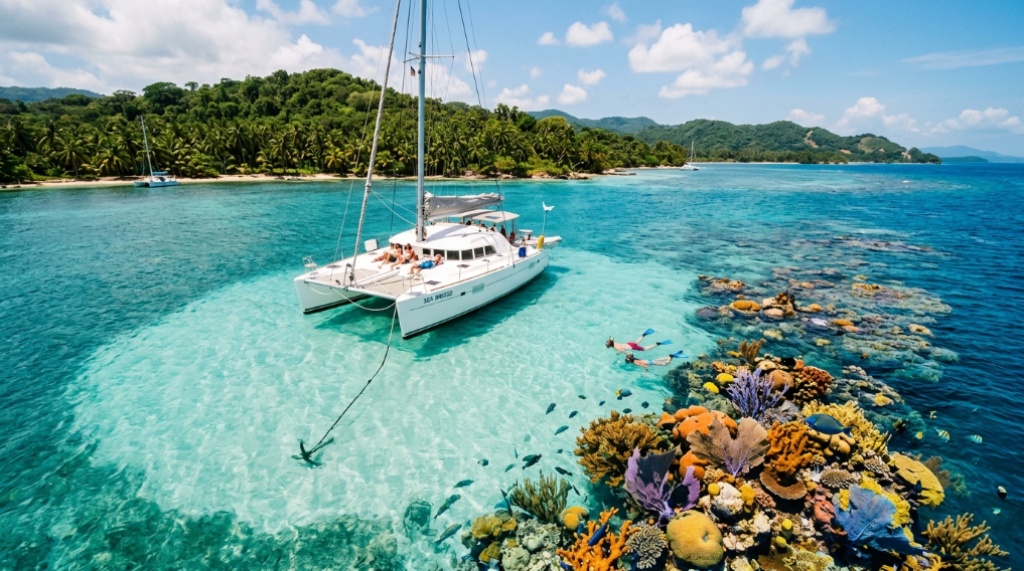
The crystal-clear water off the Florida Keys or Biscayne Bay looks like the perfect spot to drop the hook and spend a few hours fishing or snorkeling. But beneath that inviting surface, living coral formations are often just a few feet below the keel. A single careless anchor drag can snap off decades of reef growth in seconds, and it can also cost you a fine. Getting boat anchoring in Florida right means matching your gear and technique to a fragile, shallow, and tightly regulated seafloor. The basics of rope selection and scope are covered well in this guide to boat anchoring in Florida, so the real question here is how to use that gear without harming the reef or breaking the rules.
Quick Answer
Anchor near Florida reefs only in sand, rubble, or mud patches, never directly on living coral. Use a Danforth-style or Bruce anchor with a short chain leader and a rope scope of about 5:1 to 7:1, set it gently under idle power, and verify the hold before shutting down. In protected zones, use a mooring buoy instead of anchoring whenever one is available.
Key Takeaways
- Anchoring on coral is illegal in Florida waters and can cause damage that takes decades to recover, so always target sand patches visible through the water.
- Mooring buoys in Florida Keys National Marine Sanctuary and many state parks are free or low-cost and eliminate anchor damage entirely.
- A rope rode with 6 to 10 feet of chain and a 5:1 to 7:1 scope works well in the typical 10 to 30 foot depths around Florida reefs.
- Backing down gently on the anchor confirms the set without dragging it across coral or seagrass.
- Seagrass beds are protected too, and anchoring in them is restricted or prohibited in many Florida management areas.
Why Anchoring on Coral Is a Serious Problem in Florida
Coral is not rock. It is a living colony of tiny animals that builds a calcium carbonate skeleton over years and decades. When an anchor fluke or chain drags across a coral head, it scrapes away the living tissue, and recovery is measured in decades, not seasons. Branching corals like staghorn and elkhorn, the species most common in shallow Florida reef areas, are especially brittle.
The legal side matters just as much. Florida Statute 253.04 makes it a second-degree misdemeanor to damage or remove coral, seagrass, or other marine life in state waters. Federal regulations in Florida Keys National Marine Sanctuary add civil penalties and possible vessel seizure. A dropped anchor that drags across a reef can result in fines that dwarf the cost of the trip.
The practical takeaway: choose your spot before you leave the dock. Study a chart, look for sandy patches on your depth sounder, and plan where the anchor will land, not just where the boat will float.
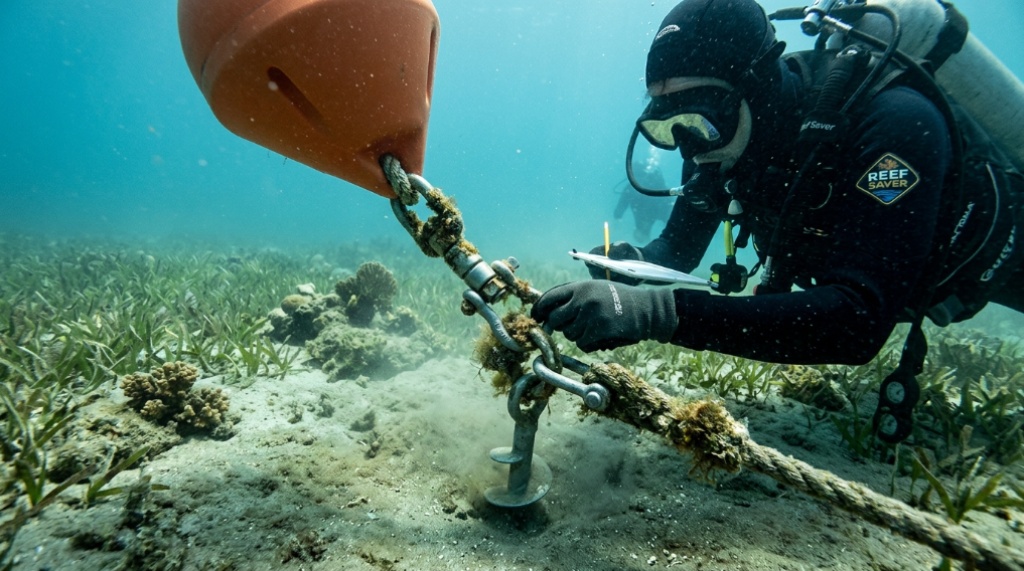
Where You Can Legally Drop the Hook
Legal anchoring near Florida reefs means anchoring over unconsolidated bottom: sand, mud, or shell rubble. These are the areas where an anchor can bury and hold without contacting living organisms.
Areas to avoid or treat with extra care include:
- Living coral and hardbottom communities, including patch reefs
- Seagrass beds, which are protected in most Florida management areas and critical nursery habitat
- Artificial reef structures and wrecks, which attract fish and often have mooring buoys for that reason
- Sanctuary Preservation Areas and Ecological Reserves in the Florida Keys, where anchoring is restricted
If you cannot clearly see the bottom and your chart does not show a sandy area, slow down and use the depth sounder. A hard, jagged return usually means reef. A soft, gradual return usually means sand or mud, To prepare your vessel for changing marine conditions before you drop anchor, check our guide on what is a swell in the ocean? how it affects surfing and boating.
Mooring Buoys: The Safest Option Near Florida Reefs
Florida has one of the most extensive mooring buoy networks in the United States. The Florida Keys National Marine Sanctuary maintains hundreds of buoys specifically to keep boaters off coral and seagrass. Many are free. Some state parks, like John Pennekamp Coral Reef State Park, use a first-come, first-served system, while a few locations use a small fee or a reservation app.
Using a mooring buoy is almost always better than anchoring near a reef for three reasons. It eliminates the risk of anchor damage, it removes the need to find a sandy patch, and it is usually positioned directly over the best diving or fishing spot. If a buoy is available, take it. Circle slowly, pick up the pennant with a boat hook, and secure it to a bow cleat. Never tie off on the buoy itself or thread your own line through the ring, which can chafe and fail.
Choosing the Right Anchor and Rode for Florida Reef Areas
Not every anchor works well in Florida’s mixed bottom. The table below compares the most common types for reef-adjacent anchoring.
| Anchor Type | Best Bottom | Pros Near Reefs | Cons Near Reefs |
|---|---|---|---|
| Danforth / Fortress | Sand, mud | Light, excellent holding in sand, easy to retrieve | Can skip across hardbottom if dragged |
| Bruce / Claw | Sand, rock, mixed | Sets quickly, good in rubble | Heavier, harder to retrieve from crevices |
| Plow / Delta | Sand, mud | Strong holding, good in current | Needs longer scope, can dig into reef edge |
| Grapnel | Rock, coral | None for reef use | Designed to hook coral; causes direct damage |
For most Florida reef-adjacent anchoring, a Danforth-style anchor for sand or a Bruce for mixed bottom is the practical choice. Avoid grapnel anchors entirely near reefs. Their entire purpose is to hook and hold on hard structure, which is exactly the outcome you do not want on living coral.
Your rode matters as much as the anchor. A rope rode with 6 to 10 feet of chain provides enough catenary to keep the shank low without dragging a heavy all-chain rode across the bottom. In 15 to 25 feet of water, a 5:1 scope is a reasonable starting point in calm conditions. Bump it to 7:1 if wind or current picks up.
Step-by-Step: Setting the Anchor Without Hitting Coral
- Approach slowly and into the wind or current, whichever is stronger, and stop over a clearly visible sand patch.
- Lower the anchor by hand or with a windlass. Do not throw it. A thrown anchor can land on coral several feet away from where you aimed.
- Pay out scope as the boat drifts back, keeping the line slightly tensioned so the anchor lands flukes-down rather than on its side.
- Once you have reached your target scope, cleat off and put the engine in idle reverse for a few seconds. Feel for the anchor to grab.
- If it does not set, retrieve it gently and try another spot. Do not drag it under power to “find” a set, which is the most common cause of reef damage.
- Take a visual fix on two shore points or use your GPS track to confirm the boat is not drifting.
- Dive or snorkel the anchor if you can. Two minutes of checking saves a lot of worry and confirms you are on sand.
Common Mistakes That Damage Reefs
Most reef damage from anchoring comes from a handful of avoidable habits.
- Dropping the anchor before checking the bottom, hoping it will hold anyway.
- Using a grapnel or reef anchor in a coral area because it “grabs better.”
- Dragging the anchor under power to set it instead of letting it settle and backing down gently.
- Anchoring in seagrass because the bottom looks sandy from the surface.
- Ignoring mooring buoys because anchoring feels faster.
- Leaving too little scope, causing the anchor to pull out and drag on the first gust.
A short pause to check the bottom and the chart solves most of these problems before they happen.
Frequently Asked Questions
Is it illegal to anchor on coral in Florida?
Yes. Florida law prohibits damaging coral, seagrass, and other marine life, and federal sanctuary rules add their own penalties in the Florida Keys. Anchoring directly on living coral can result in fines and, in serious cases, vessel seizure.
Can I anchor anywhere in the Florida Keys?
No. Anchoring is restricted in Sanctuary Preservation Areas and Ecological Reserves, and many popular reef sites are buoy-only. Check the latest Florida Keys National Marine Sanctuary regulations before your trip, since zones are updated periodically.
How much scope should I use near a reef?
In typical Florida reef depths of 10 to 30 feet, a 5:1 scope in calm conditions and 7:1 in wind or current is a reasonable rule. Add more chain or scope if the bottom is hard or the holding is uncertain.
What if a mooring buoy is taken?
Wait, move to another nearby buoy, or anchor in a clearly sandy area away from the reef. Never anchor on top of a moored boat’s swing circle, and never tie off to a buoy that is already in use.
Do I need a special anchor for Florida reefs?
No special anchor is required, but a Danforth-style or Bruce anchor with a rope-and-chain rode is the most versatile setup. Avoid grapnel anchors, which are designed to hook hard structure and cause direct coral damage.
How can I tell if the bottom is sand or coral?
Look for a smooth, tan or light-colored bottom through the water and a soft return on the depth sounder. Coral and hardbottom usually appear darker, more textured, and produce a sharp, jagged sonar return.
Conclusion
Safe anchoring near Florida’s reefs comes down to three habits: pick a sandy spot before you drop, use a mooring buoy whenever one is available, and set the anchor gently instead of dragging it into place. A Danforth or Bruce anchor with a proper rope-and-chain rode and a 5:1 to 7:1 scope handles most reef-adjacent conditions well. The reef you protect today is the one your next trip depends on, so slow down, look at the bottom, and anchor with intention.