
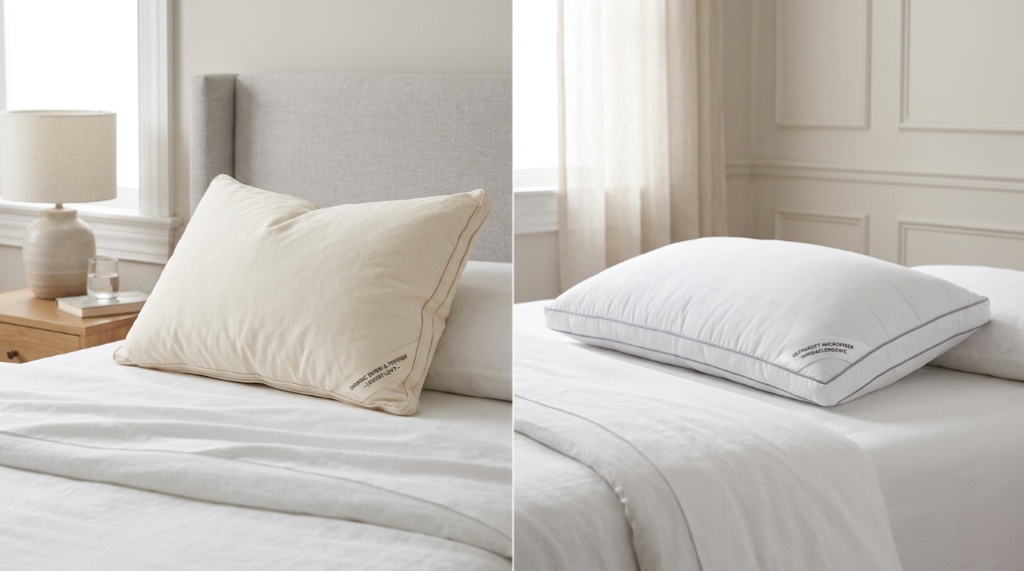
You’ve finally decided to invest in a truly great pillow, but now you’re staring at a wall of options, stuck on one fundamental question: natural or synthetic filling? It’s a decision that affects your sleep quality, your allergies, your budget, and how much maintenance you’re willing to put in. The answer isn’t simply “one is better,” but rather which one is better for you. This is especially true if you’re navigating the unique climate and lifestyle considerations. If you’re looking for a specific, high-end solution, understanding best goose down pillow in California involves weighing the benefits of natural breathability against the practicalities of care. Let’s break down the real differences between natural and synthetic fills so you can make a confident choice for a better night’s rest.
Quick Answer
Natural fillings (like goose down and feather) offer superior breathability, temperature regulation, and long-term durability, but they require more careful maintenance and come with a higher price tag. Synthetic fillings (like polyester and microfiber) are more affordable, hypoallergenic, and easier to care for, but they tend to clump, flatten, and retain heat over time. Your choice should be based on your sleep temperature, allergy sensitivities, budget, and willingness to perform routine fluffing and airing.
Key Takeaways
- Natural fillings excel in comfort and longevity but require regular airing and professional cleaning to maintain their loft.
- Synthetic fillings are the better choice for those with allergies or a limited budget, as they are inherently hypoallergenic and machine-washable.
- Your local climate matters; natural fills are better for temperature regulation, while synthetics may be warmer and less breathable.
- Durability is a key differentiator: a high-quality down pillow can last 10+ years, whereas a synthetic pillow typically needs replacing every 1-2 years.
The Core Difference: Natural vs. Synthetic Fills
The fundamental distinction lies in the source of the material. Natural fills come from animals—primarily geese and ducks—and are prized for their unique structural properties. Synthetic fills are man-made, typically from petroleum-based products like polyester, designed to mimic the feel of down but with different performance characteristics.
This difference in origin leads to significant differences in how the pillow feels, how it handles heat and moisture, and how it stands up to years of use. Understanding these core differences is the first step in making the right choice.
Natural Fillings: Down and Feather
Down is the soft, fluffy undercoating found beneath the outer feathers of geese and ducks. It consists of three-dimensional clusters that trap air, creating exceptional insulation and a plush, cloud-like feel. Feathers, on the other hand, are the outer layer with a stiff quill, providing more structure and support. Most pillows use a blend of the two to offer both softness and support.
The primary benefit of down is its breathability. The clusters allow air to circulate, wicking away moisture and preventing heat from getting trapped. This makes down pillows naturally cooler in the summer and warmer in the winter, a huge advantage for those who sleep hot. The loft—or height—of a down pillow is also more resilient; it can be fluffed back to its original shape for years, offering consistent support.
Synthetic Fillings: Polyester and Microfiber
Synthetic fills are engineered fibers designed to mimic the feel of down. They are made in a lab, which means they can be manufactured to be consistently hypoallergenic and free from the dust mites and allergens that can accumulate in natural fills. This makes them the go-to choice for allergy sufferers.
However, synthetic fibers are generally less breathable than down. They tend to trap body heat, which can make you feel sweaty and uncomfortable, especially in warmer climates. They also have a shorter lifespan. The fibers break down and lose their elasticity, leading to clumping and flattening that cannot be reversed. A synthetic pillow will inevitably lose its support and need to be replaced much sooner than a quality natural one, For your next outdoor adventure, check out our guide on how to choose between memory foam vs. inflatable camping pillow.
Comfort and Support: How They Feel
Comfort is subjective, but there are objective differences in how these fills respond to your head and neck. The choice here directly impacts your spinal alignment and sleep quality.
- Down: Offers a soft, “sink-in” feeling. It conforms to the shape of your head, providing a gentle cradle. While it feels luxurious, it may not offer enough support for side sleepers who need a firmer, higher loft to fill the space between the shoulder and ear.
- Feather: Provides a firmer, more supportive feel than pure down due to the presence of quills. This is often a good middle ground for back and stomach sleepers. The quills can sometimes poke through the fabric, which is a common complaint.
- Synthetic: Can be manufactured to mimic various levels of softness and firmness. However, it tends to have a more “spongy” or “foam-like” feel rather than the natural give of down. It offers consistent support initially but can develop hard lumps as the fibers break down.
Temperature Regulation and Breathability
This is often the deciding factor. If you frequently wake up feeling hot and sweaty, the breathability of your pillow is critical.
Down’s natural structure allows for excellent air circulation, making it a superior choice for temperature regulation. It actively helps to dissipate heat and moisture, keeping your head cool and dry. Synthetic fibers, being man-made, are not as effective at wicking moisture. They can trap heat against your skin, creating a warmer microclimate around your head. If you live in a warm climate or are a hot sleeper, this is a significant drawback of synthetic fills.
Care, Maintenance, and Hygiene

The care requirements for natural and synthetic pillows are vastly different. Your lifestyle and willingness to perform maintenance should strongly influence your decision.
Caring for Natural Down and Feather
Natural pillows require more attention to keep them fresh and performing well. They are not designed for frequent washing, as the down can become damaged and lose its loft.
- Daily Fluffing: You should fluff your down pillow every morning to redistribute the fill and maintain its shape.
- Regular Airing: Exposing the pillow to fresh air for a few hours each month helps to remove moisture and odors. The sun’s UV rays also help kill dust mites.
- Washing: Wash a down pillow only when necessary, ideally once or twice a year. It must be washed in a large-capacity machine on a gentle cycle with a mild detergent, then dried thoroughly on a low heat setting with dryer balls to break up clumps. Incomplete drying can lead to mildew.
- Professional Cleaning: For a deep clean, professional laundering is often the safest option to preserve the integrity of the down.
Caring for Synthetic Fills
Synthetic pillows are the champion of easy care. Their low cost and resilient fibers mean they can be treated much more casually.
- Machine Washable: You can typically wash synthetic pillows in your home washing machine with regular detergent. It’s generally recommended to wash them every few months.
- Easy Drying: They dry much faster than down, often in a standard dryer cycle on low or medium heat.
- No Special Treatment: You don’t need to worry about special detergents or dryer balls. If a synthetic pillow becomes too lumpy or flat, it’s often more cost-effective to simply replace it than to try and restore it.
Durability, Lifespan, and Cost
Your initial investment and long-term costs are important practical considerations. The “cheaper” option is not always the most economical in the long run.
| Feature | Natural (Down/Feather) | Synthetic (Polyester) |
|---|---|---|
| Initial Cost | High | Low |
| Lifespan | 10-15+ years with proper care | 1-3 years |
| Support Retention | Excellent; can be fluffed back to shape | Poor; fibers break down and clump |
| Maintenance | High (airing, fluffing, professional cleaning) | Low (machine washable) |
| Long-Term Value | Higher, despite the upfront cost | Lower, due to frequent replacement |
While a high-quality down pillow is a significant investment, its 10-year lifespan means the cost per year of use is often lower than buying a new synthetic pillow every year or two. The decision becomes a matter of upfront budget versus long-term value and comfort.
Allergies and Ethical Considerations
Two more factors often weigh heavily on the decision: allergies and personal values.
Allergies: The common misconception is that down is allergenic. The primary allergen is often dust mites, which thrive in the warm, humid environment of any pillow. However, down is a protein-based material that can also trigger sensitivities in some people. Synthetic fills are inherently hypoallergenic and less hospitable to dust mites, making them the safer, more straightforward choice for allergy sufferers. If you have severe allergies, synthetic is the clear winner.
Ethical Sourcing: For those concerned about animal welfare, the sourcing of down is a critical factor. Look for certifications like the Responsible Down Standard (RDS), which ensures that the down is sourced from birds that were not live-plucked or force-fed. This provides a humane alternative for those who prefer natural materials but want to ensure ethical practices. Synthetic fills, being entirely man-made, do not have this concern.
Frequently Asked Questions
Can I wash a down pillow in my home washing machine?
Yes, but it’s risky. You need a large-capacity, front-loading machine to allow the pillow to move freely. Use a gentle cycle with mild detergent specifically designed for down. The critical step is drying, which must be done on a low heat setting for several hours with dryer balls to ensure the down is completely dry and doesn’t clump or mildew.
Why does my synthetic pillow become lumpy?
Synthetic fibers are not as resilient as natural down. Over time, the polyester fibers break down, lose their elasticity, and clump together from the pressure of your head. This is a sign that the pillow’s support is degrading, and it’s usually time to replace it.
Is a firmer pillow better for neck pain?
It depends on your sleep position. Side sleepers generally need a firmer, higher-loft pillow to keep their spine aligned. Back sleepers often do well with a medium loft, while stomach sleepers typically need a soft, low-loft pillow. A feather pillow can offer adjustable firmness, while a solid down or synthetic pillow has a fixed loft.
What does “fill power” mean for down pillows?
Fill power measures the loft or fluffiness of down. It’s the number of cubic inches that one ounce of down occupies. Higher fill power (e.g., 700-800) means the down clusters are larger and provide more insulation and support with less weight. It’s a sign of higher quality and a more luxurious feel.
Are there any truly “cooling” synthetic pillows?
Yes, many brands now manufacture synthetic pillows with phase-change materials (PCMs) or gel-infused fibers designed to actively draw heat away from your head. While a standard synthetic pillow will trap heat, these specialized versions offer a viable alternative for hot sleepers who prefer not to use down.
Conclusion
Choosing between natural and synthetic pillow fillings is a personal decision that hinges on your priorities. If your main concerns are breathability, long-term durability, and a luxurious feel, and you’re willing to invest time and money in proper care, a natural down or feather pillow is an excellent choice. If your priorities are affordability, easy maintenance, and hypoallergenic properties, a synthetic pillow is a practical and effective option. By weighing the comfort, care, and durability of each, you can select the pillow that will provide you with the best possible sleep for years to come.