

Running a commercial kitchen or even a home kitchen with frequent frying can quickly become expensive. One of the biggest ongoing costs comes from cooking oil. Many restaurants and food businesses replace their frying oil far more often than necessary, throwing away gallons of perfectly usable oil simply because they don’t know better. This practice drains budgets and creates unnecessary environmental waste.
The solution lies in proper oil filtration. Modern deep fryers with built-in filtration systems can dramatically extend the life of your cooking oil. This technology transforms how you manage your kitchen operations, turning what seems like a fixed expense into an area where you can save substantial money. Understanding how filtration works and why it matters can revolutionize your approach to frying.
Understanding Why Cooking Oil Degrades
Before exploring solutions, it’s helpful to understand what happens to oil during the frying process. Fresh oil starts clear and clean, but it doesn’t stay that way for long. Each time you fry food, small particles break off and fall into the oil. These particles include breading, batter, food fragments, and moisture.
These contaminants don’t just float harmlessly in your oil. They continue cooking even after the food comes out. This ongoing cooking causes them to burn and char, creating dark particles that affect both oil quality and food taste. The burnt particles also accelerate oil breakdown through a process called oxidation.
Heat and exposure to air naturally degrade oil over time. However, the presence of food particles speeds up this degradation significantly. The particles act as catalysts, making the oil break down faster than it would from heat alone. This is why unfiltered oil develops that dark color and unpleasant smell much more quickly.
Additionally, moisture from food creates another problem. Water and oil don’t mix well, and when water droplets remain in hot oil, they cause splashing and promote faster breakdown. Removing both solid particles and moisture extends oil life considerably.
How Oil Filtration Systems Work
Oil filtration systems operate on a straightforward principle. They remove the contaminants that accelerate oil degradation, allowing you to use the same oil for much longer periods. Understanding the process helps you appreciate why this technology makes such a difference.
Most commercial filtration systems use a pump to circulate oil through a filter medium. This medium traps particles while allowing clean oil to flow back into the fryer. The process typically happens when the fryer isn’t actively cooking, though some advanced systems can filter during operation.
Different filtration methods exist, each with varying effectiveness. Paper filters are common and affordable. They catch particles down to a very small size, removing nearly all the contaminants that cause problems. These filters are disposable, making them hygienic and convenient.
Mesh filters offer a reusable option. While they don’t trap particles as small as paper filters, they still remove the larger debris that causes the most damage. These filters require regular cleaning but eliminate the ongoing cost of disposable filters.
Some systems use filter powder, which creates an even finer filtration layer. The powder coats the filter medium and catches extremely small particles. This method produces exceptionally clean oil but requires more labor to maintain.
Modern systems often include additional features like automatic scheduling. These cost saving kitchen appliances can filter oil at preset times, ensuring consistent maintenance without requiring staff to remember manual filtration.
The Financial Impact of Extended Oil Life
The numbers tell a compelling story. A typical restaurant might change its fryer oil every few days without filtration. With proper filtration, that same oil can last a week or even two weeks, depending on usage volume and food types.
Consider a restaurant that uses 50 pounds of oil per fryer and operates three fryers. Without filtration, they might go through this oil twice weekly, using 300 pounds per week. At current oil prices, this represents a significant weekly expense that adds up to thousands of dollars annually.
Now imagine cutting that consumption in half through filtration. The savings become immediately apparent. Even after accounting for the cost of filters and the initial equipment investment, the return on investment typically occurs within months.
Furthermore, extending oil life means less time spent on the messy, labor-intensive task of changing oil. Staff can focus on more productive activities rather than draining, cleaning, and refilling fryers. This labor savings adds to the financial benefits, though it’s harder to quantify.
The consistency in food quality also has financial implications. When oil stays fresher longer, your food tastes better consistently. This consistency keeps customers happy and coming back, protecting your revenue stream. Poor-quality oil produces off-flavors that customers notice, potentially damaging your reputation.
Environmental Benefits of Reducing Oil Consumption
Beyond the financial advantages, oil filtration provides substantial environmental benefits. Used cooking oil represents a significant waste stream in the food service industry. Millions of gallons get discarded annually, creating disposal challenges and environmental concerns.
When you reduce oil waste through filtration, you directly decrease your environmental footprint. Less oil consumption means less oil production, which in turn means reduced agricultural pressure. Most cooking oils come from crops like soybeans, corn, or palm, which require land, water, and energy to produce.
Transportation represents another environmental cost. Moving oil from fields to processing plants to distributors to your kitchen consumes fuel and generates emissions. Using less oil means reducing this entire supply chain impact.
Disposal creates its own environmental issues. While used cooking oil can be recycled into biodiesel or other products, this recycling requires energy and resources. Additionally, not all used oil gets recycled properly. Improper disposal can contaminate water supplies and harm ecosystems.
Some progressive businesses have found additional value in their environmental commitment. Customers increasingly care about sustainability, and promoting your efforts to reduce oil waste can enhance your brand image. This marketing advantage complements the direct cost savings.
Choosing the Right Filtration System
Not all filtration systems work equally well for every situation. Selecting the appropriate system depends on your specific needs, volume, and budget. Understanding your options helps you make an informed decision.
Built-in filtration systems integrate directly into the fryer. These automated systems offer maximum convenience. They filter oil on a schedule or with the push of a button, requiring minimal staff involvement. However, they typically cost more upfront and may require professional installation.
Portable filtration units provide flexibility. These systems work with multiple fryers and can be moved around the kitchen as needed. They cost less than built-in systems but require more manual labor. Staff must connect the unit, run the filtration cycle, and disconnect it afterward.
The size of your operation influences which system makes sense. A small restaurant with one or two fryers might do fine with a portable unit. A large operation with many fryers benefits more from built-in systems that handle the increased workload efficiently.
Consider filter media costs when evaluating systems. Paper filters need regular replacement, creating an ongoing expense. While mesh filters cost more initially, they can be cleaned and reused many times. Calculate the long-term costs of each option based on your usage patterns.
Look for systems with quality construction. A well-built filtration unit lasts many years, while a cheap unit might fail quickly. Stainless steel construction resists corrosion and handles the harsh kitchen environment better than other materials. Additionally, systems with good warranties indicate manufacturer confidence in durability.
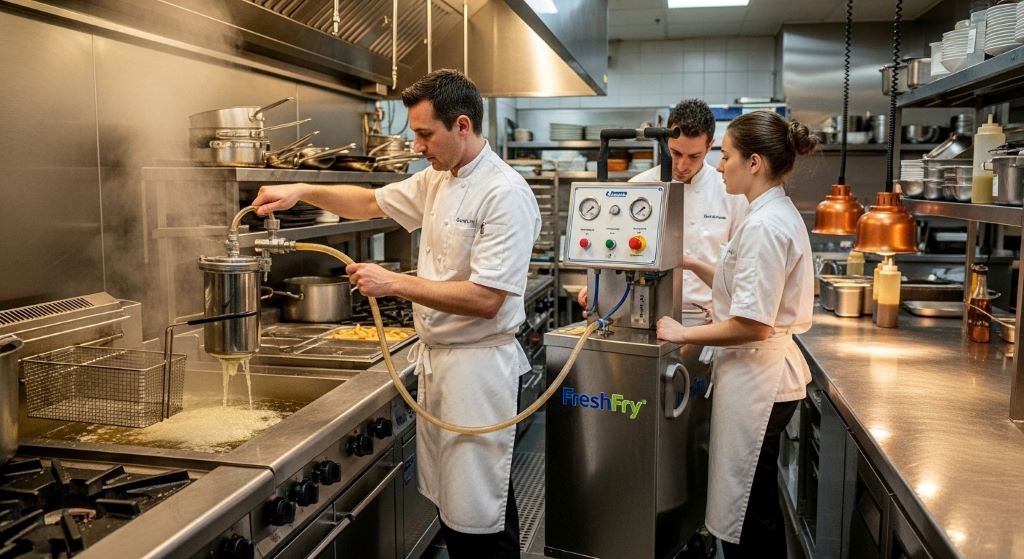
Best Practices for Oil Filtration
Having a filtration system means nothing if you don’t use it properly. Developing good filtration habits maximizes the benefits and ensures consistent results. These practices apply whether you’re running a commercial kitchen or using a home unit.
Filter your oil daily at minimum. Many operations filter multiple times per day, especially during busy periods. Frequent filtration removes particles before they have time to burn and cause damage. This regular maintenance keeps oil in peak condition.
Let the oil cool slightly before filtering, but not completely. Oil flows more easily when warm, making filtration faster and more thorough. However, extremely hot oil poses safety risks and can damage some filter media. A temperature around 300 degrees Fahrenheit works well for most systems.
Always inspect filters after use. The appearance of the debris on the filter tells you a lot about your oil condition. Heavy accumulation of dark, burnt particles indicates the oil is nearing the end of its useful life. Light-colored, minimal debris suggests the oil still has plenty of life remaining.
Replace or clean filters according to manufacturer recommendations. A clogged filter can’t remove contaminants effectively. Worse, a deteriorating filter might release particles back into the oil. Keep spare filters on hand so you’re never caught without clean ones.
Train all staff members on proper filtration procedures. Consistency matters, and everyone who works with the fryers should understand the process. Written procedures posted near the fryer help ensure everyone follows the same steps.
Signs Your Oil Needs Changing Despite Filtration
Even with excellent filtration, oil eventually reaches the end of its useful life. Knowing when to change oil prevents quality issues and ensures food safety. Several indicators tell you when it’s time for fresh oil.
Color provides the most obvious clue. Fresh oil is light and clear. As it ages, it darkens progressively. Properly filtered oil stays lighter longer, but eventually it will darken despite filtration. When oil becomes very dark brown or black, it needs replacement regardless of filtration.
Smell offers another important indicator. Fresh oil has a neutral or slightly pleasant aroma. Degraded oil develops a rancid or acrid smell. If you notice unpleasant odors coming from your fryer, the oil has probably exceeded its useful life.
Smoke point depression signals chemical breakdown. When fresh oil starts smoking at normal frying temperatures, it’s breaking down. This smoking means the oil has formed compounds that vaporize at lower temperatures than fresh oil. This change affects food quality and creates an unpleasant kitchen environment.
Foam formation indicates another problem. When oil forms excessive foam during frying, it contains too much degraded material or moisture. While filtration removes solid particles, it can’t reverse chemical changes. Persistent foaming means the oil needs replacement.
Food appearance gives you feedback about oil quality. If fried foods come out darker than usual or have an off taste, the oil is likely past its prime. Your customers’ experience matters most, so let food quality guide your oil change decisions.
Comparing Costs Between Filtered and Unfiltered Operations
Running the numbers makes the case for filtration clear. Let’s examine a realistic scenario comparing two similar operations, one with filtration and one without.
Restaurant A operates without filtration. They change their three fryers every three days, using 150 pounds of oil per change. Over a year, they consume approximately 18,000 pounds of oil. At typical commercial oil prices, this represents a substantial annual expense.
Restaurant B invested in filtration systems for their three fryers. They change oil every ten days instead of every three days. Their annual consumption drops to about 5,400 pounds. The difference of 12,600 pounds represents significant savings, easily justifying the cost of the filtration equipment and supplies.
These savings compound over time. The filtration equipment typically lasts many years with proper maintenance. After the initial investment period, the savings continue year after year. This creates a lasting improvement to the business’s bottom line.
Labor costs factor into the equation as well. Restaurant A’s staff spends considerably more time changing oil. This time adds up over weeks and months, representing hundreds of labor hours annually. Restaurant B’s staff has more time for customer service and food preparation.
The comparison becomes even more favorable when you consider that cost saving kitchen appliances like modern filtered fryers often include other beneficial features. Better temperature control, improved safety systems, and energy efficiency all contribute additional value beyond just oil savings.
Integration with Overall Kitchen Efficiency
Oil filtration doesn’t exist in isolation. It fits into a broader strategy for running an efficient, profitable kitchen. Understanding these connections helps you maximize the benefits across your entire operation.
Filtered oil maintains more consistent cooking temperatures. Clean oil transfers heat more effectively than oil filled with particles. This efficiency means shorter cooking times and more consistent results. Your kitchen can serve food faster during busy periods, improving customer satisfaction.
Better oil quality affects food waste too. When oil stays fresh longer, you throw away less food with off flavors. The subtle rancid taste from degraded oil can make otherwise perfectly cooked food unacceptable. Keeping oil fresh means more of your food meets quality standards.
Equipment maintenance benefits from filtration as well. The cleaner oil environment reduces carbon buildup inside fryers. This means less frequent deep cleaning and potentially longer equipment life. Your fryers will require less intensive maintenance over time.
Energy efficiency improves with better oil management. Degraded oil requires more energy to maintain temperature. Additionally, having to heat fresh oil more frequently uses considerable energy. By extending oil life, you reduce the energy needed to bring new oil up to temperature.
Staff satisfaction often improves with better systems. Nobody enjoys the hot, messy job of changing fryer oil. Reducing the frequency of this task makes the kitchen a more pleasant workplace. Happier staff means better retention and improved service quality.
Technology Advances in Oil Filtration
The field of oil filtration continues to evolve. New technologies make filtration more effective, more convenient, and more affordable. Staying informed about these advances helps you make better equipment decisions.
Automated systems have become increasingly sophisticated. Modern units can monitor oil quality using sensors and recommend filtration or oil changes based on actual conditions rather than just time intervals. This precision prevents premature oil disposal while ensuring consistent quality.
Some systems now feature oil quality testing built directly into the equipment. These sensors measure various indicators of oil degradation and provide real-time feedback. This data-driven approach takes the guesswork out of oil management, helping you optimize usage.
Improved filter media delivers better results with less waste. New materials capture smaller particles while maintaining faster flow rates. This means more thorough filtration in less time, reducing the impact on kitchen operations.
Energy-efficient pumps and heating systems reduce the operating costs of filtration equipment. These improvements make filtered systems even more economical to operate, enhancing the already attractive return on investment.
Mobile connectivity has entered the filtration space as well. Some premium systems can send alerts to managers’ phones, track usage patterns, and generate reports for analysis. This connectivity helps multi-location operations maintain consistency across all their kitchens.
Training Staff for Proper Oil Management
Equipment alone doesn’t guarantee success. Your staff must understand and follow proper procedures to achieve the full benefits of filtration. Effective training makes the difference between marginal improvement and transformative results.
Start with the why, not just the how. When staff understand that filtration saves money, improves food quality, and makes their jobs easier, they’re more likely to follow procedures consistently. Help them see how proper oil management benefits everyone.
Demonstrate the filtration process thoroughly. Have new staff members watch experienced workers perform filtration several times before trying it themselves. Then supervise their first few attempts to ensure they understand each step.
Create simple, visual guides for reference. Laminated instruction sheets near the fryer help staff remember the procedure even after initial training. Include safety reminders and troubleshooting tips on these guides.
Establish clear accountability. Assign responsibility for filtration to specific shifts or individuals. When someone knows they’re responsible, they’re more likely to ensure the task gets completed properly.
Regular refresher training maintains standards over time. As months pass, shortcuts and bad habits can creep in. Periodic reviews of proper procedures keep everyone aligned and maintain the quality of your oil management program.
Calculating Your Potential Savings
Before investing in filtration equipment, you naturally want to understand the potential return. Calculating your expected savings helps justify the investment and set realistic expectations.
Start by tracking your current oil usage. Document how often you change oil and how much you use with each change. Keep records for at least a month to account for variations in business volume. This baseline data provides the foundation for your calculations.
Research typical oil life extension for your type of operation. Most businesses see oil life double or triple with proper filtration. Conservative estimates suggest you’ll at least double your oil life, which means cutting your oil purchases roughly in half.
Calculate your current annual oil costs by multiplying your usage by current oil prices. Then project your costs with filtration by dividing your consumption by your expected life extension factor. The difference represents your annual savings potential.
Factor in the cost of filtration equipment and supplies. Get quotes for the systems you’re considering, and don’t forget ongoing costs like replacement filters. Divide the total equipment cost by your annual savings to determine your payback period.
Most operations recover their filtration investment within six to eighteen months. After that point, the savings flow directly to your bottom line. Over a typical equipment lifespan of seven to ten years, the cumulative savings can be substantial.
Making the Transition to Filtered Operations
Once you’ve decided to implement filtration, proper planning ensures a smooth transition. A thoughtful approach prevents disruptions and helps you realize benefits quickly.
Choose the right time to make the change. Avoid introducing new equipment during your busiest season when staff are already stressed. Pick a period with moderate business levels so staff have time to learn without pressure.
Clean your fryers thoroughly before implementing your new filtration system. Starting with clean equipment and fresh oil gives you the best baseline. This fresh start makes it easier to see the benefits of your new system.
Start filtering more frequently than you think necessary at first. This conservative approach prevents any quality issues while staff learn the system. You can adjust the frequency later based on actual results and experience.
Monitor results carefully during the first few weeks. Pay attention to oil appearance, food quality, and how long oil lasts before needing replacement. This data validates your investment and helps you fine-tune your procedures.
Communicate changes to your entire team. Everyone from cooks to managers should understand what’s changing and why. This transparency builds buy-in and ensures consistent execution across all shifts.
Conclusion
Oil filtration in deep fryers offers compelling benefits for any operation that relies on frying. The financial savings alone justify the investment, with most businesses recovering equipment costs within months. Beyond the immediate cost reduction, filtration provides consistency in food quality, reduces environmental impact, and improves overall kitchen efficiency.
The technology works by removing the contaminants that accelerate oil breakdown, allowing you to use oil far longer than would otherwise be possible. Modern systems range from simple portable units to sophisticated automated equipment, making solutions available for operations of any size. Choosing the right system depends on your specific needs and budget, but even basic filtration delivers substantial benefits.
Success requires more than just purchasing equipment. Proper training, consistent procedures, and regular monitoring ensure you capture the full value of your filtration investment. When implemented correctly, these systems transform one of your largest ongoing expenses into an area of significant savings. Furthermore, the environmental benefits of reducing oil waste align with growing consumer expectations for sustainable business practices.
Whether you’re running a large commercial kitchen or a smaller operation, oil filtration represents one of the most cost-effective improvements you can make. The combination of reduced expenses, improved food quality, and environmental responsibility makes filtration a smart choice for forward-thinking operations.
Frequently Asked Questions
How much money can filtration actually save on oil costs?
Most operations see their oil costs drop by 50 to 70 percent after implementing proper filtration. The exact savings depend on your current oil change frequency, the type of food you fry, and how consistently you filter. A restaurant spending $10,000 annually on oil might reduce that to $3,000 or $4,000, saving thousands of dollars each year.
Does filtered oil produce the same quality food as fresh oil?
Yes, properly filtered oil maintains excellent food quality throughout its extended life. Filtration removes the particles that cause off-flavors and dark colors. Many chefs actually prefer slightly used but well-filtered oil because it fries more consistently than brand new oil. The key is filtering regularly and still changing oil when it shows signs of degradation.
How often should I filter my fryer oil?
Most commercial operations should filter at least once daily, preferably at the end of each business day. High-volume operations or those frying breaded items might need to filter twice daily or more. The goal is to remove particles before they burn and damage the oil. More frequent filtration extends oil life further.
Can I use the same filtration system for different types of fryers?
Portable filtration systems work with most standard commercial fryers, making them versatile for operations with multiple units. However, built-in systems are specific to particular fryer models. When purchasing equipment, verify compatibility with your existing fryers. Many portable units include adapters for different fryer configurations.
What’s the difference between filtering and completely changing oil?
Filtration removes solid particles and some moisture but cannot reverse chemical breakdown of the oil itself. Even filtered oil eventually degrades from heat and oxidation. Think of filtration as maintenance that extends oil life, not a permanent solution. You’ll still need to change oil eventually, just far less frequently than without filtration.
Related Topics:
How to Choose the Best Small Rice Cooker for Daily Cooking
Keeping Kitchen Sparkling: Maintenance Tips and Tricks