

Insurance products tied to market performance offer growth potential but come with unique risks. When market conditions shift, policyholders may encounter unexpected adjustments to their contract values. Understanding these mechanisms helps investors make informed decisions about their financial futures. According to Press Permit, staying informed about investment adjustments is essential for protecting your portfolio during uncertain times.
Market value adjustments represent a critical feature in certain insurance contracts, particularly annuities and life insurance policies with cash value components. These adjustments directly reflect current market conditions and interest rate environments. When you withdraw funds or surrender your policy early, insurers apply calculations based on prevailing rates compared to when you purchased the contract.
Understanding Market Value Adjustments in Insurance
Insurance companies use market value adjustments to manage financial risk and maintain stability. These adjustments protect both the insurer and other policyholders from losses caused by early withdrawals. Additionally, they help insurance companies balance their investment portfolios during turbulent market periods.
The mechanism works through interest rate sensitivity. When rates rise, bond values typically fall. Similarly, when rates decline, bond values increase. Insurance companies invest heavily in bonds to back their policy obligations. Therefore, why do insurance companies have market value adjustments? They need to reconcile the difference between the guaranteed rate in your contract and current market rates.
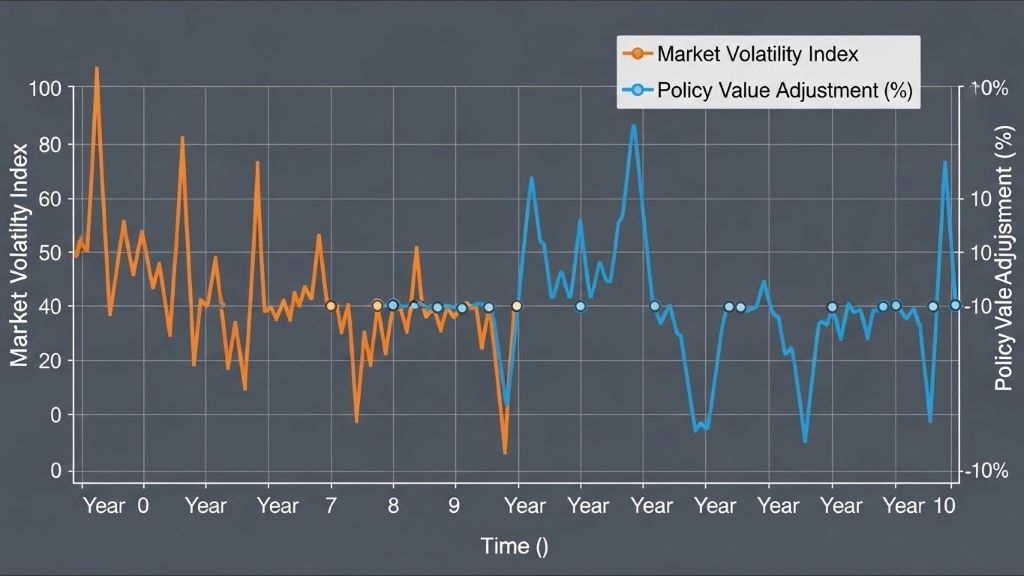
Market volatility amplifies the impact of these adjustments. During periods of rapid interest rate changes, the spread between contract rates and current rates widens. Consequently, policyholders face larger adjustments when accessing their funds early. However, understanding this relationship empowers investors to time their withdrawals strategically.
How Market Volatility Affects MVA Calculations
Economic uncertainty creates ripple effects throughout financial markets. Insurance companies must respond to these changes to maintain solvency and meet regulatory requirements. Market value adjustments serve as the primary tool for this response, particularly for fixed-indexed and variable products.
Interest rate fluctuations drive most MVA changes. The Federal Reserve adjusts rates based on economic conditions, inflation targets, and employment data. According to Forbes, market volatility often increases during periods of economic transition or geopolitical uncertainty. These rate movements directly influence the adjustments applied to insurance contracts.
Furthermore, bond market dynamics play a crucial role. Insurance companies hold substantial bond portfolios to generate steady returns and fund policy benefits. When market rates change, the value of existing bonds adjusts inversely. This relationship means rising rates decrease bond values, while falling rates increase them.
The calculation methodology considers several factors. Insurers examine the original guaranteed rate in your contract. Then they compare it to current market rates for similar investments. The difference between these rates, multiplied by the time remaining in your surrender period, determines the adjustment amount.
Types of Insurance Products with MVAs
Not all insurance products include market value adjustments. Understanding which contracts contain these provisions helps you evaluate your investment options more effectively. Fixed-indexed annuities commonly feature MVAs, providing insurers flexibility while offering downside protection to policyholders.
Traditional fixed annuities may include MVA provisions depending on the contract terms. These products guarantee a specific interest rate for a set period. However, early withdrawal triggers the adjustment calculation. Variable annuities typically avoid MVAs since their values fluctuate with underlying investment performance anyway.
Certain permanent life insurance policies incorporate similar mechanisms. Universal life and indexed universal life contracts sometimes include surrender charges that function like MVAs. These charges protect the insurance company’s long-term investment strategy while maintaining policy sustainability.
The presence of an MVA affects product pricing and features. Contracts with MVA provisions often offer higher guaranteed rates compared to those without. Therefore, insurers can afford better terms knowing they have protection against early withdrawals during unfavorable market conditions.
Positive and Negative MVA Scenarios
Market value adjustments can work in your favor or against you depending on market movements. Understanding both scenarios helps you plan withdrawals strategically and maximize your contract value. Interest rate trends determine whether you experience a bonus or penalty.
When interest rates fall below your guaranteed contract rate, you benefit from a positive MVA. The insurance company essentially pays you a premium for the higher rate locked in your contract. This scenario occurs during economic downturns when central banks lower rates to stimulate growth. Consequently, your withdrawal value exceeds the basic contract value.
Conversely, rising interest rates create negative MVAs. Your guaranteed rate becomes less attractive compared to current market rates. The insurer deducts an amount reflecting this difference from your withdrawal. This situation typically emerges during economic expansion or when inflation concerns prompt rate increases.
The magnitude of these adjustments varies based on several factors. Longer remaining surrender periods amplify the adjustment size. Additionally, larger rate differences between contract and market rates increase the impact. Market volatility accelerates these changes, sometimes creating substantial adjustments within short timeframes.
Strategies to Minimize MVA Impact
Smart planning reduces the financial impact of market value adjustments on your insurance contracts. Several approaches help you navigate these provisions while maintaining access to your funds when needed. Timing plays a crucial role in optimizing your outcomes.
First, consider holding contracts until surrender periods expire. Most MVA provisions only apply during the initial contract years. After this period ends, you can access funds without adjustment penalties. Therefore, patience often proves the most cost-effective strategy.
Additionally, take advantage of penalty-free withdrawal provisions. Many contracts allow annual withdrawals of 10% without triggering MVAs. This feature provides liquidity while preserving the bulk of your investment. Systematic withdrawals within these limits satisfy income needs without incurring adjustments.
Monitor interest rate trends and economic indicators. When rates appear likely to rise, consider accelerating withdrawals if needed. Conversely, declining rate environments favor delaying non-essential withdrawals. However, avoid making decisions based solely on short-term market movements.
Diversification across multiple contracts provides flexibility. Staggering surrender periods creates regular opportunities for penalty-free access. This approach reduces concentration risk while maintaining liquidity options throughout different market cycles.
Regulatory Framework and Consumer Protections
Insurance regulations require clear disclosure of market value adjustment provisions. State insurance departments mandate that companies explain these features in policy documents. Furthermore, agents must discuss MVAs during the sales process to ensure informed consumer decisions.
The National Association of Insurance Commissioners provides model regulations that many states adopt. These standards ensure consistency in how insurers calculate and apply MVAs. Additionally, they protect consumers from arbitrary or excessive adjustments that could unfairly diminish contract values.
Transparency requirements have improved significantly over recent years. Insurance companies must provide illustrations showing potential positive and negative MVAs under various scenarios. These projections help consumers understand the range of possible outcomes based on different interest rate environments.
Consumer advocacy groups emphasize the importance of understanding contract terms before purchasing. According to CNBC, reviewing surrender schedules and MVA provisions prevents surprises when you need to access funds. Therefore, careful analysis during the buying process pays dividends later.
Conclusion
Market volatility significantly influences insurance market value adjustments, affecting contract values when policyholders withdraw funds early. Insurance companies implement MVAs to manage risk and protect their investment portfolios during changing interest rate environments. Understanding how these adjustments work empowers consumers to make strategic decisions about their insurance-based investments.
Interest rate movements drive MVA calculations, creating either bonuses or penalties depending on market conditions. While these adjustments may seem complex, they serve important purposes for both insurers and policyholders. By recognizing which products include MVAs and planning withdrawals strategically, investors can minimize negative impacts and potentially benefit from favorable market conditions.
Ultimately, education and careful planning prove essential when navigating insurance products with market value adjustments. Consulting financial professionals and thoroughly reviewing contract terms before purchase helps ensure these products align with your financial goals and liquidity needs.
Frequently Asked Questions
What is a market value adjustment in insurance?
A market value adjustment is a provision in certain insurance contracts that adjusts the cash value when you withdraw funds or surrender the policy early. It reflects the difference between interest rates at purchase and current market rates.
Can MVAs ever increase my policy value?
Yes, when interest rates fall below your guaranteed contract rate, you receive a positive MVA. This bonus increases your withdrawal amount above the basic contract value, rewarding you for holding a higher-rate contract.
How long do MVA provisions typically last?
MVA provisions generally apply during the surrender charge period, which typically ranges from 5 to 10 years. After this period expires, you can usually access funds without market value adjustments.
Do all annuities have market value adjustments?
No, not all annuities include MVAs. Fixed-indexed annuities commonly feature them, while many variable annuities do not. Always review your specific contract to understand whether MVA provisions apply.
How can I avoid negative MVAs on my insurance policy?
You can minimize negative MVAs by waiting until the surrender period ends, using penalty-free withdrawal provisions, or timing withdrawals during falling interest rate environments. Planning ahead significantly reduces potential penalties.
Related Topics:
How to Recover Professionally After a Layoff: A Complete Guide
What Is the Stock Market? A Beginner’s Crash Course