
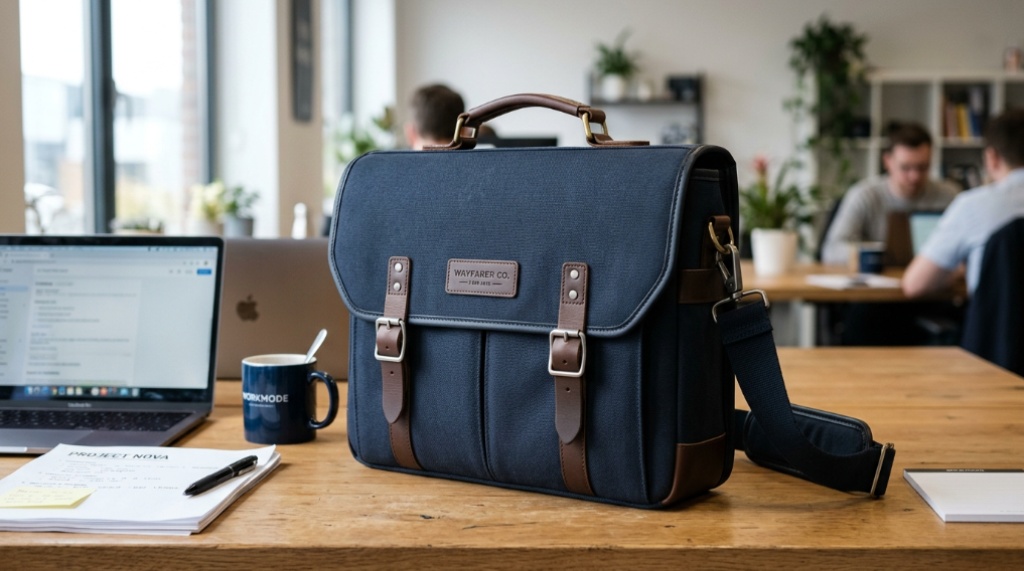
A stack of signed contracts, a laptop, a folder of tax documents, and a passport — that is a typical Tuesday for many consultants, attorneys, and sales directors. Drop that load into a soft tote and you get bent corners, creased pages, and a slow shuffle at the client’s desk. Structured bags solve that specific problem, and for anyone who regularly moves paperwork between offices, courts, and client sites, a genuine leather attache case for professionals in georgia is a practical reference point for what a well-built, rigid-frame bag actually looks like. This article explains why structure matters, where it falls short, and how to decide whether a structured bag fits the way you work.
Quick Answer
Structured bags work well for business documents because a rigid frame and reinforced panels hold their shape, so papers stay flat and edges stay uncrushed instead of folding around whatever else is in the bag. The trade-off is weight and reduced flexibility: a hard-sided or semi-rigid case carries less casual gear and takes up more space when empty. If your priority is protecting documents and presenting a professional appearance, structure wins. If you need to squeeze a gym kit or a bulky camera into the same bag, a soft-sided option is usually more practical.
Key Takeaways
- Structure protects documents physically — flat panels prevent bending, creasing, and corner damage that soft bags allow.
- Rigid frames also keep the bag upright and open, which speeds up access during meetings and check-ins.
- The main costs are weight, bulk, and reduced capacity for irregular items.
- Semi-structured bags (reinforced panels, soft sides) often hit a better balance than fully hard cases for daily commuting.
- Match the bag to your document format — A4, US Letter, and legal-size folders each need different interior dimensions.
What “Structured” Actually Means in a Bag
A structured bag is one that holds its own shape whether it is empty or full. That shape comes from a combination of materials and construction methods, not from the leather alone.
Three elements usually define the category:
- Frame or stiffener: A rigid insert — often board, high-density foam, or a wire frame — runs along the base, sides, and sometimes the lid.
- Reinforced panels: The front, back, and base are laminated or backed so they resist bending under pressure.
- Recessed or gusseted construction: The sides fold in a controlled way, so the bag expands and contracts without collapsing.
A soft leather briefcase can look similar from the outside but behave very differently. Press down on the top of a structured case and it barely moves. Press down on a soft one and the whole shape sags.
Why leather is often the outer material of choice
Full-grain and top-grain leather hold shape better than most fabrics because the material itself has some body. Leather also resists the scuffing and sagging that nylon and canvas develop over years of daily use. That is why structured cases and leather are so often paired — the material reinforces the design intent rather than fighting it.

How Structure Protects Documents in Practice
The protection is physical and fairly easy to reason about. Documents fail in three ways inside a bag: bending, abrasion, and compression.
Bending and creasing
Paper has almost no memory for flatness once it bends. A single fold across a contract page leaves a visible line that never fully disappears. In a soft bag, the contents shift and the bag itself folds around them, so any thin stack of paper ends up curved along its length. A rigid back panel keeps the stack flat against a plane.
Abrasion at the edges
Corner wear is the most common damage to documents in transit. When paper slides against a soft lining, the corners fray. Structured cases typically hold documents in place with a fixed sleeve or a low-friction lining that stops the sliding in the first place.
Compression from other contents
This is where structure matters most. A soft bag with a laptop, a water bottle, and a folder will press all three against each other. Over a commute, that pressure creases the folder. A structured case separates the document compartment from the rest of the load, usually with a dedicated section that does not deform when the bag is full, Check out our guide on choose a quiet golf cart bag for arizona for more storage tips.
Structured vs Soft-Sided Bags: A Direct Comparison
Neither design is universally better. The right choice depends on what you carry and how you move.
| Factor | Structured bag | Soft-sided bag |
|---|---|---|
| Document protection | High — flat panels prevent bending and creasing | Low to moderate — contents shift and fold |
| Shape retention when empty | Holds shape indefinitely | Collapses, creases, and can look worn |
| Weight (empty) | Heavier due to frame and stiffeners | Lighter |
| Capacity for irregular items | Limited — fixed internal geometry | High — expands around bulky objects |
| Access speed | Fast — bag stays open and upright | Slower — contents settle and need rearranging |
| Storage when not in use | Takes up shelf space | Folds flat |
| Professional appearance | Crisp and consistent | Depends on how well it is packed |
The pattern is clear: structure buys protection and presentation at the cost of weight and flexibility. If your bag is essentially a document and laptop carrier, that trade is usually worth it. If it doubles as a general-purpose bag, the rigidity becomes a liability.
When a Structured Bag Is the Wrong Choice
Structured bags get recommended so often that the limitations rarely get mentioned. They matter.
- You carry bulky, irregular items. A camera body, a pair of shoes, or a folded jacket will not fit comfortably in a fixed-geometry case. Forcing them in damages the lining and distorts the frame.
- You walk or cycle long distances. The added weight of a rigid frame becomes noticeable over a few kilometres, especially on one shoulder.
- You travel frequently by air. Structured cases are harder to compress into overhead bins and take up more of a carry-on allowance.
- You need one bag for everything. If the same bag has to handle documents, gym clothes, and a laptop charger, a semi-structured design is more forgiving.
A semi-structured bag — reinforced base and back panel, softer sides — is the compromise most people actually want. It protects documents adequately without turning the bag into a rigid box.
What to Check Before Buying
Most buying mistakes come from ignoring interior dimensions. A bag described as “fits A4” may still not fit an A4 ring binder, and a legal-size folder is longer than most people assume.
Measure your actual documents first
Take the largest item you regularly carry — usually a folder, binder, or laptop sleeve — and measure its length, width, and thickness. Then compare against the bag’s internal dimensions, not the external ones. Manufacturers often list external size, which includes the frame and can be 2–4 cm larger than the usable interior.
Check the document compartment separately
A good structured case has a dedicated section for documents, distinct from the laptop sleeve and the general compartment. If the only flat area is the back wall of the main compartment, documents will press against whatever else is inside.
Look at how the lid closes
Zippered lids are more secure but slower to open. Flap-and-lock designs are faster for meetings but leave a small gap at the edges. Neither is wrong; it depends on whether you open the bag in front of clients or only at your desk.
Consider the base
The base takes the most abuse — it rests on floors, car seats, and café tiles. A reinforced or studded base extends the life of the bag considerably and keeps the bag standing upright when you set it down.
Practical Care for a Structured Leather Case
Rigid bags hold their shape, but leather still needs attention. Three habits make the biggest difference.
- Do not overfill. Excess pressure is the fastest way to distort a frame and stretch the lid. If the bag will not close without force, remove something.
- Store it upright, empty. Stuffing the bag with paper or a shaped insert helps the leather keep its form during long periods of storage.
- Condition the leather periodically. Dry leather cracks at the flex points — usually the hinge of the lid and the base corners. A light application of leather conditioner a few times a year prevents that.
Keep the case away from prolonged direct heat, such as a car dashboard in summer. Heat softens the leather and can weaken the adhesives used in the frame over time.
Frequently Asked Questions
Are structured bags heavier than soft bags?
Yes, generally. The frame and stiffeners add weight even when the bag is empty. The difference is usually modest for a briefcase-sized case but becomes significant in larger designs.
Can a structured bag hold a laptop as well as documents?
Most modern structured cases include a padded laptop sleeve alongside the document compartment. Check that the sleeve is padded on both sides — a single-sided sleeve offers little protection against pressure from the document side.
Does genuine leather matter for structure?
Leather helps because it has natural body and resists sagging better than most fabrics, but the frame does most of the work. A well-framed synthetic bag can be structured too; it simply tends to show wear faster at the flex points.
How do I know if a bag is truly structured?
Press down firmly on the top edge and the front panel. A structured bag resists compression noticeably. If the whole shape gives way, it is soft-sided regardless of how it is marketed.
Is a structured bag suitable for daily commuting?
It is suitable if your commute is mostly seated or short. For long walks or cycling, the weight and rigidity make a semi-structured or soft bag more comfortable.
What size should I choose?
Measure your largest regular document or folder and add roughly 1–2 cm of clearance on each side. Anything tighter makes the bag hard to load; anything larger lets the contents slide.
Conclusion
Structured bags work well for business documents because they solve a specific physical problem: paper bends, creases, and frays when it is not held flat. A rigid frame, reinforced panels, and a dedicated document compartment prevent that, and they keep the bag looking presentable through years of daily use. The cost is weight and reduced flexibility, which is why semi-structured designs suit many people better. Measure your documents, check the internal dimensions, and choose the level of rigidity that matches how you actually travel.