

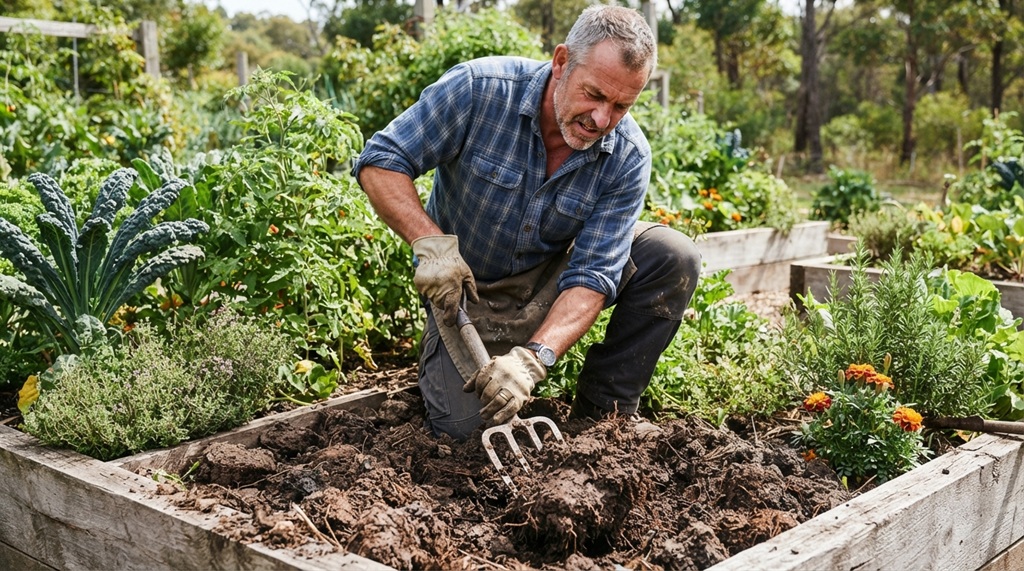
Picture this: you’re kneeling in your Washington garden, the soil is damp from morning mist, and you reach for your hand fork only to watch it bend like a cheap spoon. Frustrating, right? The Pacific Northwest’s heavy clay, rocky glacial till, and relentless root systems demand a tool that can take a beating. You don’t just need any tool; you need the best garden hand fork wa residents actually trust for their unique soil conditions. This guide breaks down exactly what to look for, which materials survive our wet winters, and how to match a fork to your specific gardening style so you never waste money on a flimsy disappointment again.
What Makes a Hand Fork Different from Other Garden Tools?
A hand fork is a compact, three-pronged tool designed for working in tight spaces. Unlike a trowel, which digs and scoops, a hand fork excels at loosening soil, teasing out weeds, and aerating around established plants. Its prongs allow you to penetrate packed earth without cutting through roots you want to keep.
The Anatomy of a Quality Hand Fork
Every hand fork has three critical components: the handle, the shank (the metal connector), and the prongs. A well-designed fork distributes pressure from your grip down through the shank into the soil. If any part is weak, the entire tool fails. Look for a solid one-piece construction where the shank runs deep inside the handle, not just a cheap weld.
Why Your Standard Trowel Just Isn’t Enough
In Washington’s dense soils, a trowel often struggles to break the surface. A hand fork’s narrower profile creates less resistance, making it easier to work in raised beds and containers. It is also superior for removing shallow-rooted weeds like chickweed or bittercress, which are notorious in western WA gardens.
Three-Prong vs. Four-Prong Designs
Three-prong forks are the standard, offering a good balance between penetration and soil disturbance. Four-prong forks are less common but provide better surface area for raking mulch. For heavy clay, stick with three prongs for less friction. For fluffy, amended beds, a four-prong version can speed up work.
Why Washington Soil Demands Heavy-Duty Hand Forks
Washington’s contrasting landscapes present a brutal test for standard garden tools, dividing the state between the wet, acidic clay west of the Cascades and the dense, rocky silt to the east. Off-the-shelf budget forks frequently bend or rust when subjected to these relentless freeze-thaw cycles, high annual rainfall, and abrasive soils, making forged metallurgy and weather-sealed handles absolute necessities for local gardeners. Beyond routine bed maintenance, using the right tool becomes especially critical when working along property edges much like how property owners must address hidden ground settlement through a miami gardens foundation inspection failure reasons, excavating dense earth near home structures requires precision equipment that can break through compacted soil without disrupting surrounding foundation stability.
Understanding the Cascade Divide in Soil Types
West of the Cascades, you face heavy clay and decomposing organic matter, which can corrode low-grade steel quickly. East of the mountains, you encounter sandy loam and basalt rocks that can snap brittle prongs. The best garden hand fork wa choices must account for both extremes, favoring corrosion-resistant steel and robust tines.
How Rain and Moisture Affect Metal and Wood
Continuous moisture is the enemy of cheap tools. If a fork has a painted head, a single scratch invites rust. Ash handles left in damp soil will rot within a season. Washington gardeners need stainless steel heads or epoxy-coated finishes, along with handles sealed with linseed oil or made from fiberglass, to avoid premature failure.
The Impact of Freeze-Thaw Cycles on Tool Durability
Winter temperatures cause soil to expand and contract violently. This creates immense lateral pressure on any tool left in the ground. A high-carbon steel fork will flex and survive, while a cast-metal fork will fracture. Always look for “drop-forged” or “heat-treated” stamps, which indicate the metal can withstand the stress.
What Materials Should You Look for in a Premium Fork?
The material of both the head and the handle dictates 90% of the fork’s lifespan. Never buy a fork without knowing exactly what metal was used. The best options are boron steel, stainless steel, or hardened carbon steel.
Stainless Steel vs. Carbon Steel: Which Is Superior?
Stainless steel is the best choice for Washington’s wet climate because it resists rust almost entirely. However, it can be slightly softer than carbon steel. High-carbon steel is stronger and holds a sharper edge, but it will rust if you don’t clean it meticulously. For low-maintenance reliability, choose 420-grade stainless steel.
Handle Materials: Wood, Fiberglass, or Aluminum?
Wooden handles (typically ash) feel great in the hand and absorb shock, but require oiling. Fiberglass is impervious to rot and weather but can be slippery when wet. Aluminum is lightweight and durable but conducts cold. For WA, we recommend either sealed hardwood or a textured fiberglass handle.
Why “Forged” Construction Matters for Longevity
Forged heads are created by heating and shaping solid metal, which aligns the grain structure and eliminates weak points. Stamped heads are cut from sheets of metal and bent into shape, leaving them prone to bending at the neck. Always verify that the fork is “drop-forged” for serious, long-term use.
How Do Ergonomic Designs Reduce Wrist Strain?
Repetitive weeding causes carpal tunnel and tendinitis. Ergonomic handles are angled to keep your wrist straight while you pull. Look for a fork with a “D” handle or a cushioned grip that fits the natural curve of your palm. This reduces fatigue significantly during long spring cleanups.
Straight Handles vs. Angled Handles
Standard straight handles force your wrist to bend at an awkward angle. Angled handles (often bent at 14 degrees) allow you to work with a straight wrist, transferring force from your arm rather than your joints. This design is critical for gardeners with arthritis or existing wrist pain.
The Role of Grip Diameter in Comfort
Larger grips are easier on your hands but harder to control for precision tasks. Smaller grips offer control but cause cramping. Test the diameter: your fingers should overlap slightly, not stretch. Rubberized grips with a slight tackiness are excellent in wet WA weather.
Weight Distribution and Balance
A well-balanced fork should feel heavy in the head and light in the handle. If a fork feels “handle-heavy,” it means the tool is unbalanced and will cause your arm to tire. Hold it by the end of the handle; it should pivot naturally without falling to either side.
Which Hand Fork Size Is Right for Your Gardening Style?
Size isn’t one-size-fits-all. A compact border fork (around 10 inches long) is perfect for raised beds and containers. A full-sized hand fork (up to 14 inches) gives you more leverage for breaking up ground plots. Match the size to where you work most often.
Compact Forks for Raised Beds and Containers
Raised beds have loose, fluffy soil, so you don’t need a long blade. A shorter fork (8–10 inches) allows for easier maneuverability between plants without disturbing root systems. They are also lighter, making them ideal for quick daily weeding sessions.
Long-Handled Forks for Ground-Level Work
If you are working directly on the ground, kneeling can be tough on your knees. A longer fork (14–16 inches) allows you to reach farther without shifting your body weight. This reduces the number of times you need to stand up and reposition your kneeler.
Weighing Portability vs. Leverage
Short forks are easier to carry in an apron pocket. Long forks offer more torque due to the extended moment arm. If you have rocky soil, the extra length helps you pry out stones with less effort. For tool belts, keep it short.
How to Test the Sturdiness of a Hand Fork Before Buying?
You cannot test a fork in the store without clumps of dirt, but you can test the “flex test.” Hold the handle in one hand and push the prongs against your thumb. If the prongs flex significantly, they are too soft. If they are rock solid, they will likely resist bending.
Listening for the “Ring” of Good Steel
Tap the metal head of the fork with your knuckle. High-carbon steel produces a clear, high-pitched ring that lingers. Lower-grade steel produces a dull thud. This is an old trick used by master gardeners to assess metal quality without any equipment.
Checking the Ferrule Connection
The ferrule is the metal ring where the head attaches to the handle. This is the weakest point on most forks. Squeeze it hard. Check for gaps or movement. Indoors, the head should be welded or riveted, not just glued. A loose ferrule will ruin the tool within weeks.
Are Stainless Steel Forks Worth the Higher Price in WA?
Absolutely, if you value your time and money over the long term. While a stainless fork may cost $30 versus $12 for a carbon steel option, it will last 10–15 years in wet WA conditions, whereas the cheaper one might rust out in 2 years.
Calculating Cost-per-Year of Use
Let’s do the math. A $12 cheap fork lasts 2 years (so $6/year). A $35 stainless fork lasts 12 years ($2.91/year). The stainless steel option is actually cheaper over time. Additionally, you avoid the frustration of replacing a tool in the middle of spring planting.
Maintenance Requirements of Each Type
Stainless steel requires zero maintenance regarding rust prevention. Just rinse and dry. Carbon steel needs wiping down after every use, oiling monthly, and immediate rust spot treatment. If you don’t have a dry shed, stainless is the only logical answer.
Which Brands Consistently Earn Top Reviews from WA Gardeners?
Several brands have built solid reputations in the Pacific Northwest. Sneeboer, DeWit, and Hound Dog are often cited in local gardening forums. These companies use specific heat treatments and ergonomic handles that cater to the serious gardener.
Sneeboer and DeWit: The Dutch Standard
Dutch brands like Sneeboer and DeWit are forged from a single piece of boron steel. They are incredibly sharp and durable, designed for the wet, heavy soils of the Netherlands, which are remarkably similar to western Washington. These are professional-grade tools.
Budget-Friendly Alternatives That Actually Work
If you are not ready to invest $50+ in a fork, look at brands like Flexrake or Ames, but only their “solid forged” lines (avoid their stamped heads). These usually cost between $15–$20 and offer decent performance for light-duty tasks.
The “Buy It Once” Philosophy
The cultural shift toward sustainability and reducing waste favors buying a premium tool that lasts forever. A high-quality fork can become a family heirloom. Ask yourself: do you want to buy a new fork every spring, or buy once and never think about it again? For a deep dive into specific models, check out this resource on the best garden hand fork wa selection.
How to Maintain Your Hand Fork for Years of Service
Maintenance is simple but requires consistency. After each use, knock off the soil and rinse the head. Do not leave it outside overnight, as morning dew will initiate the rusting process. Store it dry and out of direct sunlight.
Cleaning and Sharpening Your Prongs
Sharp pruning is essential for cutting through roots. Use a flat file to sharpen the inside edge of the prongs once a month. Keep the edges at a 45-degree angle. And always remove sap with rubbing alcohol to prevent sticky buildup.
Seasonal Storage Strategies for Winter
Before putting your fork away for winter, wash it, dry it, and apply a light coat of linseed oil to wooden handles or WD-40 to metal heads. Hang it vertically. Do not let it sit in a bucket of water or on the ground in the shed.
Can a Hand Fork Replace a Trowel for Planting Bulbs?
Sometimes, yes. For small bulbs like crocus or scilla, a hand fork is perfect for loosening soil to the correct depth. However, for large bulbs like daffodils, you still need a trowel to widen the hole. Use the fork to loosen and the trowel to displace.
Best Practices for Aerating Compacted Soil
Insert the fork into the soil, pull back gently to create a crack, and move to the next spot. This introduces oxygen to the root zone without churning up the soil layers. This is called “no-till” cultivation and is highly recommended for WA clay.
Where Can You Buy a High-Quality Hand Fork Locally?
Skip the big-box hardware stores where tools are often made of the cheapest imported steel. Visit independent garden centers like Swansons Nursery in Seattle or Skagit Valley Gardens. The smaller shops typically carry the premium European brands that you won’t find at Home Depot.
Supporting Local Nurseries vs. Online Retailers
Local nurseries allow you to physically feel the weight of the fork before buying. Online retailers offer more variety and better prices but require trusting photos. If you shop online, look for stores with a “tool guarantee” policy, as they value long-term customers.
Frequently Asked Questions
What is the best material for a garden hand fork?
High-carbon steel or boron steel is the best material for the head of a hand fork because it holds a sharp edge and resists bending. Stainless steel is the second-best option, offering higher resistance to rusting with a slight trade-off in edge retention.
How long should a garden hand fork last?
With proper care, a high-quality forged hand fork can last 10 to 15 years. Cheaper stamped models typically last 1 to 3 years before bending or rusting through. The lifespan depends heavily on the soil type and maintenance routine.
Can I use a hand fork in rocky soil?
Yes, you can, but you must choose a fork with thicker prongs and a forged construction. Thin prongs will snap or bend outward permanently when they hit stones. Look for a fork specifically rated for “heavy soil” or “rocky” conditions.
Is a stainless steel hand fork better than a carbon steel one?
For wet climates like Washington, stainless steel is better because it does not rust. For dry climates, carbon steel might be better as it gets sharper. Since WA is wet, prioritize stainless or a coated carbon steel.
What length should a hand fork be?
Hand forks for bed work usually range from 9 to 12 inches in overall length. A longer handle is better for leverage and ground beds, while a shorter handle is better for containers and precision work.
Why do my hand fork handles keep breaking?
Handles break because of “lever stress” at the insertion point. This happens when you pull back on the handle while the prongs are stuck. Prevent this by loosening the soil forward before pulling back, and always purchase forks with a deep shank (metal going up into the handle).
Conclusion
Choosing the right hand fork in Washington isn’t about the flashiest color or the lowest price; it’s about matching the metal, handle, and size to our unique environmental demands. You need something that resists rust in the west, handles rocks in the east, and keeps your wrist pain-free regardless of your gardening style.
Don’t settle for a warped, squeaky tool that leaves you frustrated. Take the time to invest in a drop-forged head with a sturdy, ergonomic handle. The right tool will make weeding feel less like a chore and more like a satisfying connection to your land. Head to your local nursery today, use the “knuckle tap” test, and feel the weight of the tool in your hand. Your garden and your aching back will thank you for decades to come.