

If your leash fails during a heavy set, your session can end instantly. Worse, a snapped leash can send your board into other surfers, rocks, or the shoreline. The best performance leash for shortboards is designed to stay lightweight, reduce drag, and survive aggressive surfing without limiting movement. For shortboard riders, the right leash is not just a backup cord. It is critical surfing equipment.
What Is the Best Performance Leash for Shortboards?
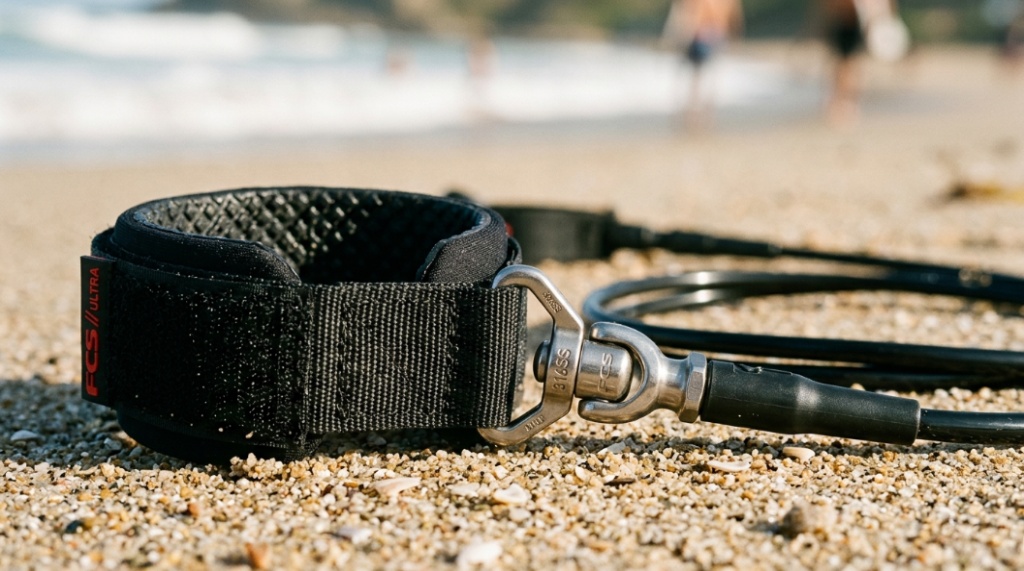
A performance leash for shortboards is a lightweight surfboard leash built for speed, responsiveness, and reduced drag in small-to-medium waves. It typically uses a thinner cord diameter, flexible urethane, and a low-profile cuff to improve maneuverability during progressive surfing.
Unlike bulky big-wave leashes, performance leashes focus on freedom of movement. They are ideal for shortboard surfing gear setups where responsiveness matters more than maximum strength.
Most high-level surfers choose:
- 5’6” to 6’6” leash length for shortboards
- 5mm–6mm cord thickness
- Double swivels to reduce tangling
- Minimal ankle cuffs for comfort
- Lightweight rail savers for less drag
Why Does Your Shortboard Need a Performance Leash?
A shortboard requires a high-mobility leash because fast turns, aerials, and aggressive cutbacks put constant tension on the cord. Heavy or oversized leashes create unnecessary drag and can slow rail-to-rail transitions.
Modern shortboarding depends on speed generation. Every piece of surfboard accessories impacts performance, including the leash.
Here is why surfers upgrade to performance models:
- Less water resistance during paddling
- Reduced ankle irritation
- Faster recovery after wipeouts
- Better responsiveness in quick direction changes
- Lower chance of tangling during turns
According to several surf equipment retailers and product testing reviews, thinner competition-style leashes are now the most popular category among intermediate and advanced surfers because they balance durability and speed.
What Leash Length Is Best for a Shortboard?
The best leash length for a shortboard is usually the same length as the board or slightly longer. A 6-foot shortboard pairs best with a 6-foot leash.
Using a leash that is too short increases snap risk during wipeouts. A leash that is too long creates extra drag and tangling.
| Shortboard Size | Recommended Leash Length | Best Use |
|---|---|---|
| 5’4″–5’8″ | 5’6″ | Small wave grovelers |
| 5’9″–6’2″ | 6′ | Everyday shortboards |
| 6’3″–6’6″ | 6’6″ | Step-up boards |
Many surfers mistakenly choose oversized leashes believing they are safer. In reality, excessive length can cause the leash to wrap around fins or legs during critical maneuvers.
How Thick Should a Performance Surf Leash Be?
The ideal thickness for a performance shortboard leash is usually between 5mm and 6mm. This provides enough strength without adding noticeable drag.
Thicker cords are stronger but slower in the water. Thinner cords feel lighter but may wear faster in heavy surf.
5mm Leashes
Best for small-to-medium waves and progressive surfing.
- Lowest drag
- Lightweight feel
- Ideal for aerial surfing
- Preferred in competitions
6mm Leashes
Best for everyday reliability and mixed conditions.
- Better durability
- Stronger in punchy surf
- Good balance of speed and safety
7mm+ Leashes
Typically unnecessary for regular shortboarding unless surfing heavy reef breaks or large waves.
What Features Make a Surf Leash Truly High Performance?
The best performance leash combines lightweight materials, anti-tangle technology, and durable construction without sacrificing comfort.
Several features separate premium models from cheap generic options.
Double Swivels
Double swivels help prevent tangling during turns and wipeouts. They are especially important for surfers doing aggressive cutbacks or airs.
Comfortable Ankle Cuff
Modern neoprene cuffs reduce rubbing and pressure points during long sessions.
Look for:
- Low-profile padding
- Secure Velcro
- Quick-release tabs
- Lightweight construction
Molded Rail Saver
A rail saver protects the tail of your board from leash damage during wipeouts.
Performance leashes use slimmer rail savers to minimize drag while still protecting the board.
Premium Urethane Cord
High-quality urethane stretches more evenly and resists snapping better than cheaper materials.
Cheaper leashes often fail because the cord becomes brittle from UV exposure or saltwater wear.
What Is the Difference Between Competition and Regular Surf Leashes?
Competition leashes prioritize speed and flexibility, while regular surf leashes prioritize durability and all-around use.
| Feature | Competition Leash | Regular Leash |
|---|---|---|
| Cord Thickness | 5mm or thinner | 6mm–7mm |
| Weight | Very lightweight | Moderate |
| Drag | Minimal | Slightly higher |
| Durability | Moderate | High |
| Best For | Small-medium waves | Daily surfing |
If you surf daily in varied conditions, an everyday performance leash around 6mm is usually the smartest option.
Can a Cheap Surf Leash Hurt Your Performance?
Yes. Cheap leashes often use stiff cords, weak swivels, and low-grade Velcro that affect both safety and maneuverability.
Many surfers focus heavily on boards, fins, and wetsuits while ignoring leash quality. But leash drag directly affects paddling efficiency and responsiveness.
Common issues with low-quality leashes include:
- Frequent tangling
- Velcro slipping loose
- Cord memory coils
- Premature snapping
- Ankle discomfort
In crowded surf breaks, leash failure can also become a serious safety issue.
How Often Should You Replace a Performance Leash?
Most surfers should replace a performance leash every 6 to 12 months depending on usage frequency and wave conditions.
Even premium leashes weaken over time from:
- UV exposure
- Saltwater damage
- Stretch fatigue
- Sand abrasion
- Repeated heavy wipeouts
Warning Signs Your Leash Needs Replacing
- Yellowing or cloudy cord
- Small cracks in urethane
- Loose swivels
- Weak Velcro grip
- Flattened or overstretched cord
A worn leash may still look functional while being significantly weaker internally.
What Are the Best Conditions for a Performance Leash?
Performance leashes work best in waist-high to overhead surf where speed and maneuverability matter most.
They are ideal for:
- Beach breaks
- Performance shortboarding
- Air sections
- Fast point breaks
- Competition surfing
However, if conditions become extremely heavy or hollow, many surfers switch to thicker leashes for added safety.
Should Beginners Use a Performance Leash?
Most beginners should start with a slightly thicker all-around leash instead of an ultra-thin competition leash.
New surfers wipe out more often and place inconsistent tension on the leash. Extra durability is more important than minimal drag during the learning phase.
Once surfers improve:
- Paddling efficiency matters more
- Turning speed improves
- Footwork becomes quicker
- Reduced drag becomes noticeable
At that point, upgrading to a true performance leash makes sense.
How Do Pro Surfers Choose Their Leashes?
Professional surfers choose leashes based on wave size, board type, and surfing style rather than brand hype alone.
Most pros rotate multiple leashes depending on conditions.
Typical Pro Setup
- Small waves: 5mm comp leash
- Average surf: 6mm performance leash
- Heavy surf: thicker step-up leash
They also replace leashes frequently because consistent tension weakens cords over time.
For advanced surfers, leash feel becomes highly noticeable. A good leash should almost disappear during surfing.
Which Surfboard Accessories Pair Best With a Performance Leash?
A performance leash works best when paired with other lightweight shortboard surfing gear designed for speed and responsiveness.
Performance Surfboard Fins
Responsive fins improve drive and release during turns.
Tail Pads
Tail traction pads provide back-foot control during snaps and airs.
Lightweight Board Bags
Travel protection helps prevent rail pressure dings and UV damage.
High-Quality Wax
Temperature-specific wax improves grip consistency.
Together, these surfboard accessories create a more controlled and efficient setup.
What Mistakes Do Surfers Make When Buying a Leash?
The biggest mistake is choosing based only on price instead of wave conditions and board type.
Other common mistakes include:
- Buying oversized leashes
- Ignoring cord thickness
- Using old damaged leashes too long
- Choosing heavy leashes for small waves
- Ignoring swivel quality
A leash should match your actual surfing conditions rather than worst-case scenarios.
Are Premium Performance Leashes Worth the Money?

Yes. Premium performance leashes usually provide better durability, comfort, and lower drag than budget models.
High-end leashes often include:
- Better urethane compounds
- Stronger molded connections
- Corrosion-resistant swivels
- More comfortable cuffs
- Reduced cord memory
Considering a leash protects both the surfer and the surfboard, it is one of the most cost-effective upgrades in shortboard surfing gear.
Conclusion: What Is the Smartest Performance Leash Setup for Shortboards?
The best performance leash for shortboards balances strength, flexibility, and low drag. For most surfers, a 6-foot leash with a 5mm–6mm cord delivers the best mix of speed, safety, and reliability.
Choosing the right leash improves paddling efficiency, maneuverability, and overall confidence in the water. It also protects your board and other surfers during wipeouts.
If you surf small-to-medium waves regularly, prioritize lightweight construction and anti-tangle features. If you surf heavier conditions, slightly thicker cords provide added security without sacrificing too much performance.
Do not treat your leash as an afterthought. In modern surfing, even small gear upgrades can noticeably improve your sessions. A properly matched performance leash is one of the smartest investments you can make in your surfboard accessories setup.
Before your next session, inspect your current leash closely. If the cord shows wear, stretching, or stiffness, replacing it now could save both your board and your surf session later.
FAQ: Best Performance Leash for Shortboards
What size leash should I use for a 6-foot shortboard?
A 6-foot leash is ideal for a 6-foot shortboard. Matching leash length to board length helps reduce tangles while maintaining safe distance during wipeouts.
Is a thinner surf leash better for performance?
Yes. Thinner leashes create less drag and feel lighter during turns. However, extremely thin leashes may wear faster in powerful surf conditions.
How long does a performance surf leash last?
Most performance leashes last between 6 and 12 months with regular use. Frequent heavy wipeouts, UV exposure, and saltwater can shorten lifespan.
Can I use a performance leash in big waves?
You can use one in moderate surf, but serious big-wave conditions usually require thicker heavy-duty leashes for added strength and safety.
Why do surf leashes get tangled?
Leashes tangle because of poor swivel systems, excessive length, or cord memory. Double-swivel performance leashes significantly reduce tangling issues.
Do expensive surf leashes actually make a difference?
Yes. Premium leashes often feel lighter, last longer, and resist tangling better than cheap models. The difference becomes noticeable during longer sessions and aggressive surfing.
What is the best leash thickness for everyday shortboarding?
A 6mm leash is usually the best all-around choice for daily shortboard surfing because it balances durability and low drag effectively.
📌 Related Reads
Discover: Difference Between ‘Alaia’ and ‘Paipo’ Boards
Explore: How to Choose the Proper Size Surfboard for My Kid: A Parent’s Guide