
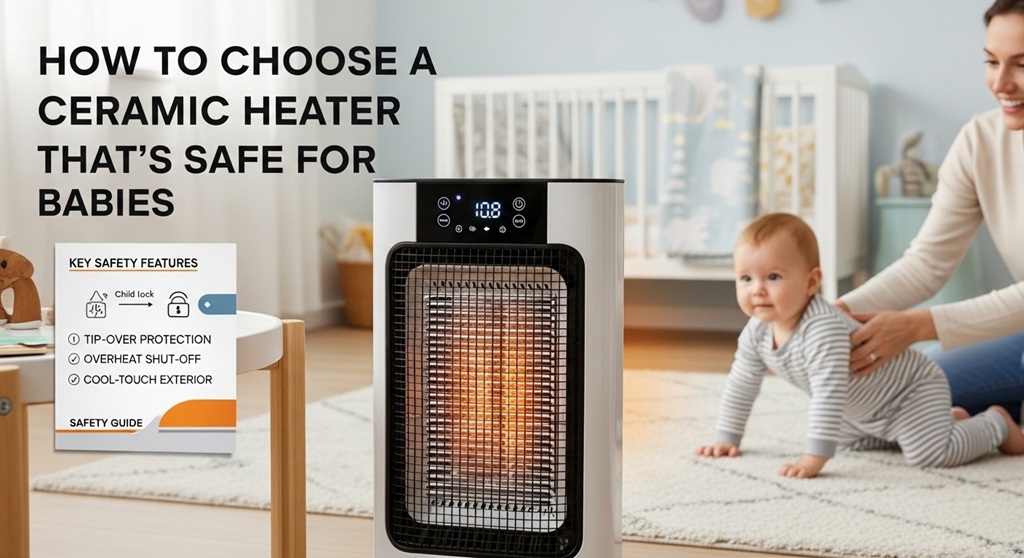
A baby-safe ceramic heater is a space heater that uses ceramic heating elements and includes built-in safety features like tip-over protection heater systems and overheat protection sensors to reduce fire and burn risks in nurseries.
Cold nights can disrupt your baby’s sleep. You want warmth. But you also want zero risk. That’s where ceramic heaters come in.
Ceramic heaters use a ceramic plate and aluminum baffles to produce heat. A fan distributes warm air evenly. Unlike older coil heaters, ceramic elements cool down faster and operate at lower surface temperatures. That lowers the burn risk.
According to the U.S. Consumer Product Safety Commission (CPSC), space heaters are linked to thousands of residential fires annually. Many of these incidents involve models without automatic shut-off features. That’s why safety-first design is not optional in a nursery.
If you are setting up a baby room, a heater must meet three standards: stable base, internal temperature control, and cool-touch housing. Everything else is secondary.
Why Are Regular Space Heaters Risky for Babies?
Short answer: Traditional space heaters can cause burns, fire hazards, and carbon monoxide risks if they lack modern safety features.
Here’s the problem.
Babies crawl. They pull cords. They knock things over. A heater without a tip-over protection heater switch can continue running after falling. That increases fire risk.
Older radiant or coil-based heaters can exceed 500°F internally. Even if the outer grill feels warm, internal overheating can trigger ignition if placed near bedding.
Gas or kerosene heaters also release combustion byproducts. Even small levels of carbon monoxide exposure are dangerous in enclosed spaces.
Case study reference: In a review of residential fire incidents published by the National Fire Protection Association (NFPA), heating equipment was involved in 12% of home fires annually. Portable heaters were a leading cause when placed too close to flammable materials.
That’s why ceramic heaters with automatic safety systems are now recommended for nurseries over open-coil or fuel-based heaters.
What Safety Features Should a Ceramic Heater Have for a Nursery?
Short answer: Choose a model with tip-over shut-off, overheat protection, cool-touch housing, thermostat control, and UL certification.
1. Tip-Over Protection Heater Mechanism
This feature automatically turns the heater off if it tilts or falls. Look for models with a mechanical or internal gravity switch. It should activate instantly.
2. Overheat Protection
An internal sensor monitors temperature. If the unit exceeds safe limits, it shuts off automatically. This prevents electrical overheating and internal component damage.
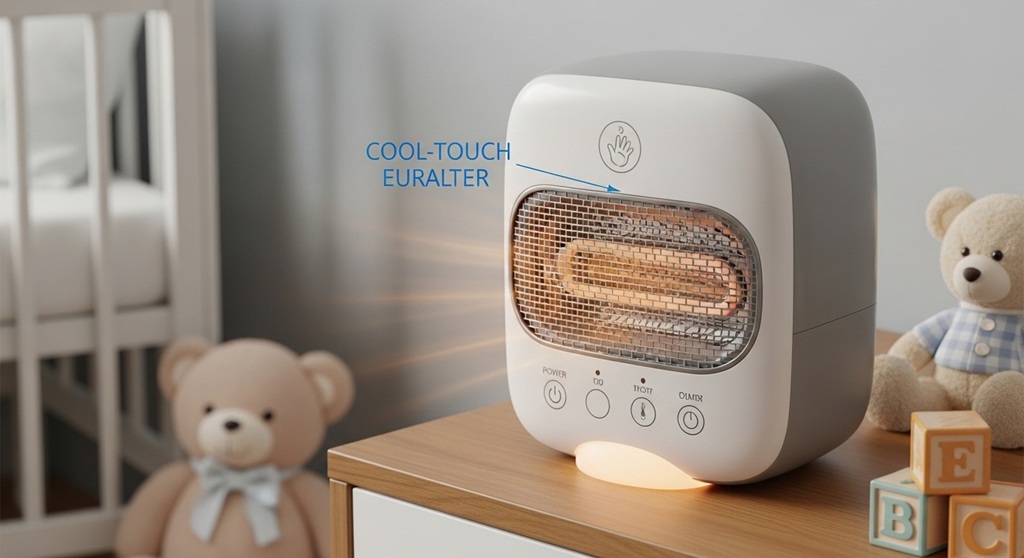
3. Cool-Touch Exterior
The outer casing should remain safe to touch even during extended use. Double-insulated plastic housing reduces burn risk.
4. Thermostat With Auto-Regulation
Digital thermostats maintain consistent nursery temperatures between 68°F and 72°F, which pediatric sleep experts often recommend.
5. Safety Certifications
- UL (Underwriters Laboratories)
- ETL Listed
- CE marking (for international models)
If a heater does not list certification, skip it.
How Does Ceramic Heating Technology Improve Safety?
Short answer: Ceramic elements self-regulate temperature and reduce the risk of extreme surface heat compared to exposed coils.
Ceramic heaters use Positive Temperature Coefficient (PTC) elements. These increase electrical resistance as temperature rises. That means the heater naturally slows heat output once it reaches a limit.
This built-in regulation lowers the chance of runaway heating.
Traditional metal coils continue heating at a constant rate unless manually controlled. That difference matters in a nursery where airflow may be restricted.
Also, ceramic heaters distribute heat evenly. No concentrated hotspots. That reduces localized overheating near cribs or curtains.
What Is the Ideal Temperature for a Baby’s Room?
Short answer: Most pediatric sleep guidelines suggest maintaining 68°F to 72°F (20°C to 22°C) for safe and comfortable sleep.
Overheating is linked to increased SIDS risk. That’s why consistent temperature matters more than maximum heat output.
A heater with adjustable thermostat control prevents temperature swings. Pair it with a room thermometer for accuracy.
Humidity also matters. Aim for 40% to 60% relative humidity. Dry air can irritate a baby’s airway.
What Size Ceramic Heater Is Best for a Nursery?
Short answer: Choose a heater rated for the square footage of your nursery. Avoid oversized units.
| Room Size (sq ft) | Recommended Wattage |
|---|---|
| Up to 150 | 750W |
| 150–300 | 1000–1500W |
A small nursery (120 sq ft) does not need a 1500W heater running at full power. Oversizing leads to overheating cycles.
Look for models with eco-mode settings. These adjust power based on room temperature.
Are Ceramic Heaters Energy Efficient?
Short answer: Yes. Ceramic heaters convert nearly all electrical energy into heat, but efficiency depends on thermostat control and insulation.
All electric heaters are technically 100% efficient at converting electricity to heat. The difference lies in heat distribution and runtime control.
A ceramic heater with auto shut-off and thermostat cycling uses less electricity over time compared to a heater running continuously.
Estimated operating cost example:
1500W heater × 8 hours = 12 kWh daily. At $0.15 per kWh, that equals $1.80 per day.
Using eco-mode can reduce runtime by 20–30% depending on insulation.
Where Should You Place a Ceramic Heater in a Baby’s Room?
Short answer: Place it at least 3 feet away from the crib, curtains, and furniture on a flat, stable surface.
- Never place inside the crib area.
- Avoid carpeted unstable surfaces.
- Keep away from cords within reach.
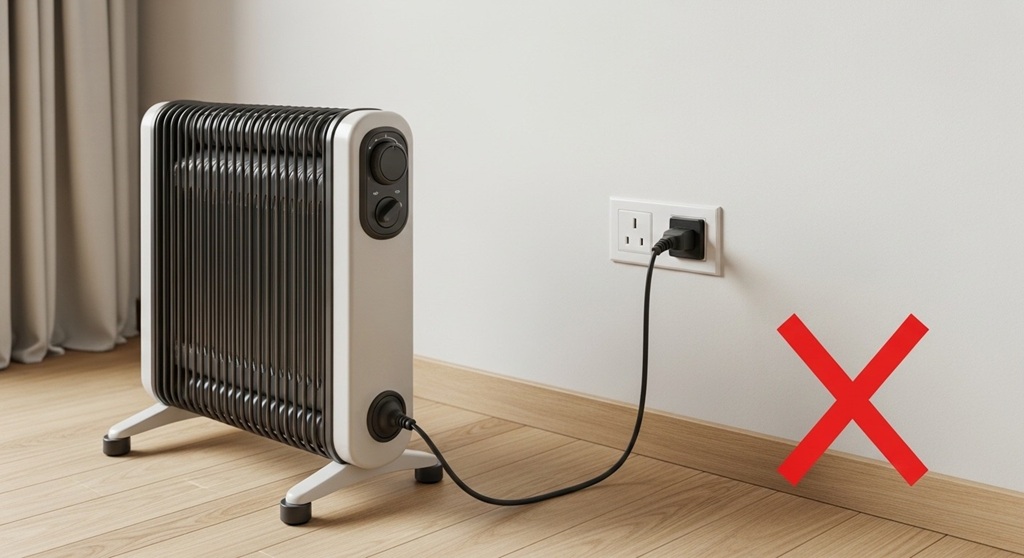
- Do not use extension cords.
The heater should plug directly into a wall outlet. Extension cords increase electrical fire risk.
Are Ceramic Heaters Safe to Run Overnight?
Short answer: Yes, if the heater has tip-over protection, overheat protection, and thermostat auto shut-off.
Modern ceramic heaters are designed for extended use. However, safety depends on proper placement and maintenance.
Checklist before overnight use:
- Clean air filter
- Clear airflow vents
- Stable positioning
- Thermostat activated
If any safety feature fails, replace the unit.
How Do You Maintain a Ceramic Heater for Long-Term Safety?
Short answer: Clean filters monthly, inspect cords regularly, and test safety shut-offs.
Dust buildup can restrict airflow. Restricted airflow leads to overheating.
Unplug before cleaning. Use compressed air or a soft brush to clear vents.
Inspect the power cord for cracks or fraying. Replace immediately if damaged.
Test the tip-over function carefully by tilting the unit slightly (while unplugged afterward). It should shut off immediately.
Should You Choose a Tower or Compact Ceramic Heater for a Nursery?
Short answer: Compact models are generally safer due to lower center of gravity.
Tower heaters distribute heat widely but are taller. In homes with pets or toddlers, compact models with a broad base reduce tipping risk.
Look for anti-slip feet and weighted bases.Conclusion: How Do You Choose the Right Ceramic Heater for Your Baby?
Choosing a ceramic heater for your baby is not about maximum heat. It is about controlled warmth.
Focus on three things: tip-over protection heater systems, overheat protection, and thermostat accuracy. Ignore decorative features. Ignore high wattage marketing.
Your goal is stable sleep temperature. Nothing more.
Before purchasing, compare certified nursery-safe options and review detailed safety breakdowns here: Best Baby Safe Room Heaters Guide.
Make warmth predictable. Make safety non-negotiable.
Frequently Asked Questions (FAQ)
1. Is a ceramic heater safer than an oil-filled radiator for babies?
Answer: Both can be safe, but ceramic heaters heat faster and include active safety shut-offs. Oil radiators stay hot longer after shutdown.
2. Can ceramic heaters cause dry air?
Answer: Electric heaters do not remove moisture directly, but heating air reduces relative humidity. Use a humidifier if levels drop below 40%.
3. What is the safest wattage for a nursery?
Answer: 750W to 1000W is sufficient for small nurseries under 200 sq ft.
4. Do ceramic heaters emit fumes?
Answer: No. They use electric heating elements and produce no combustion gases.
5. How far should a heater be from a crib?
Answer: Maintain at least 3 feet of clearance.
6. What certifications should I look for?
Answer: UL or ETL certification confirms tested safety compliance.
Related Topic: How Oil Filtration in Deep Fryers Saves Money and Reduces Waste
Read Next: How to Buy the Best Paper Shredder for a Small Office