

Key Takeaways
- AI-driven enhancements are rapidly improving user experiences in cloud-based productivity tools, increasing performance, accuracy, and convenience.
- Market leaders like Microsoft and Google continue to innovate, revolutionizing collaboration through more intuitive and efficient features for teams.
- Strong market growth underscores the indispensable role these tools play for businesses in a digital-first landscape, propelling further development and adoption.
The digital workspace is undergoing a period of profound transformation as organizations worldwide adopt cloud technology to streamline daily operations, drive efficiency, and empower teams to achieve ambitious goals. Cloud-based software solutions Chicago now offer not just convenience but a powerful strategic advantage, allowing businesses to remain agile in competitive markets. Leveraging cloud-based software solutions allows companies to benefit from unparalleled flexibility, rapid scalability on demand, and seamless team collaboration regardless of physical location or time zone. These advances are ushering in a new paradigm where increased efficiency, robust security, and dynamic adaptability are the norm, all fueled by breakthroughs in cloud-based productivity platforms.
The rapid evolution of cloud-based productivity tools is no accident. Ongoing innovations are enabling these platforms to outpace traditional software in terms of intelligence, connectivity, and user experience. As hybrid and remote work models become mainstream realities for organizations of all sizes, technology leaders are taking a critical look at their IT infrastructures. Rather than relying solely on established office suites, they are adopting platforms built to harness artificial intelligence, prioritize stringent security, and provide deep customization—from automated meeting scheduling to predictive analytics dashboards—all tailored to individual workflows. The result is an expanding set of digital tools that not only meet new demands but help shape the future of modern work culture.
Integration of AI Assistants
Artificial intelligence is reshaping the productivity tool landscape, weaving smart automation and insight into everyday work processes. Prominent products, such as Microsoft Copilot, have established a new standard by embedding generative AI directly into daily user workflows. With Copilot, for example, users gain the capacity to compose complex emails, brainstorm ideas, summarize key points, generate polished content, analyze spreadsheets, and synthesize information from across Microsoft 365 apps—all without ever leaving their core workflow or toggling between disparate interfaces. This extended functionality, which even enables synchronized productivity with third-party platforms like Gmail, increases efficiency and minimizes wasted effort.
The pace of AI innovation within productivity tools is remarkable, extending beyond mere task automation to more advanced realms, such as natural language processing, personalized recommendations, predictive text, and highly accurate search capabilities. These advancements empower users—whether working independently or within teams—to rapidly navigate vast troves of information, manage their workloads, and find the necessary data points with minimal friction. As AI continues to mature, it will further transform how teams approach problem-solving, creative work, and operational efficiency in the digital workplace.
Enhanced Collaboration Features
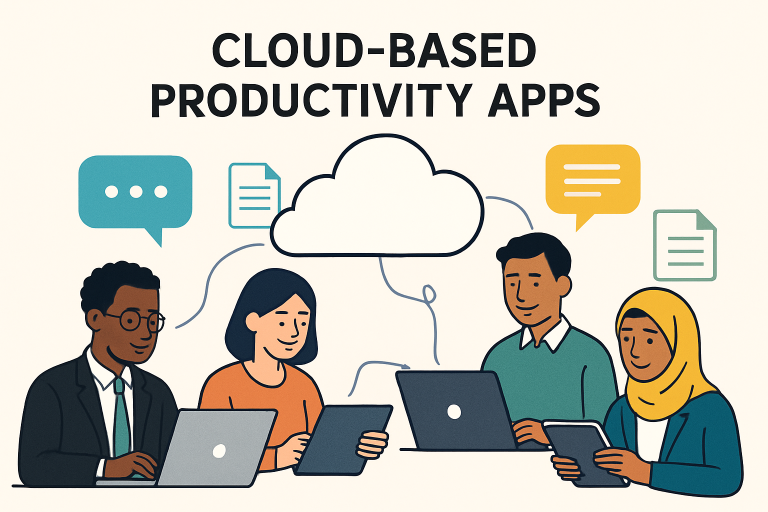
Real-time collaboration features have moved from “nice-to-have” to absolute requirements in today’s cloud-based productivity ecosystems. Few platforms demonstrate this more effectively than Google Workspace, which allows multiple users to simultaneously edit documents, offer comments, resolve feedback, and assign follow-up actions without risking lost changes or version conflicts. Workspace’s AI-powered functionalities further supercharge teamwork by automating recurring tasks, offering intelligent grammar and style advice, summarizing extensive documentation, and even flagging areas for improvement—all of which significantly reduce tedious and repetitive work.
For hybrid and remote-first organizations, these collaborative capabilities translate into tangible business results. Streamlined approval processes, transparent task tracking, and robust integrations with popular project management tools help ensure every stakeholder stays informed and focused. Advanced sharing permissions and encryption measures uphold security standards, allowing teams to share information safely while keeping sensitive data protected, even as collaboration expands beyond company walls.
Market Growth and Adoption
The demand for cutting-edge, cloud-based productivity suites is accelerating at a remarkable pace, reflecting the transformative impact these tools are having on business processes globally. Market research indicates that the global market for cloud-based productivity software is on track to reach $127.7 billion by 2030—a staggering figure that underscores the shift from on-premises tools to adaptable, scalable cloud solutions designed to keep pace with digital transformation. The shift isn’t just about keeping up appearances: on-premises platforms often fail to deliver the speed, accessibility, collaborative potential, and scalability that today’s organizations require.
Cloud-based tools are particularly attractive for small and midsize businesses, which can now leverage sophisticated features without the burden of major upfront investments in hardware or IT support. These companies enjoy the ability to add capacity or modules on demand as needs evolve, helping them compete effectively and embrace innovation more rapidly than ever before.
Security and Data Governance
As cloud-based software becomes foundational to everyday business, IT leaders and CIOs face new and greater responsibilities to protect digital assets. Today’s leading cloud platforms use state-of-the-art security, leveraging AI-driven continuous monitoring to detect suspicious activity, block potential threats, and ensure compliance. Features such as automated compliance reports, customizable audit trails, and self-updating security protocols provide administrators with critical oversight and early warning, minimizing risks associated with human error or sophisticated cyberattacks. Such measures have become pivotal in maintaining regulatory compliance—including industry-specific mandates like GDPR and HIPAA—helping businesses safeguard customer data, avoid costly fines, and bolster reputations. Leading media outlets describe these multilayered strategies as essential in a world where data flows endlessly between apps and cloud environments.
Customization and Flexibility
Today’s cloud-based productivity platforms are not one-size-fits-all; rather, they offer advanced customization to meet the nuanced needs of every organization. Companies now have unprecedented control to tailor dashboards and interfaces, automate industry-specific workflows, and build integrations that fit unique legacy processes or new digital ambitions. This degree of personalization frees up valuable staff time, as repeatable administrative tasks are automated and reporting is tailored for maximum impact. The ultimate outcome is greater alignment between business objectives and technology, enabling teams to pivot quickly in response to shifting external conditions or internal strategic shifts.
Challenges and Considerations
Despite the transformative potential of cloud-based tools, organizations must address several critical challenges to fully realize their value. Data privacy and sovereignty concerns are increasingly prominent as larger volumes of sensitive information move to the cloud, making it essential for businesses to clearly understand where data is stored, how it is processed, and what safeguards are in place for backup and recovery. Integration with legacy on-premises systems can also introduce complexity, often requiring specialized middleware or substantial process redesign to ensure seamless interoperability and reliable data flows. Additionally, the rapid rollout of advanced features demands ongoing training initiatives to maintain user proficiency and maximize return on investment. Industry analysis consistently underscores the need for a deliberate, strategic approach to cloud adoption—one that balances workforce upskilling, thorough vendor evaluation, and disciplined change management.
Conclusion
Cloud-based productivity tools are ushering in a major transformation in how businesses operate, collaborate, and secure information. With seamless AI integration, more intelligent collaboration, robust data protection measures, and unmatched flexibility, these platforms are redefining what modern work looks like. Companies that make continuous learning and deliberate adoption of these innovations a strategic priority will find themselves better prepared for the demands of a digital-first, ever-adapting global economy.