
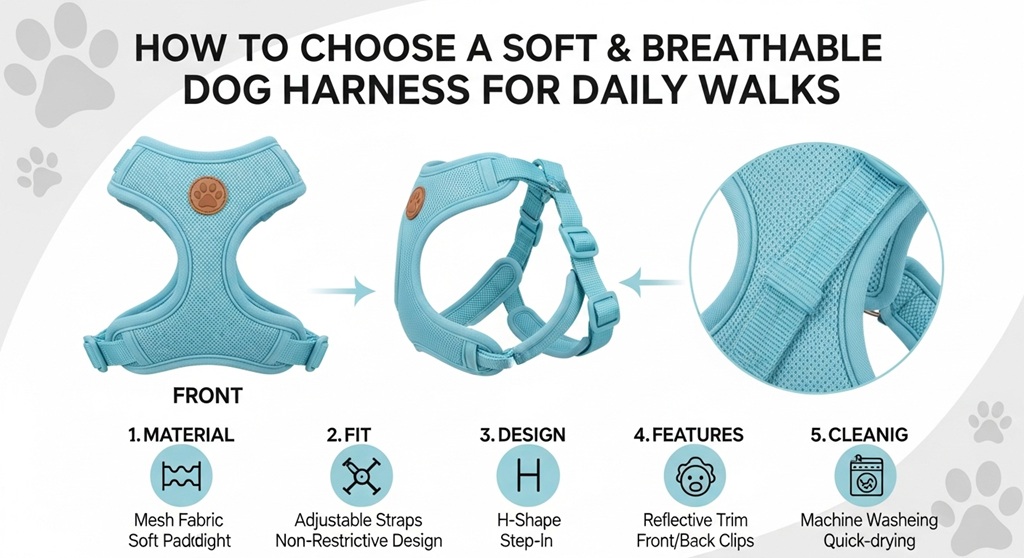
A soft and breathable dog harness is a walking tool designed with lightweight materials, airflow-friendly mesh fabric, and padded support to reduce pressure on a dog’s neck and chest during daily walks.
Many dog owners switch to a harness only after their dog starts coughing, pulling, or resisting walks. That’s the problem. Standard collars concentrate force around the neck. According to guidance from the American Veterinary Medical Association (AVMA), repeated pressure on the neck can increase the risk of tracheal irritation, especially in small breeds.
Daily walks are not optional. Dogs need physical movement and mental stimulation. But if the walking gear causes heat buildup, friction, or restricted movement, the walk becomes uncomfortable. Over time, discomfort changes behavior. Dogs pull more. Owners pull back harder. The cycle continues.
A breathable mesh vest, comfort dog gear with soft lining, and a lightweight harness design can reduce these risks. The goal is simple: distribute pressure across the chest, allow airflow, and maintain freedom of movement.
This guide explains how to choose the right option for daily walks using clear criteria, real data, and practical comparisons.
Why Do Dogs Struggle With Traditional Harnesses?
Dogs struggle with poorly designed harnesses because of overheating, restricted shoulder movement, and uneven pressure distribution.
Let’s break down the main problems:
- Heat retention: Thick fabric traps moisture. Dogs regulate temperature through panting, not sweating. Overheating increases fatigue.
- Chafing: Rough seams under the front legs cause skin irritation.
- Shoulder restriction: Some harnesses sit across the shoulder joint, limiting stride extension.
- Poor fit: A loose harness shifts. A tight one restricts breathing.
A 2020 gait study published in veterinary biomechanics research found that certain harness types reduced shoulder extension by up to 10%. That may not sound like much. But repeated daily restriction affects natural movement patterns.
If your dog slows down, scratches at the harness, or pants excessively on mild days, the gear may be the issue.
How Does a Breathable Mesh Vest Improve Comfort?
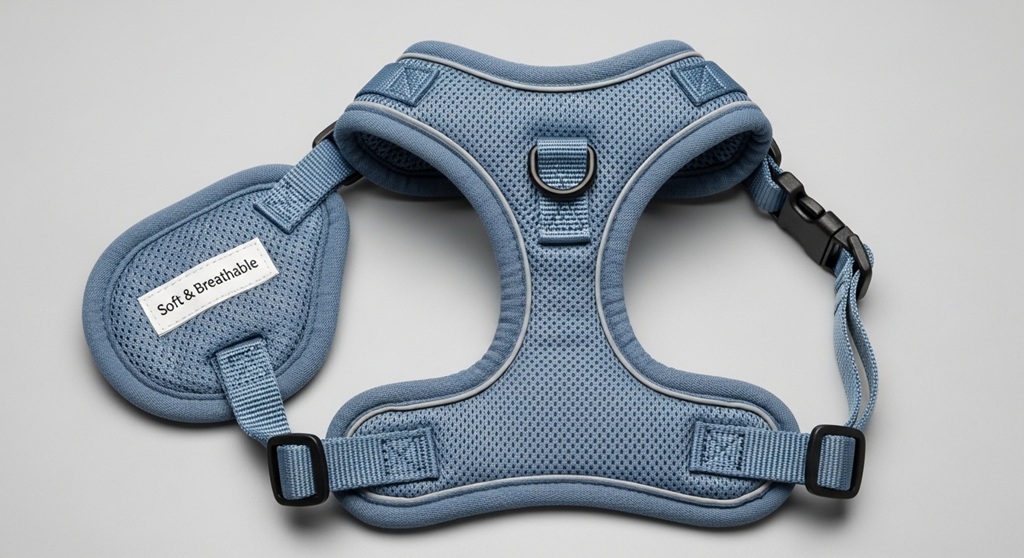
A breathable mesh vest improves airflow, reduces moisture buildup, and evenly distributes pressure across the chest.
Mesh fabric contains small perforations. These openings allow air circulation between the dog’s body and the outer layer. This matters in warm climates and humid regions.
Here’s what makes a breathable mesh vest effective:
- Lightweight polyester or nylon mesh
- Soft inner padding without bulky foam
- Wide chest panel for pressure distribution
- Quick-dry properties
When evaluating breathable mesh vest options, check stitching quality and seam placement. Seams should not sit directly behind the front legs. Hardware should be metal or reinforced composite.
The right comfort dog gear does not just prevent discomfort. It improves walking behavior. Dogs move freely. Owners apply less force. Walks become smoother.
What Makes a Harness Truly Lightweight?
A lightweight harness weighs less than 10% of a dog’s body weight and uses minimal hardware without compromising durability.
Heavy buckles and thick padding may look secure. But extra weight adds strain over long walks.
Evaluate these features:
| Feature | What to Look For | Why It Matters |
|---|---|---|
| Material | Breathable mesh or soft nylon | Reduces heat and weight |
| Buckles | Low-profile side-release | Minimizes bulk |
| Straps | Adjustable but narrow | Prevents digging into skin |
| Hardware | Rust-resistant metal D-ring | Maintains durability |
The balance is critical. Too light, and it tears. Too heavy, and it causes fatigue. For daily walks of 20–45 minutes, the harness should feel barely noticeable to the dog.
How Should a Soft Harness Fit for Daily Walks?
A properly fitted harness should allow two fingers between the strap and the dog’s body while preventing rotation.
Follow these steps:
- Measure chest girth at the widest point.
- Measure neck base (not collar line).
- Compare with manufacturer sizing chart.
- Adjust straps evenly on both sides.
After fitting:
- Check for slipping when walking.
- Ensure no pressure on throat.
- Confirm shoulder movement remains unrestricted.
Fit affects safety. According to pet product safety data, escape incidents are often caused by improper sizing rather than product defects.
Is a Front-Clip or Back-Clip Better for Comfort?
For daily comfort, back-clip harnesses reduce tangling, while front-clip designs help manage pulling behavior.
Here’s a quick comparison:
| Type | Best For | Comfort Level |
|---|---|---|
| Back-Clip | Calm walkers | High comfort, simple control |
| Front-Clip | Dogs that pull | Moderate comfort with training support |
| Dual-Clip | Versatile walking | Flexible adjustment |
If your dog pulls frequently, consider reviewing structured comparisons like those discussed in guides focused on no-pull designs. Many lightweight harness options now include dual attachment points.
The right choice depends on behavior. Not trend.
What Materials Are Safest for Sensitive Skin?
Soft-lined mesh, neoprene padding, and smooth-edge nylon are safest for sensitive skin.
Avoid:
- Rough canvas
- Exposed stitching
- Cheap plastic hardware
Dogs with short fur are more prone to friction irritation. Regular inspection prevents hotspots.
If redness appears after walks, switch immediately. Comfort dog gear should not leave marks.
How Does Climate Affect Harness Choice?
Hot climates require breathable mesh; cold climates require layered but flexible padding.
In humid regions, airflow is essential. In colder areas, thin fleece-lined harnesses may provide mild insulation without bulk.
Reflective strips also improve visibility during early morning or evening walks. Safety is part of comfort.
Can the Right Harness Improve Behavior?
Yes. Properly fitted, breathable harnesses reduce stress signals and pulling intensity over time.
Case example:
A mid-sized mixed breed participating in a six-week leash behavior adjustment program switched from a collar to a chest-distributed lightweight harness. Pull frequency reduced by 30% during controlled sessions. Trainers noted improved responsiveness.
The improvement was not magic. Reduced discomfort lowers resistance.
How Often Should You Replace a Dog Harness?
Replace a harness every 12–18 months or sooner if signs of wear appear.
Check monthly for:
- Frayed straps
- Loose stitching
- Weak buckles
- Rust on hardware
Daily use accelerates wear. Regular inspection prevents accidents.
What Should You Avoid When Buying Online?
Avoid unclear sizing charts, missing material descriptions, and exaggerated claims.
Look for:
- Clear measurement guides
- Close-up stitching photos
- Real user feedback
- Weight specifications
Comfort dog gear should be selected based on data, not marketing language.
Conclusion: How Do You Choose the Right Harness Today?
Daily walks shape your dog’s physical and mental health. Poor gear creates friction. Friction creates resistance. Resistance changes behavior.
A breathable mesh vest with soft lining and a lightweight harness structure solves common issues: overheating, chafing, and uneven pressure.
Start with accurate measurements. Prioritize airflow. Choose hardware that balances durability and weight. Match clip style to behavior. Inspect regularly.
If your current setup causes pulling or discomfort, reassess your gear today. Explore structured comparisons and tested options to make a confident decision.
The right harness does not just improve walks. It improves your relationship with your dog.
Frequently Asked Questions (FAQs)
1. What is the best material for a breathable dog harness?
Lightweight polyester mesh with soft inner lining provides airflow and reduces skin irritation during daily walks.
2. Can a lightweight harness stop pulling?
A lightweight harness alone does not stop pulling, but front-clip or dual-clip designs can reduce pulling when combined with training.
3. How tight should a soft harness be?
You should fit two fingers between the harness strap and your dog’s body. It should not rotate or press against the throat.
4. Are mesh harnesses safe for large dogs?
Yes, if reinforced stitching and strong hardware are included. Always check weight limits and durability ratings.
5. How do I clean a breathable mesh vest?
Most mesh harnesses can be hand-washed with mild detergent and air-dried. Avoid high heat to maintain fabric strength.
6. Do vets recommend harnesses over collars?
Many veterinarians recommend harnesses for dogs prone to tracheal sensitivity or pulling behavior because they reduce neck strain.
7. How long should a daily walk last with a harness?
Most adult dogs benefit from 20–45 minutes of walking daily, depending on breed, age, and health status.
Related Topic: How to Identify Durable Surf Fishing Reels That Last Years
Read Next: How to Choose Zero Waste Kid Gift Ideas That Are Fun and Sustainable