

In the realm of culinary tools, knives reign supreme, and the distinction between Japanese and Western knives is a topic of much debate among professional chefs and home cooks alike. Both traditions boast a rich history and unique characteristics, leading to a clash of titans in the kitchen. Just as choosing the right knife for culinary tasks is essential, understanding the differences in tools like a carpet knife vs utility knife can be crucial for various household tasks, highlighting the importance of selecting the appropriate tool for each specific job. Let’s dive deeper into the key differences that set these two culinary powerhouses apart.
1. Steel Composition and Hardness
One of the most fundamental distinctions lies in the type of steel used and its resulting hardness. Japanese knives are typically crafted from high-carbon steel, renowned for its exceptional hardness. This hardness translates to an incredibly sharp edge that can be honed to a razor-like fineness. However, this hardness also makes them somewhat brittle and prone to chipping if misused.
Western knives, on the other hand, are generally made from stainless steel, which is a blend of steel and chromium. This composition makes them more resistant to corrosion and staining, and they are less likely to chip or break. However, the trade-off is that they may not hold an edge as long as their Japanese counterparts.
2. Blade Geometry and Shape
The geometry and shape of the blade are another key differentiator. Japanese knives often feature a single-bevel edge, meaning that only one side of the blade is sharpened. This design allows for incredibly precise cuts and is favored in Japanese cuisine, where delicate slicing and presentation are paramount.
Western knives, conversely, typically have a double-bevel edge, where both sides of the blade are sharpened. This design results in a more robust edge suitable for a wider range of cutting tasks. It is also generally considered easier to sharpen for those who are not experienced in honing single-bevel blades.
The shape of the blade also varies. Japanese knives often have a straighter cutting edge with a pointed tip, while Western knives tend to have a more curved edge and a rounded tip. The straighter edge of Japanese knives facilitates precise cuts, while the curved edge of Western knives is conducive to the rocking motion often used in Western cooking techniques.
3. Handle Design and Construction
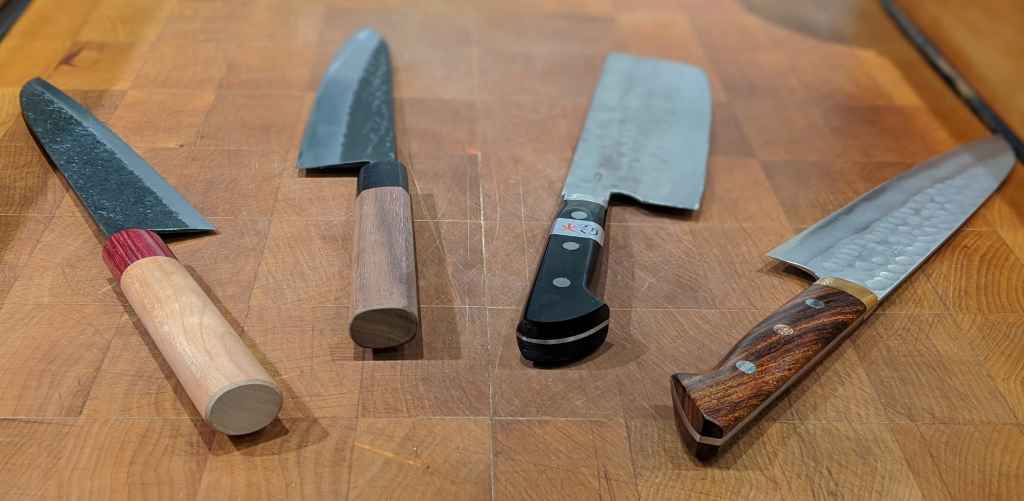
The design and construction of the handle also differ significantly. Japanese knives traditionally feature a wooden handle that is often octagonal in shape. This design provides a comfortable and secure grip, even when the handle is wet. However, wooden handles require more maintenance and are susceptible to damage if not cared for properly.
Western knives typically have handles made from synthetic materials such as plastic or composite materials. These handles are durable, easy to clean, and resistant to moisture. They may not offer the same level of tactile feedback as wooden handles, but they are generally considered more practical for everyday use.
4. Cutting Techniques and Applications
The differences in blade design and handle construction naturally lead to variations in cutting techniques and applications. Japanese knives, with their single-bevel edge and pointed tip, excel at precise cuts, such as those required for slicing sashimi or preparing sushi rolls. They are also well-suited for delicate tasks like peeling and mincing.
Western knives, with their double-bevel edge and curved blade, are more versatile and can handle a wider range of cutting tasks. They are particularly adept at chopping, slicing, and dicing, making them ideal for everyday kitchen use. The rocking motion facilitated by the curved blade is also useful for tasks like mincing herbs or chopping vegetables.
5. Maintenance and Sharpening
Maintaining and sharpening these knives also require different approaches. Japanese knives, due to their high-carbon steel composition and single-bevel edge, require more specialized sharpening techniques. They are typically sharpened on water stones, which allow for precise control over the sharpening angle and edge refinement.
Western knives, being made from stainless steel and having a double-bevel edge, are generally easier to sharpen. They can be sharpened using a variety of tools, including honing steels, electric sharpeners, and manual sharpening systems.
Choosing the Right Knife for You
The choice between Japanese and Western knives ultimately depends on your individual needs and preferences. If you are looking for a knife that can handle a wide range of cutting tasks and is easy to maintain, a Western knife may be the better choice.
However, if you value precision and are willing to invest the time and effort required to maintain a high-performance blade, a Japanese knife may be the perfect addition to your culinary arsenal. It’s also worth noting that many professional chefs and avid home cooks own a combination of both, allowing them to leverage the unique strengths of each type of knife for specific tasks.
Beyond the Basics
While the key differences outlined above provide a general overview, it’s important to recognize that there are countless variations within each category. Japanese knives encompass a wide range of styles, each with its own unique characteristics and intended use. Similarly, Western knives come in various shapes and sizes, catering to different culinary needs. Exploring these nuances can be a fascinating journey for anyone passionate about the art of cooking.
Conclusion
The clash between Japanese and Western knives is a testament to the rich diversity and innovation within the culinary world. Both traditions offer exceptional tools that can elevate your cooking experience to new heights. By understanding the key differences and choosing the right knife for your needs, you can unleash your culinary creativity and achieve culinary excellence. Whether you opt for the precision of a Japanese blade or the versatility of a Western knife, remember that the true magic lies in the hands that wield it.
Remember:
- The choice between Japanese and Western knives is a matter of personal preference and culinary needs.
- Both traditions offer exceptional tools with unique strengths and weaknesses.
- Exploring the nuances within each category can enhance your culinary knowledge and skills.
- The true magic lies in the hands that wield the knife, regardless of its origin.
By embracing the diversity and appreciating the craftsmanship behind both Japanese and Western knives, you can embark on a culinary journey filled with creativity, precision, and delicious results. Happy cooking!