
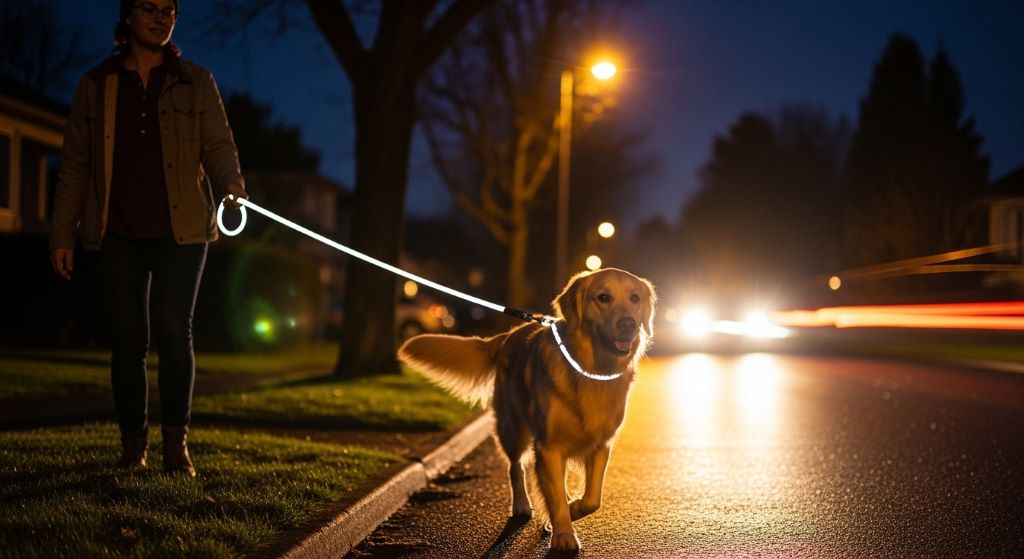
Walking your dog after dark presents unique challenges that daytime strolls never encounter. Visibility becomes a critical concern for both you and your furry companion. Vehicles, cyclists, and other pedestrians need to see you from a distance to avoid accidents. Meanwhile, you need to keep track of your dog’s movements in low-light conditions. The right equipment makes all the difference in preventing dangerous situations.
Many pet owners underestimate the importance of proper gear for evening walks. Standard leashes that work perfectly during the day become nearly invisible once the sun sets. This invisibility creates serious safety risks that affect everyone involved. However, modern innovations in pet accessories have addressed these concerns effectively. Specialized equipment now exists to keep both you and your pet visible and safe during nighttime adventures.
Understanding the Importance of Visibility During Evening Walks
Darkness reduces visibility to a fraction of daytime levels. Human eyes struggle to detect objects without adequate lighting. This applies to drivers, cyclists, and other people sharing sidewalks and streets. When you walk your dog in low-light conditions, you essentially become invisible to others unless you take precautions.
Statistics show that pedestrian accidents increase significantly after sunset. Many of these incidents involve people walking pets who were not visible to drivers. Additionally, cyclists moving at high speeds may not notice dogs crossing paths until too late. These situations can lead to serious injuries or worse outcomes.
Reflective materials solve visibility problems by bouncing light back to its source. When headlights hit reflective surfaces, they create a bright glow that alerts drivers to your presence. This early warning system gives everyone more time to react appropriately. Therefore, incorporating reflective elements into your walking routine significantly reduces accident risks.
Beyond vehicle-related concerns, visibility helps you monitor your dog’s behavior. Seeing your pet clearly in darkness prevents tangles, allows you to notice potential hazards, and helps you respond quickly to unexpected situations. Furthermore, other dog owners can see you approaching from a distance. This advance notice prevents surprise encounters that might trigger aggressive reactions from anxious dogs.
Key Features to Look for in Night Safety Leashes
Selecting the right leash requires understanding which features provide maximum safety benefits. Not all reflective products offer the same level of protection. Quality varies significantly between manufacturers and designs. Knowing what to prioritize helps you make informed decisions.
Reflective coverage area determines how visible you become in darkness. Full-length reflective stitching provides 360-degree visibility from all angles. This comprehensive approach ensures drivers can see you regardless of your position relative to their headlights. Conversely, minimal reflective elements only work when light hits them directly. Therefore, maximum coverage offers superior safety.
Material quality affects both durability and reflective performance. High-grade reflective threads maintain their brightness through repeated use and washing. Cheaper alternatives fade quickly and lose effectiveness over time. Additionally, the base rope material should resist weathering, fraying, and wear from regular use. Look for materials that balance strength with comfortable handling.
Length options influence your control and your dog’s freedom. Shorter leashes provide better control in busy areas with traffic and pedestrians. Longer options allow more exploration in parks or quiet neighborhoods. However, extremely long leashes make it difficult to react quickly in emergencies. Consider your typical walking environments when choosing length.
Handle design impacts your comfort during extended walks. Padded handles prevent rope burn and reduce hand fatigue. Ergonomic shapes distribute pressure evenly across your palm. Furthermore, some handles include additional reflective elements for increased visibility. These thoughtful details enhance the overall walking experience.
Hardware strength ensures the leash withstands your dog’s pulling force. Metal clasps should be rust-resistant and securely attached. Swivel mechanisms prevent tangling when dogs spin or change directions frequently. Moreover, all connection points should exceed your dog’s strength to prevent breakage during unexpected lunges.
Different Types of Reflective Leashes Available
The market offers various reflective leash designs to suit different needs and preferences. Understanding these options helps you select the most appropriate type for your situation. Each style has distinct advantages worth considering.
Rope leashes provide excellent durability and comfortable grip. The braided construction distributes force evenly and resists fraying better than flat designs. Additionally, rope materials dry quickly after exposure to rain or wet grass. Many rope leashes incorporate reflective threads throughout the braid for comprehensive visibility. This integration creates a seamless appearance while maintaining strength.
Nylon webbing leashes offer lightweight convenience and affordability. These flat designs often feature reflective strips sewn along their length. However, webbing can become stiff when wet and may cause rope burn if your dog pulls suddenly. They work well for trained dogs who walk calmly beside their owners.
Retractable leashes with reflective components give dogs variable freedom. These mechanisms allow dogs to explore while maintaining owner control. Nevertheless, retractable designs have safety concerns including sudden stops and tangling risks. If choosing this option, ensure the housing and tape both include reflective elements.
Bungee-style leashes absorb shock from sudden pulls and lunges. The elastic section reduces impact on both your arm and your dog’s neck. Some models incorporate reflective threading throughout the bungee portion. This design benefits strong pullers or energetic dogs who haven’t mastered loose-leash walking.
Multi-dog leashes accommodate households with multiple pets. These coupler designs split from one handle into two or more attachment points. Reflective versions ensure all dogs remain visible during group walks. However, managing multiple dogs in darkness requires extra attention and training.
Evaluating Reflective Technology and Effectiveness
Not all reflective materials perform equally well in real-world conditions. Understanding the technology behind visibility features helps you assess quality and effectiveness. Several factors influence how well reflective elements work.
Retro-reflective materials specifically direct light back toward its source. This property makes them far more effective than simple shiny surfaces. When car headlights hit retro-reflective threads, the light bounces directly back to the driver. Therefore, these materials create much brighter and more noticeable glows than standard reflective coatings.
Reflective brightness varies between products and materials. High-visibility industrial-grade reflectors shine brighter than standard consumer versions. Some manufacturers use the same materials found on safety vests and road signs. These premium options provide maximum visibility even in challenging conditions.
Color choices affect daytime appearance and nighttime performance. Bright colors like neon yellow or orange increase daytime visibility. Meanwhile, reflective elements handle nighttime safety. Some products combine both features for comprehensive all-day protection. This dual approach ensures visibility regardless of lighting conditions.
Weather resistance determines long-term effectiveness. Reflective materials must withstand rain, snow, and mud without losing their reflective properties. Quality products maintain performance through hundreds of washes and years of outdoor exposure. Furthermore, UV resistance prevents sun damage that degrades inferior materials over time.
Placement patterns influence visibility from different angles. Continuous reflective stitching along the entire length ensures visibility from all directions. Intermittent patterns may leave gaps where reflection doesn’t occur. Additionally, some designs include reflective elements on the handle for when you hold the leash gathered in your hand.
Sizing Considerations for Different Dog Breeds
Choosing the correct size ensures safety and comfort for both you and your pet. Different breeds require different specifications based on their physical characteristics and behavior patterns. Proper sizing prevents equipment failure and enhances control.
Small breeds under twenty pounds need lighter, thinner leashes. Heavy equipment feels burdensome and interferes with their natural movement. However, even small-dog leashes should include adequate reflective elements. Toy breeds often walk close to the ground where they’re harder to see. Therefore, visibility becomes especially important for these tiny companions.
Medium-sized dogs between twenty and fifty pounds require balanced durability and flexibility. These dogs possess enough strength to pull hard but generally respond to training. Leashes for this size range should handle moderate force while remaining comfortable to hold. Additionally, medium dogs benefit from four to six-foot lengths that provide control without restriction.
Large breeds over fifty pounds demand maximum strength and durability. These powerful animals can generate significant pulling force, especially when excited or distracted. Hardware and materials must withstand this strength without failure. Furthermore, wider diameter ropes distribute pressure better and provide more secure grips during strong pulls.
Working breeds and high-energy dogs need special consideration regardless of size. These animals often pull harder and move more unpredictably than calm companions. Extra-strong materials and reinforced hardware prevent breakage during intense moments. Moreover, shorter lengths give you better control over enthusiastic walkers.
Multiple-dog households should consider individual needs when selecting leashes. Each dog might require different specifications based on their size and behavior. However, using a night walking dog leash for all pets ensures consistent visibility. This uniformity makes group walks safer and more manageable.
Testing and Evaluating Leash Performance
Before relying on any leash for regular nighttime use, thorough testing confirms its suitability. Simple evaluation methods reveal potential problems before they cause accidents. Taking time to assess performance prevents unpleasant surprises during actual walks.
Daytime inspection reveals construction quality and potential weak points. Examine all stitching for tightness and consistency. Check hardware for smooth operation and secure attachment. Additionally, look for any fraying, loose threads, or manufacturing defects. Quality products show excellent craftsmanship in every detail.
Reflective testing requires a dark environment and light source. Take the leash into darkness and shine a flashlight or phone light at it from various angles. Quality reflective elements should glow brightly and visibly from all directions. Furthermore, test from different distances to simulate how drivers will see you. Effective products remain visible from at least a hundred feet away.
Strength testing ensures the leash handles your dog’s pulling force. Secure the leash to a fixed object and apply steady pressure similar to your dog’s typical pulling strength. Quality leashes should feel solid without stretching excessively or showing stress. However, avoid applying force that might damage the leash unnecessarily.
Comfort evaluation involves holding the leash for extended periods. Walk around your home for ten to fifteen minutes while holding the leash. Notice whether the handle causes discomfort or fatigue. Additionally, practice quick grabs and adjustments to ensure you can manage the leash easily in emergencies.
Weather resistance testing reveals how the leash performs in various conditions. Wet the leash thoroughly and see how it feels and functions when damp. Quality materials should maintain their grip and reflective properties when wet. Moreover, allow the leash to dry and check whether the reflective elements still work effectively afterward.

Safety Tips for Night Walking with Your Dog
Having the right equipment represents only part of nighttime walking safety. Your behavior and route choices also significantly impact overall security. Implementing smart practices maximizes protection for both you and your pet.
Route planning should prioritize well-lit areas whenever possible. Choose streets with functioning streetlights and active businesses. Additionally, avoid isolated paths or areas with heavy vehicle traffic and no sidewalks. Familiar routes reduce surprises and help you anticipate potential hazards.
Timing considerations affect safety levels significantly. Walking immediately after sunset or before sunrise provides more ambient light than deep nighttime. However, if late-night walks are necessary, stick to busy areas where other people provide additional security. Furthermore, consistent schedules help neighbors recognize you and your dog.
Additional visibility gear enhances your reflective pet leash effectiveness. Wearing reflective vests, armbands, or clip-on lights makes you more visible. Your dog can also wear reflective collars or LED safety lights. These multiple layers of visibility ensure drivers notice you from greater distances.
Attention management becomes crucial in low-light conditions. Avoid distractions like phone use or headphone listening that might prevent you from hearing approaching vehicles or other dangers. Instead, stay alert to your surroundings and your dog’s behavior. Moreover, make eye contact with drivers when crossing streets to ensure they see you.
Emergency preparedness includes carrying identification and contact information. Keep your phone charged and accessible. Additionally, carry a small flashlight for inspecting areas before your dog enters them. Some pet owners also bring treats and waste bags that include reflective elements for added visibility.
Maintenance and Care for Long-Lasting Performance
Proper maintenance extends your leash’s lifespan and ensures continued safety performance. Regular care prevents premature wear and maintains reflective effectiveness. Simple habits protect your investment and keep you safe.
Cleaning frequency depends on usage intensity and environmental exposure. Wash your leash every two to three weeks if you walk daily in various conditions. Less frequent walking in clean environments requires monthly cleaning. However, always clean immediately after exposure to mud, saltwater, or other harsh substances.
Washing methods vary by material but generally involve gentle approaches. Hand washing with mild soap and lukewarm water works best for most leashes. Avoid harsh detergents or bleach that might damage reflective materials. Additionally, scrub gently to remove dirt without fraying fibers or damaging stitching.
Drying procedures prevent mold and material degradation. Air drying in a well-ventilated area works best for most materials. Avoid direct sunlight during drying as UV exposure can fade colors and weaken fibers. Furthermore, ensure the leash dries completely before storage to prevent mildew growth.
Storage conditions affect longevity significantly. Keep leashes in cool, dry places away from direct sunlight. Hanging storage prevents creasing and allows air circulation. Additionally, store leashes away from chemicals, sharp objects, or areas where pets might chew them.
Regular inspection catches developing problems early. Before each walk, quickly check the clasp, stitching, and reflective elements. Look for fraying, weak spots, or reduced reflective brightness. Moreover, replace leashes immediately if you notice significant wear or damage. Safety equipment should never be compromised.
Understanding Price Ranges and Value
Reflective leashes span a wide price range depending on materials, features, and brand reputation. Understanding what influences cost helps you make value-conscious decisions. The cheapest option isn’t always the best choice for safety equipment.
Budget options typically cost between ten and twenty dollars. These basic models provide fundamental reflective features and adequate strength for many situations. However, they may use lower-quality materials that wear faster or lose reflective properties quickly. Additionally, cheaper hardware might fail under stress from strong pullers.
Mid-range products between twenty and forty dollars offer better materials and construction. These leashes typically include high-quality reflective threading and durable rope materials. Furthermore, hardware on mid-range options usually exceeds minimum strength requirements significantly. This price point often provides the best balance of quality and affordability.
Premium leashes costing forty dollars and above feature top-tier materials and advanced designs. These products often include industrial-grade reflective elements and exceptionally strong construction. Additionally, premium brands usually offer warranties and customer support. For owners of large dogs or those who walk frequently in challenging conditions, premium options justify their cost.
Value assessment goes beyond initial price. Calculate cost per year based on expected lifespan. A thirty-dollar leash lasting five years costs six dollars annually. Meanwhile, a ten-dollar leash replaced yearly costs the same or more over time. Therefore, higher quality often proves more economical long-term.
Special features justify price increases for specific needs. Leashes with multiple dogs couplers, hands-free waist attachments, or integrated LED lights cost more than basic models. Evaluate whether these features address your specific requirements. If they solve real problems you face, the extra investment makes sense.
Environmental and Ethical Considerations
Conscious consumers increasingly consider environmental impact and ethical manufacturing when purchasing pet products. These factors matter beyond immediate functionality. Supporting responsible companies creates positive change in the pet supply industry.
Material sustainability varies between products. Some manufacturers use recycled materials in their leashes and packaging. Others prioritize biodegradable components or sustainable sourcing practices. Research brands that align with your environmental values. Furthermore, durable products that last years reduce overall waste compared to frequently replaced cheap alternatives.
Manufacturing ethics include fair labor practices and safe working conditions. Companies transparent about their supply chains typically demonstrate higher ethical standards. Additionally, some brands donate portions of profits to animal welfare organizations. Supporting these businesses contributes to broader positive impacts.
Packaging waste represents another environmental consideration. Minimal packaging reduces waste while excessive plastic creates unnecessary environmental burden. Some companies use recycled cardboard and eliminate plastic entirely. Moreover, buying from local retailers reduces shipping-related carbon emissions.
End-of-life disposal matters when leashes eventually wear out. Some components can be recycled if separated properly. Check with local recycling facilities about accepted materials. Additionally, some creative pet owners repurpose old leashes for other uses before disposal.
Local shopping supports community businesses and reduces environmental impact. Local pet stores often stock quality reflective leashes and provide knowledgeable advice. Furthermore, seeing products in person helps you assess quality before purchasing. This reduces returns and associated shipping waste.
Conclusion
Choosing the right reflective rope dog leash significantly improves safety during nighttime walks. Visibility features protect both you and your pet from vehicle-related accidents and other hazards. Understanding key features like reflective coverage, material quality, and appropriate sizing helps you make informed decisions.
Different leash types serve various needs and preferences. Rope designs offer durability and comfort, while other styles provide specific advantages. Testing potential leashes before regular use ensures they meet your requirements. Additionally, proper maintenance extends lifespan and maintains safety performance over time.
Safety extends beyond equipment to include route planning, timing choices, and attention management. Combining a quality night walking dog leash with smart walking practices creates comprehensive protection. Furthermore, considering environmental impact and ethical manufacturing aligns purchases with broader values.
Investment in quality reflective equipment pays dividends through years of safe evening adventures with your companion. Whether you own a small terrier or a large shepherd, appropriate gear exists for your situation. Take time to research options, test products, and select leashes that provide maximum visibility and reliability.
Frequently Asked Questions
How bright should the reflective elements be on a dog leash?
Quality reflective elements should glow brightly when light hits them from at least 100 feet away. Test your leash in darkness using a flashlight or car headlights. The reflection should be immediately visible and attention-grabbing, similar to road signs or safety vests. If the reflection appears dim or requires close proximity to see, the leash lacks adequate reflective quality for safe nighttime use.
Can I use a regular leash with reflective tape added to it?
While adding reflective tape to existing leashes provides some visibility improvement, this approach has limitations. Tape may peel off over time, especially when exposed to weather and regular use. Additionally, tape typically covers less surface area than integrated reflective threading. For maximum safety, purpose-built reflective leashes offer superior durability and comprehensive coverage that maintains effectiveness through years of use.
What length is best for walking dogs at night?
Four to six feet works best for most nighttime walking situations. This length provides adequate control in areas with traffic while allowing your dog some freedom to explore. Shorter lengths increase control but restrict movement excessively. Longer leashes make it difficult to react quickly to vehicles or other hazards in low visibility. Retractable leashes should be locked at shorter lengths during nighttime walks for safety.
Do reflective leashes work in rain or fog?
Yes, quality reflective materials function effectively in wet conditions. The retro-reflective technology works by bouncing light back to its source regardless of weather. However, heavy fog can reduce overall visibility distances for everyone. In extremely poor conditions, consider adding LED clip-on lights to supplement reflective elements. Additionally, wearing reflective clothing yourself increases total visibility for approaching vehicles.
How often should I replace my reflective dog leash?
Replace your leash when you notice significant wear, reduced reflective brightness, or any damage to hardware and stitching. With proper care, quality leashes last three to five years of regular use. Test reflective performance periodically in darkness. If the glow appears noticeably dimmer than when new, consider replacement. Never compromise on safety equipment. Replace immediately if you have any doubts about reliability.
Related Topics:
Best Adult Wet Dog Food: Pedigree Beef Edition
Arm and Hammer Kiwi Blossom Dog Shampoo Review: Is It Worth It?