

Key Takeaways
- A strong protection plan begins with a property-specific risk review, not a device shopping list.
- Fire detection, burglar alarms, cameras, access control, monitoring, and maintenance are most useful when they support one another.
- Houston owners should consider occupancy, layout, weather exposure, operating hours, construction activity, and local requirements.
- Regular testing, clear emergency contacts, and staff training help prevent overlooked gaps.
- Commercial projects and major system changes may require professional planning, permits, inspections, and documented maintenance.
Houston properties face very different protection needs depending on whether they are homes, retail stores, offices, warehouses, or mixed-use buildings. A practical plan starts by identifying real risks in the building and then using connected layers that help people detect problems, communicate quickly, and respond with purpose.
For owners researching fire alarm systems Houston, TX, Digital Alarm Systems is a Houston-based, licensed fire and burglar alarm company serving residential and commercial properties across Greater Houston. Its services include integrated fire alarm design, video surveillance, access control, installation, service, and 24/7 monitoring, making it a useful local option for properties that need coordinated life-safety and security planning rather than a collection of unrelated devices.
Why Layered Plans Matter
One camera or one alarm rarely addresses every property risk. A layered approach creates separate but connected functions: detection identifies smoke, heat, forced entry, or unusual activity; verification can provide a useful camera view; notification alerts occupants or authorized contacts; and response procedures tell people what to do next.
Consider a Houston retail store with a rear loading area. Door contacts can identify an after-hours opening, cameras can cover the receiving door and cash-handling areas, smoke detection can alert occupants to a fire condition, and a written plan can tell staff where to evacuate and whom to contact. Each layer has a defined job.
Start With a Property Risk Review
Before selecting equipment, walk the property at different times of day. Note how people enter, where deliveries occur, which spaces are occupied after hours, and where a person could be difficult to see or hear. Houston’s large footprints, detached storage areas, parking lots, and loading zones can create coverage gaps if planning focuses only on the front entrance.
Questions to Ask
- Who uses the property, including residents, employees, visitors, tenants, children, or older adults?
- Which doors, windows, storage rooms, exterior areas, and restricted spaces need the most attention?
- Are cooking appliances, machinery, chemicals, electronics, cash, inventory, or records present?
- Do walls, shelving, landscaping, poor lighting, or building additions create blind spots?
- What should happen if power, internet, or a primary communication path is unavailable?
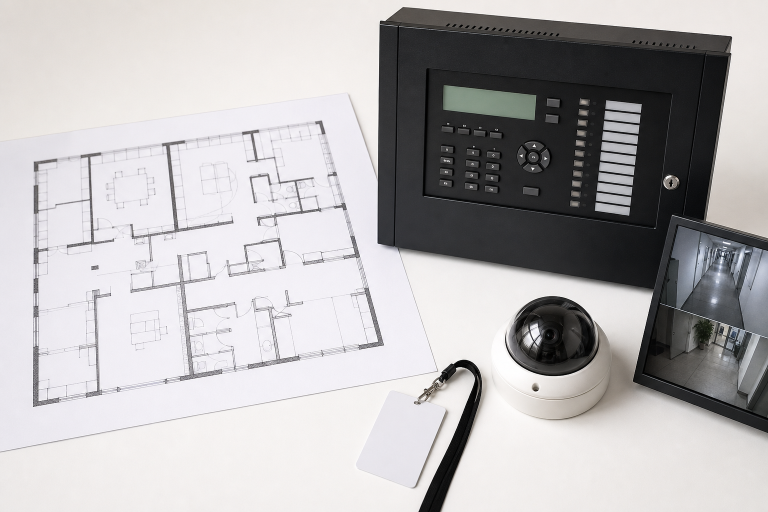
Create a simple floor plan and mark entrances, exits, bedrooms or work areas, fire risks, alarm devices, camera views, extinguishers, and gathering points. Update it after remodeling, tenant changes, or a major shift in how the building is used.
Build a Practical Fire Detection Layer
Fire protection planning should match the building’s use and applicable requirements. Depending on the property, the system may involve smoke alarms, heat detection, manual pull stations, audible and visible notification devices, carbon monoxide alarms where appropriate, emergency lighting, exit signs, sprinklers, and portable extinguishers.
For homes, the Houston Fire Department recommends smoke alarms in bedrooms, connecting hallways, living areas, and on every floor. The department also advises testing alarms monthly, cleaning them regularly, and following manufacturer instructions. Alarms should be placed where occupants can hear them, especially from sleeping areas.
Commercial spaces require more careful coordination. Heat detectors may be appropriate in locations where ordinary smoke, dust, or steam could create nuisance alarms. Equipment choices and placement should never be based solely on appearance or convenience. The system must fit the environment, building design, and required performance.
Add Burglar, Camera, and Access Controls
Security measures complement fire protection but do not replace it. Match each security layer to a specific operational concern, whether that is unauthorized entry, a vulnerable delivery door, limited visibility in a parking area, or access to sensitive equipment.
Useful Security Layers
- Perimeter protection: Door contacts, window sensors, glass-break detection, locks, fencing, and exterior lighting.
- Interior detection: Motion devices, panic buttons, duress devices, and alarms for restricted rooms.
- Video surveillance: Cameras for entrances, loading docks, parking areas, cash points, and other high-priority zones.
- Access control: Cards, mobile credentials, visitor procedures, and time-based permissions for employees or contractors.
- Remote management: Authorized alerts and camera access that allow owners or managers to check the property without sharing keys or passwords broadly.
Cameras may provide useful awareness and documentation, but they are not a substitute for reliable locks, lighting, alarms, trained personnel, or emergency procedures. A camera pointed at the right area is more valuable than a larger number of cameras placed without a coverage plan.
Review Houston Requirements Before Work Begins
Requirements can vary by occupancy, scope of work, building conditions, and the type of system involved. Before beginning a commercial installation, alteration, relocation, or major repair, owners should review the Houston Fire Department’s fire alarm permit and maintenance information and confirm the process that applies to their project.
- Identify the property’s use and occupancy.
- Determine whether permits, plan review, inspections, or documented testing may apply.
- Keep installation records, inspection reports, test results, repair notes, and current contact information.
- Use qualified, properly licensed professionals whenever the project or local rules require them.
Plan for Monitoring, Response, and Maintenance
An alert is only the beginning. Residents, employees, property managers, and monitoring contacts should understand what happens after a fire alarm, burglary alert, power outage, severe weather event, or camera communication failure. List emergency contacts, alarm passwords, utility shutoffs, evacuation routes, safe meeting points, and backup decision-makers in one accessible location.
Simple Ongoing Checklist
- Test smoke and carbon monoxide alarms according to manufacturer guidance.
- Check that camera views remain clear and that landscaping, signage, or stored materials do not block them.
- Inspect visible doors, locks, exterior lighting, and alarm devices for damage or changes.
- Remove former employees, tenants, or vendors from access and notification lists.
- Schedule required professional testing and investigate recurring false alarms.
- Refresh evacuation and emergency-response training after staff changes or renovations.
Common Questions
Should a home and a business use the same plan?
No. Similar tools may be used, but the design should reflect the building size, occupancy, operating schedule, access patterns, and requirements that apply to the property.
Are cameras enough to protect a property?
No. Cameras can improve visibility, but a dependable plan also includes physical security, alarm detection, suitable lighting, access procedures, and a clear response process.
What is the best first step for an older Houston building?
Begin with a site review. Look for outdated devices, changed room layouts, blocked camera views, weak exterior lighting, missing detection, and fire risks introduced by new equipment or storage practices.
Conclusion
A smarter Houston protection plan is not about installing the most devices. It is about selecting the right layers, putting them in useful locations, preparing people to respond, and maintaining the system as the property changes. That approach can help homeowners and business owners make their buildings safer, more manageable, and better prepared for everyday risks.