

Key Takeaways
- Digital check-in kiosks significantly reduce patient wait times and streamline administrative processes.
- They enhance data accuracy, ensuring up-to-date patient information and minimizing errors.
- These kiosks improve patient privacy by allowing discreet self-service check-ins.
- Integration with Electronic Health Records (EHR) systems facilitates seamless data management.
- Healthcare facilities report increased patient satisfaction and operational efficiency post-implementation.
Introduction
Technology plays a pivotal role in today’s healthcare environment, where speed and efficiency directly impact care quality. Among the most impactful advancements are digital check-in kiosks. By replacing manual, paper-based processes with digital workflows, these systems eliminate bottlenecks and boost operational efficiency when a patient enters the facility. As adoption spreads, healthcare providers increasingly rely on these kiosks to transform the traditional check-in process into a faster and more patient-centered experience.
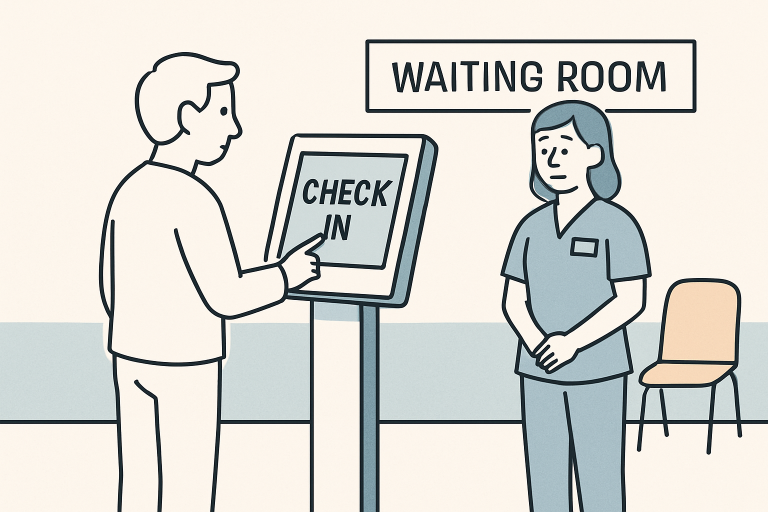
Solutions like self-service patient check-in kiosks are becoming an industry standard, with hospitals and clinics of all sizes leveraging the technology to improve frontline service and administrative operations. These systems allow patients to confirm appointments, update information, and handle copay payments easily, thereby reducing reception desk congestion and freeing valuable staff time for more critical patient needs.
Enhancing Patient Experience and Reducing Wait Times
Long queues and crowded waiting rooms have long been hallmarks of traditional healthcare check-in procedures, often straining patients and staff. The adoption of digital check-in kiosks is helping to reverse this trend by empowering patients to manage their arrival and registration independently. Notably, facilities like Boston Medical Center have seen marked improvements in wait times and overall patient satisfaction since implementing iPad-based check-in solutions. Studies reveal that even a few minutes saved per patient collectively translate into significantly improved office flow and reduced overall wait periods.
Beyond expediency, self-service kiosks foster a more personalized experience. Multilingual support, accessible interface options for those with disabilities, and the ability to quickly update demographic data make these kiosks universally valuable. All these factors contribute to increased patient satisfaction, which has emerged as a key metric in the modern healthcare landscape.
Improving Data Accuracy and Security
Manual data entry during check-in is often fraught with mistakes, leading to communication breakdowns and, in some cases, medical errors. With digital check-ins, patients directly input their details into the system, resulting in more accurate and current information populating the practice management and EHR systems. Additionally, patients can correct any discrepancies or changes at their convenience, ensuring that providers have the latest information.
Security is another crucial benefit. Leading digital check-in solutions incorporate robust encryption protocols and secure cloud storage, helping healthcare organizations comply with stringent data privacy standards such as HIPAA. This protects sensitive information and strengthens patient trust in the facility. For a deeper look at how digital kiosks contribute to data integrity and privacy, visit HealthIT.gov.
Alleviating Administrative Burdens
Reception staff in healthcare environments frequently manage a demanding mix of administrative duties, including answering phone calls, greeting and checking in patients, processing forms, and addressing complex insurance inquiries. This constant multitasking can lead to stress, slower service, and mistakes. Digital check-in kiosks offer an effective solution by automating routine tasks such as data collection, appointment confirmation, and insurance verification. This automation speeds up patient intake and minimizes repetitive data entry, significantly reducing the risk of human error. With less time spent on manual processes, staff can focus on patient engagement, problem-solving, and other high-value responsibilities. The result is improved workflow efficiency, higher patient satisfaction, and a meaningful boost in staff morale—an essential benefit amid the healthcare sector’s persistent workforce shortages and burnout challenges.
Integration with Electronic Health Records (EHR)
One of the most significant advantages of digital check-in kiosks is their seamless integration with Electronic Health Records. Upon check-in, patient information entered at the kiosk can instantly update the EHR, ensuring that all data is synchronized and accessible to clinical and administrative teams in real time. This rapid data flow means patient medical histories, allergies, and insurance details are always current, enabling more informed, safer care. Reliable EHR integration is also essential for effective care coordination and continuity, as the Health Affairs Journal emphasized in research.
Real-World Success Stories
The true measure of any healthcare innovation lies in its real-world performance. Multiple hospitals have demonstrated that digital check-in kiosks can dramatically lower wait times. An example from the New York City Health + Hospitals system showed an up to 60% reduction in patient check-in time, allowing patients to meet their providers sooner and spend less time in the waiting room. Not only did this streamline internal workflows, it also led to a notable rise in patient satisfaction metrics. More about their transformation can be read in Healthcare Dive.
Addressing Potential Challenges
While digital check-in kiosks offer efficiency, reduced wait times, and improved data accuracy, their effectiveness relies heavily on how they are introduced and managed. An intuitive, user-friendly interface is essential to accommodate patients of all ages, backgrounds, and technological skill levels. Accessibility features—such as large text, multiple language options, and audio assistance—should be built into support those with visual, hearing, or mobility impairments. Trained staff must remain available nearby to guide patients who may feel hesitant or confused. Equally important, facilities should maintain alternative check-in methods, such as in-person counters, to avoid alienating those who prefer traditional interactions. Successful deployment hinges on proactive planning, thorough staff training, and a patient-first mindset that balances innovation with empathy, ensuring no one is left behind in the transition.
Future Trends and Innovations
Innovation is accelerating in the kiosk technology sector. Artificial intelligence-powered features promise to personalize and expedite check-ins even further, while biometric authentication methods are poised to enhance secure identification and efficiency. As healthcare systems continue to digitize, digital check-in kiosks will remain core to the patient intake experience, creating opportunities for even more streamlined, secure, and patient-friendly care environments.
Digital check-in kiosks now stand at the forefront of healthcare modernization, offering tangible benefits for patients and providers. With expanded adoption and advancing capabilities, self-service solutions will continue to drive improvements in efficiency, satisfaction, and overall care quality across the industry.