
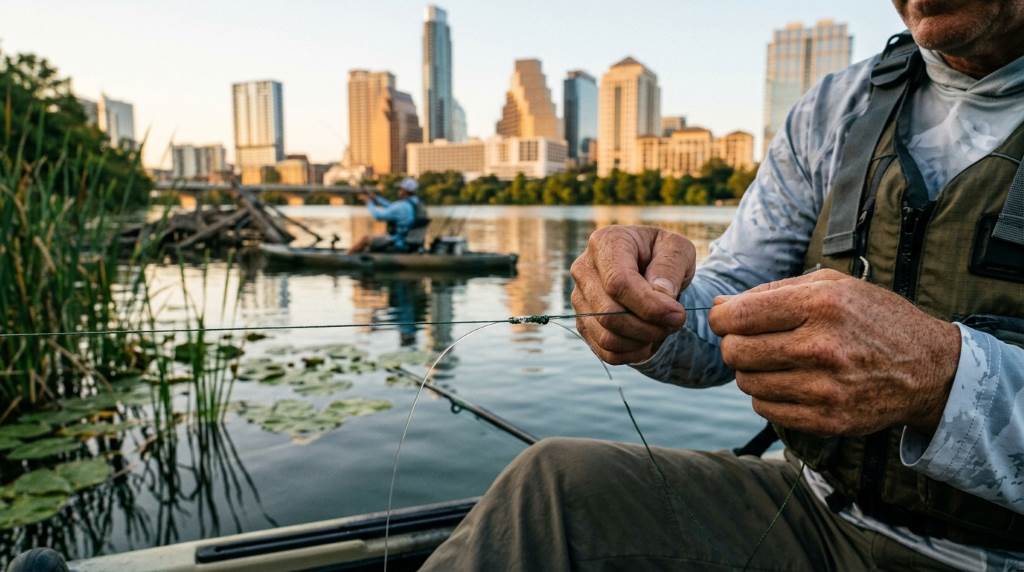
Austin holds some of the busiest freshwater fishing spots in Texas every year. Texas Parks and Wildlife reports that bass fishing remains one of the state’s most popular outdoor activities, especially across Central Texas lakes. At the same time, kayak fishing participation has grown because anglers want lower costs and better access to shallow water. Many local anglers now trust the fluoro to braid knot for bass because it improves casting control and helps handle aggressive largemouth bass. The knot also supports stealth fishing in Austin’s clear water during hot and windy conditions.
Why Austin Kayak Anglers Need Strong Line Connections
Austin lakes create difficult fishing conditions throughout most of the year. Water clarity changes fast after storms, while summer heat pushes bass into deeper cover. Kayak anglers also fight limited movement because they cannot reposition as quickly as boat anglers. As a result, every part of the setup must work smoothly under pressure.
Braided line gives excellent sensitivity when anglers target bass near docks, hydrilla, and rock edges. However, braid becomes visible in clear water around Lake Travis and Lady Bird Lake. Fluorocarbon leaders solve that problem because they stay less visible below the surface. Many anglers also combine this setup with a budget fishing travel setup to save money while keeping solid performance.
The connection knot matters more in kayaks because anglers often fish closer to structure. A weak knot can fail when bass pull into submerged timber or bridge pilings. Therefore, experienced Austin anglers focus heavily on knot strength and smooth casting. The fluoro to braid setup offers both advantages when tied correctly.
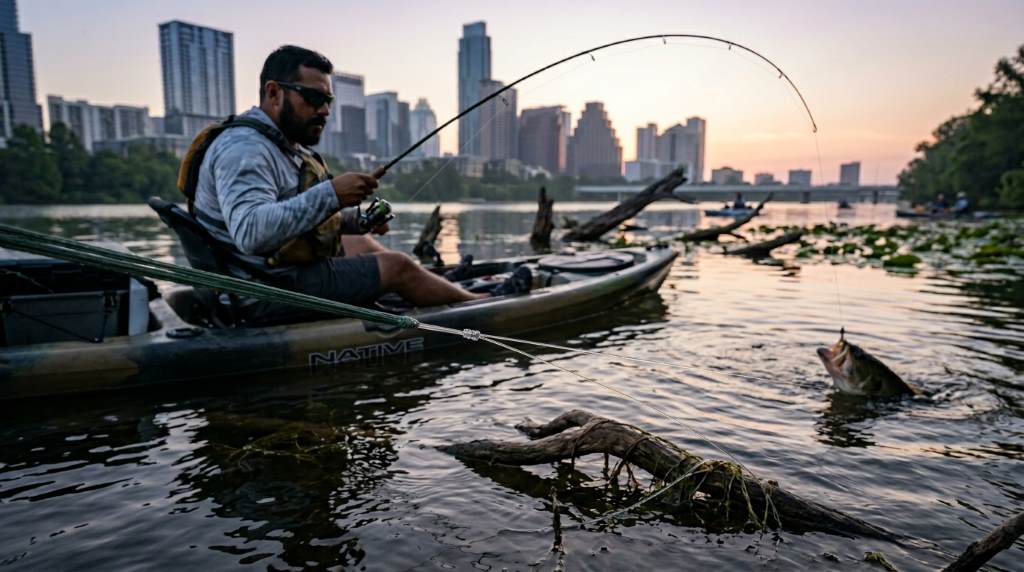
How the Fluoro to Braid System Helps Bass Fishing
Braided line gives kayak anglers excellent casting distance during windy Texas afternoons. Thin braid slices through the wind better than thick monofilament. At the same time, fluorocarbon leaders create less underwater visibility around cautious bass. This combination helps anglers present soft plastics naturally in pressured lakes.
Fluorocarbon also sinks faster than braid, which improves lure action near drop offs and ledges. Austin bass often suspend around rocky points during summer mornings. A fluorocarbon leader helps weightless worms and jigs fall with a more realistic movement. Consequently, anglers gain better strike opportunities without changing their entire reel setup.
Kayak anglers appreciate sensitivity because they sit closer to the water and feel more direct contact with the line. Braid transfers vibrations quickly when bass strike lightly near weeds or brush piles. Meanwhile, fluorocarbon adds abrasion resistance against limestone rocks common around Austin reservoirs. The result is a balanced system that performs in several fishing environments.
Key Benefits of the Setup
- Longer casting distance in open water
- Lower line visibility in clear lakes
- Better sensitivity for soft strikes
- Improved abrasion resistance near rocks
- Faster hooksets from seated kayak positions
Why Austin Waters Make This Knot So Important
Austin lakes present unique conditions that challenge anglers every season. Lake Travis often stays very clear during dry months, while Decker Lake can hold heavy vegetation. Wind also becomes unpredictable during spring afternoons across Central Texas. Therefore, anglers need line systems that adapt quickly without constant retying.
The fluoro to braid knot performs well because it passes through rod guides smoothly in compact kayak setups. Kayak anglers usually carry fewer rods than boat anglers, so versatility matters more. One rod may handle worms, jigs, and topwater lures during the same trip. This knot allows easy leader changes without rebuilding the entire spool.
Another overlooked factor involves kayak positioning during bass fights. Anglers often drift sideways while fighting fish near structure. Sudden pressure changes place heavy stress on line connections. A properly tied knot absorbs these movements better than weaker connections that slip under tension.
Local tournament anglers in Austin also prefer this setup because weather shifts happen fast across the region. Morning calm can turn into rough wind by midday. Braid keeps strong hooksets even in deeper water around submerged channels. Fluorocarbon then protects against sharp rocks and dock cables during close fights.
Best Knots Austin Kayak Anglers Commonly Use
Several knots work well for braid to fluorocarbon connections. However, Austin anglers usually prefer knots that stay compact and strong under repeated casting. The FG knot remains one of the most trusted options because it creates a slim profile. That slim design matters when anglers cast lightweight lures from seated kayaks.
The Double Uni knot also remains popular among beginners because it ties faster on the water. Many weekend anglers use it while learning kayak bass fishing around Austin parks and river sections. Some fishermen even pair the setup with a comfortable fishing chair guide when fishing longer sessions from shore before moving into kayaks. The knot may look bulkier, but it still performs well for medium sized bass.
Advanced anglers often choose the Alberto knot for finesse presentations during summer heat. Austin bass can become extremely selective when temperatures climb above 95 degrees. Smaller finesse lures demand cleaner line movement and better stealth. The Alberto knot helps maintain sensitivity while staying easier to tie than the FG knot.
Popular Knot Choices
- FG Knot for maximum strength and smooth casting
- Double Uni Knot for fast and beginner friendly tying
- Alberto Knot for finesse bass fishing setups
- Modified Albright Knot for heavy cover conditions
The Hidden Advantage Most Blogs Ignore
Many fishing blogs focus only on strength ratings and casting distance. However, Austin kayak anglers value another factor that rarely gets discussed. A good braid to fluorocarbon knot reduces paddle interference during tight kayak movement. This matters because loose line can wrap around paddle blades while repositioning near cover.
Compact knots also reduce noise when anglers skip lures under docks. Bass in pressured Austin lakes often react negatively to unnatural splashes and repeated disturbances. Smooth line movement creates quieter entries during close range presentations. Therefore, stealth becomes just as important as raw knot strength in local waters.
Another uncommon advantage involves nighttime kayak fishing around bridge lights. Austin anglers frequently target bass after sunset during summer heat waves. Fluorocarbon leaders resist abrasion from concrete pilings and underwater debris near lit areas. At the same time, braid helps anglers detect subtle strikes in low visibility conditions.
The knot also improves efficiency during sudden weather changes. Central Texas storms can develop quickly and force anglers to relocate fast. A reliable line connection reduces wasted time from constant retying after snags or hard hooksets. That efficiency matters when short feeding windows appear before storms move in.
Seasonal Strategies for Austin Bass Anglers
Spring bass fishing around Austin usually centers around shallow spawning areas. Bass move toward protected coves and grassy banks as temperatures rise. During this season, braid helps anglers pull fish away from vegetation quickly. Fluorocarbon leaders also improve lure presentation in clearer spawning zones.
Summer conditions create tougher fishing patterns because surface temperatures climb rapidly. Bass often move deeper during midday and feed aggressively at dawn or dusk. Long casts become more important because kayak anglers cannot always drift directly over fish. The braid and fluorocarbon combination supports accurate casts across windy open water.
Fall fishing improves as baitfish activity increases across Austin reservoirs. Bass chase shad aggressively near rocky shorelines and creek mouths. Fast moving reaction baits perform better during this period. Braid sensitivity helps anglers react quickly when fish strike crankbaits or spinnerbaits near structure.
Winter bass fishing demands patience and slower presentations. Fluorocarbon leaders become especially important because water clarity often improves during colder months. Subtle jig movements trigger more bites from sluggish bass. Therefore, smooth knot performance matters during repeated deep water presentations.
Practical Tips for Tying Stronger Connections
Always wet the knot before tightening because dry friction weakens fluorocarbon quickly. Many beginners rush this step and damage the leader material without noticing. Slow tightening creates a cleaner and stronger connection. Consistency matters more than tying speed during preparation.
Anglers should trim tag ends closely to reduce guide friction during repeated casts. Large tag ends can catch rod guides and weaken casting performance over time. Compact knots also move through micro guides more smoothly on modern bass rods. Consequently, anglers experience fewer interruptions while fishing tight cover.
Testing the knot before launching the kayak saves major frustration later. A quick pull test reveals weak wraps or slipping braid immediately. Austin lakes contain enough structure to punish poorly tied knots fast. Therefore, experienced anglers always check connections before starting long paddles.
Leader length should also match fishing conditions and lure style. Clear water often requires longer fluorocarbon leaders around ten feet. Heavy vegetation may work better with shorter leaders for stronger hooksets. Adjusting leader size helps anglers stay flexible during changing weather and water conditions.
Choosing the Right Gear for Austin Conditions
Medium heavy rods remain popular among Austin kayak anglers because they balance power and control well. Most local fishermen pair braid between 20 and 30 pounds with fluorocarbon leaders between 10 and 15 pounds. This setup handles largemouth bass effectively across different lake structures. It also supports both finesse and power fishing techniques.
Reel selection matters because kayak anglers often make hundreds of casts during long sessions. Smooth drag systems protect fluorocarbon leaders during sudden runs near rocks or docks. Many experienced anglers also focus on durable reel construction tips when choosing equipment that can survive harsh outdoor use. Reliable reels reduce line twist and improve knot performance over time.
Line maintenance also affects success across Austin lakes. Dirty braid absorbs debris and loses casting smoothness after repeated trips. Fluorocarbon leaders can weaken after scraping rocks and timber repeatedly. Replacing damaged leaders regularly prevents sudden failures during critical fights.
Conclusion
Austin kayak anglers rely on the fluoro to braid knot because it matches the region’s changing water conditions and aggressive bass behavior. The setup combines casting distance, sensitivity, stealth, and abrasion resistance into one practical system. It also supports fast adjustments during windy afternoons and heavy fishing pressure across Central Texas lakes. Anglers who want stronger setups and longer lasting equipment should also review these reliable fishing reel insights before their next trip. Start practicing these knots consistently so every hookset feels more controlled and confident on the water.
FAQs
What is the best braid size for Austin bass fishing?
Most kayak anglers use 20 to 30 pound braid for balanced casting and strength.
Why do Austin anglers prefer fluorocarbon leaders?
Fluorocarbon stays less visible in the clear water common across Austin lakes.
Which knot works best for beginners?
The Double Uni knot works well because it ties quickly and remains dependable.
How often should fluorocarbon leaders get replaced?
Anglers should replace leaders whenever they notice abrasions, fraying, or weakened sections.
Does the fluoro to braid setup help in windy conditions?
Yes, braid improves casting distance and sensitivity during strong Central Texas winds.