

Digital advertising can drain your budget fast. Every click costs money. However, smart marketers know that testing makes campaigns work better. That’s where contextual trigger experiments come in. These tests help you lower costs while keeping performance strong. Cakra Studio specializes in helping businesses optimize their paid campaigns through strategic testing approaches.
Understanding Contextual Triggers in Advertising
Contextual triggers are signals that tell you when to show specific ads. They include time of day, location, device type, and user behavior. Additionally, they can involve weather conditions, trending topics, or seasonal events. These triggers matter because people respond differently based on context. A lunch deal ad works better at noon than midnight. Therefore, testing different triggers helps you find what works.
Many advertisers struggle with high costs per click. They run the same ads all day to everyone. This wastes money on uninterested audiences. Instead, you need ab testing to improve ctr cpc by matching your message to the right moment. When you test contextual triggers, you discover which situations drive the best results at the lowest cost.
Why AB Testing Matters for CPC Reduction
AB testing compares two versions of something to see which performs better. In advertising, this means testing different ad elements against each other. You might test headlines, images, or targeting options. The goal is finding combinations that get more clicks for less money. However, traditional AB testing often ignores context.
Contextual trigger experiments go deeper. They test how different triggers affect your ad performance. For example, you might compare mobile ads shown during commute hours versus evening hours. Or you could test location-based triggers in different neighborhoods. This approach reveals patterns that simple AB tests miss.
Research shows that contextual relevance significantly impacts ad performance. According to Google’s advertising research, ads aligned with user context achieve higher engagement rates. When your ad matches what someone needs right now, they’re more likely to click. Moreover, these clicks often cost less because your relevance score improves.
Setting Up Contextual Trigger Experiments
Start by identifying potential triggers for your business. Think about when your customers are most likely to need your product. Also consider where they might be and what device they’re using. Make a list of at least five different contextual factors to test.
Next, create variations of your ads for each trigger. Keep most elements the same but adjust the message slightly. For instance, a breakfast restaurant might emphasize speed in morning ads but atmosphere in evening ads. These small changes make your ad feel more relevant.
Choose one trigger to test at a time. Testing too many variables together makes results confusing. You won’t know which change caused the improvement. Therefore, focus on single variables first. Run each test for at least two weeks to gather enough data.
Key Metrics to Track
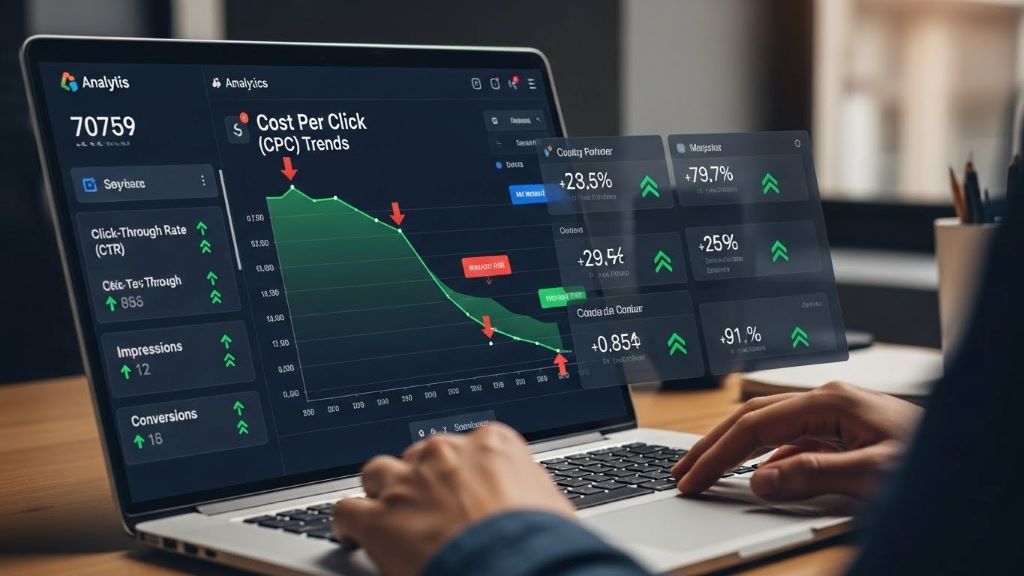
Watch your click-through rate closely. This shows how many people find your ad relevant enough to click. A rising CTR usually means your contextual targeting is working. Additionally, it often leads to lower CPC because platforms reward relevant ads.
Monitor your cost per click throughout each test. Compare the CPC for different triggers directly. Some contexts might generate more clicks but at higher costs. Others might have fewer clicks but better efficiency. Your goal is finding the sweet spot.
Conversion rate matters too. Cheaper clicks mean nothing if they don’t lead to sales. Track how different triggers affect your conversion funnel. Sometimes the most expensive clicks actually deliver the best customers. Balance cost savings with quality results.
Common Trigger Types to Test
Time-based triggers work well for many businesses. Test different hours, days of the week, or seasons. A coffee shop might find morning ads perform best. Meanwhile, a movie theater might see better results with evening campaigns. The data will surprise you.
Location triggers help businesses with physical presence. Test ads shown near your store versus farther away. Also experiment with different neighborhood demographics. Urban areas often behave differently than suburbs.
Device-based triggers matter more than ever. Mobile users have different needs than desktop users. Test separate campaigns for each device type. Additionally, consider tablet users as a distinct segment. Their behavior often falls somewhere between phones and computers.
Weather-triggered ads work surprisingly well for relevant businesses. The Weather Company reports that weather-based advertising can increase relevance dramatically. Test how rain, heat, or cold affects your ad performance. A fitness studio might promote outdoor classes on sunny days but indoor options when it rains.
Analyzing Your Test Results
Give each test enough time to collect meaningful data. Two weeks minimum lets you capture different days and patterns. However, a full month provides even better insights. Rush decisions based on small sample sizes lead to mistakes.
Look for statistical significance in your results. A small difference might be random chance. Use confidence intervals to determine if changes are real. Most advertising platforms provide these calculations automatically.
Compare not just averages but distributions. One trigger might have consistent performance while another varies wildly. Consistency helps with budget planning. Therefore, stable triggers often work better long-term even if their average CPC is slightly higher.
Implementing Winning Triggers
Once you find winning combinations, scale them gradually. Don’t immediately shift your entire budget to new triggers. Start with a small increase and monitor performance. Sometimes what works at small scale changes at large scale.
Create automated rules based on your findings. Most advertising platforms let you adjust bids by context. Set higher bids for your best-performing triggers. Lower bids for contexts that underperform. This optimization happens automatically after setup.
Keep testing even after finding winners. Markets change and audiences evolve. What works today might not work next month. Therefore, always have at least one active experiment running. Continuous improvement keeps your CPC low.
Advanced Trigger Combinations
After mastering single triggers, try combining multiple factors. Test time plus location together. Or device plus weather. These combinations can reveal powerful insights. However, they require more traffic to test properly.
Create audience segments based on trigger patterns. Some users respond well to certain contexts repeatedly. Build remarketing lists targeting these high-value patterns. This approach maximizes your testing investment.
Use seasonal triggers for major events. Holidays, sporting events, and cultural moments all affect behavior. Plan your tests around these dates. Preparation lets you capitalize on opportunities quickly.
Common Mistakes to Avoid
Don’t test too many things simultaneously. This creates confusion and wastes money. Focus on one variable at a time. Patience leads to clearer insights.
Avoid ending tests too early. A few days of data rarely tells the full story. Wait for statistical significance before making decisions. Otherwise, you might kill a winning variation prematurely.
Never ignore negative results. Failed tests teach valuable lessons. They show you what doesn’t work, saving future budget. Document everything for reference later.
Budget Considerations
Start with a modest testing budget. You don’t need thousands of dollars to learn valuable insights. Even a few hundred dollars can reveal important patterns. Scale spending as you find winners.
Allocate at least 10 percent of your total ad budget to testing. This ensures continuous improvement without risking everything. Successful tests more than pay for themselves through CPC reductions.
Track your return on testing investment. Calculate how much you save from CPC drops versus your testing costs. Most businesses find that systematic testing delivers five to ten times its cost in savings.
Conclusion
Contextual trigger AB experiments offer a powerful way to reduce your advertising costs. By testing when, where, and how you show ads, you find the most efficient combinations. This approach goes beyond basic AB testing to consider the full context of each impression. Start with simple triggers like time and location. Track your metrics carefully and give tests enough time to produce reliable data. Implement winners gradually while continuing to experiment. The result is lower CPC, better CTR, and more efficient advertising spending. Your budget goes further while reaching the right people at the right moments.
Frequently Asked Questions
How long should I run a contextual trigger AB test?
Run each test for at least two weeks, preferably four weeks. This timeframe captures different days, weekends, and behavioral patterns. Shorter tests might miss important variations in your audience behavior.
Can contextual triggers work for small advertising budgets?
Yes, contextual triggers work at any budget level. Start with simple time-based tests that don’t require additional spending. Even small accounts can test morning versus evening performance to find better efficiency.
What’s the biggest mistake in contextual AB testing?
Testing too many variables at once is the most common error. This makes it impossible to know which change caused your results. Focus on one contextual factor at a time for clear insights.
How much can contextual triggers reduce my CPC?
Results vary by industry and implementation, but most businesses see 15 to 40 percent CPC reductions. Some highly optimized campaigns achieve even greater savings through systematic contextual testing.
Do I need special tools for contextual trigger testing?
Most major advertising platforms include built-in tools for contextual testing. Google Ads, Facebook Ads, and other platforms let you segment by time, location, and device without additional software.
Related Topics:
Troubleshooting Temu Removal: Complete Guide to Clean Your Computer
AI-Powered Study Assistants: Best Picks & Features