
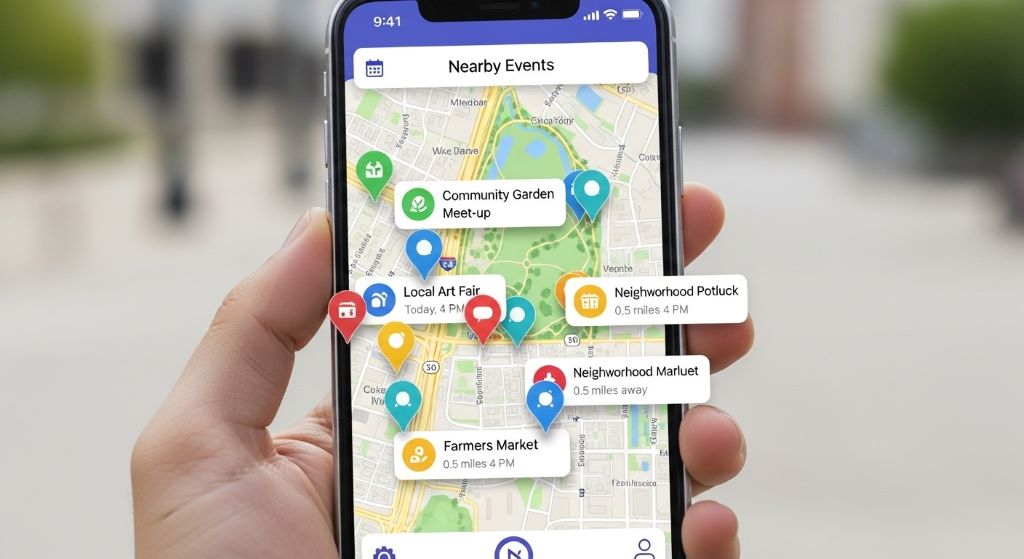
The way we discover events happening around us is changing rapidly. Instead of learning about nearby activities days or weeks in advance, people now receive instant notifications about what’s happening within blocks of their location. This shift represents a fundamental transformation in how communities connect and interact. Real-time micro-local event signaling allows residents to stay informed about everything from pop-up markets to emergency situations as they unfold. According to Index Marks, this technology is reshaping how neighborhoods communicate and build stronger local bonds.
Traditional event discovery methods often fail to capture the spontaneous nature of community life. However, modern technology now enables immediate awareness of activities happening in your immediate vicinity. Hyperlocal communications systems deliver information tailored to specific neighborhoods or even individual streets. This precision ensures that people receive only relevant updates about their surroundings. As a result, communities become more connected and responsive to local happenings.
The technology behind these systems relies on sophisticated location-based algorithms. These tools analyze user location data to determine which events are truly nearby and relevant. Additionally, they filter out noise from broader regional announcements that don’t apply to specific micro-locations.
How Real-Time Event Signaling Works
The mechanics of micro-local event signaling combine several technological elements. First, event creators input specific geographic coordinates or address information when posting announcements. The system then creates a virtual boundary around that location. Next, users within that boundary receive notifications based on their preferences and proximity. This process happens instantly, ensuring timely awareness.
Mobile applications serve as the primary interface for these systems. Users can customize their notification radius, choosing to receive alerts for events within one block, five blocks, or a mile. Furthermore, they can filter by event type, such as community gatherings, safety alerts, or commercial promotions. This customization prevents notification overload while maintaining awareness.
The verification process is crucial for maintaining system integrity. Many platforms require event hosts to confirm their location through GPS authentication. Some systems also incorporate user reporting features to flag inaccurate or spam content. Therefore, the information remains reliable and trustworthy.
Benefits for Community Engagement
Real-time micro-local event signaling strengthens neighborhood relationships in multiple ways. Residents discover impromptu gatherings they might otherwise miss, like spontaneous block parties or last-minute yard sales. Moreover, local businesses can announce flash sales or special events to nearby customers instantly. This immediacy creates opportunities for organic community interactions.
Safety represents another significant advantage of these systems. Emergency notifications about accidents, road closures, or security concerns reach residents within seconds. Consequently, people can make informed decisions about their movements and take necessary precautions. Neighborhood watch groups particularly benefit from this rapid information sharing.
Small businesses gain a competitive edge through micro-local signaling. Instead of spending money on broad advertising campaigns, they can target potential customers within walking distance. A café can announce fresh pastries to people passing by, while a bookstore can promote an author appearance to local literature enthusiasts. These targeted announcements generate higher engagement rates than traditional marketing methods.
Challenges and Considerations
Despite its advantages, real-time event signaling faces several obstacles. Privacy concerns remain at the forefront of user hesitation. Many people worry about sharing their precise location data, even when it enables better service. Therefore, platform developers must implement robust privacy protections and transparent data usage policies.
Notification fatigue presents another challenge for these systems. When users receive too many alerts, they may disable notifications entirely or ignore important messages. Platforms must strike a balance between keeping users informed and avoiding overwhelming them. Smart filtering algorithms and user control options help address this issue.
Digital divide considerations cannot be ignored either. Not everyone owns a smartphone or has reliable internet access. Communities must ensure that critical information reaches all residents, not just those with advanced technology. Hybrid approaches combining digital notifications with traditional methods like community boards may be necessary.
Integration with Smart City Infrastructure
Modern urban planning increasingly incorporates real-time communication systems. Smart city initiatives use sensors and connected devices to gather data about local conditions. This information feeds into event signaling platforms, creating a comprehensive awareness network. For example, traffic sensors can trigger alerts about congestion, while environmental monitors can warn about air quality issues.
Public transportation systems benefit significantly from integration with micro-local signaling. Commuters receive real-time updates about delays, route changes, or crowding at nearby stations. According to The New York Times, cities implementing these systems report higher public transit satisfaction rates. Transit authorities can also communicate service updates directly to affected passengers.
Municipal governments use these platforms to enhance civic engagement. City officials can announce town hall meetings, community clean-up events, or public consultations to residents in specific districts. This targeted approach increases participation rates and ensures that announcements reach the most relevant audiences.

The Role of Artificial Intelligence
Artificial intelligence enhances micro-local event signaling through predictive analytics and personalization. Machine learning algorithms analyze user behavior patterns to predict which events might interest specific individuals. Over time, the system becomes better at delivering relevant notifications while filtering out irrelevant content.
Natural language processing helps categorize events automatically based on their descriptions. This technology can distinguish between a concert, a protest, and a farmers market without manual tagging. Furthermore, AI can detect potential conflicts or overlapping events in the same location, alerting organizers to scheduling issues.
Sentiment analysis tools monitor community response to events in real-time. Organizers can gauge interest levels and adjust their plans accordingly. If an event generates significant positive buzz, they might extend its duration or add capacity. Conversely, low engagement signals might prompt them to enhance promotion efforts.
Future Trends and Innovations
The evolution of micro-local event signaling continues to accelerate. Augmented reality integration will soon allow users to view event information overlaid on their physical surroundings through smartphone cameras. Imagine pointing your device down a street and seeing virtual banners for events happening at each location.
Wearable technology will make event notifications even more seamless. Smartwatches and other devices can deliver gentle alerts without requiring users to check their phones constantly. Voice-activated assistants will enable hands-free event discovery and RSVP functions.
Blockchain technology may revolutionize event verification and ticketing for micro-local activities. Decentralized systems could eliminate fraudulent event listings while providing secure, tamper-proof attendance records. This innovation would particularly benefit paid events and exclusive gatherings.
Cross-platform integration will expand reach and functionality. Users might receive notifications through social media, messaging apps, and dedicated event platforms simultaneously. This multi-channel approach ensures that important information reaches people regardless of their preferred communication method.
Conclusion
Real-time micro-local event signaling represents a significant advancement in community connectivity and urban living. By delivering instant, location-specific information, these systems empower residents to engage more fully with their neighborhoods. The technology benefits everyone from individual residents seeking social connections to businesses attracting local customers and municipalities improving civic engagement. While challenges like privacy concerns and digital access gaps require ongoing attention, the potential for stronger, more responsive communities is substantial. As technology continues to evolve, micro-local event signaling will become an increasingly integral part of how we experience and interact with our immediate surroundings. The future of neighborhood communication is here, and it’s happening in real-time.
Frequently Asked Questions
What is real-time micro-local event signaling?
Real-time micro-local event signaling is a technology that delivers instant notifications about events, activities, or situations happening within a very small geographic area, typically within a few blocks of your current location. It uses GPS and location-based services to provide hyper-relevant information.
How does micro-local event signaling differ from regular event apps?
Unlike traditional event platforms that show activities across an entire city or region, micro-local signaling focuses exclusively on your immediate neighborhood. It provides real-time updates rather than advance event listings, emphasizing spontaneous and time-sensitive information relevant to your exact location.
Is my privacy protected when using location-based event apps?
Reputable platforms implement strong privacy protections, including encrypted data transmission and user control over location sharing. You can typically adjust your privacy settings, choose when to share location data, and control what information is visible to others. Always review the privacy policy before using any location-based service.
Can businesses benefit from micro-local event signaling?
Yes, businesses can significantly benefit by reaching potential customers within walking distance. Local shops, restaurants, and service providers can announce special offers, new products, or time-sensitive promotions to nearby consumers, resulting in higher engagement rates and foot traffic compared to broader advertising methods.
What happens if I’m in an area without good internet connectivity?
Most micro-local event apps require internet connectivity to function properly. However, some platforms offer offline modes that cache recent event information. For critical safety alerts, some systems integrate with SMS messaging to ensure notifications reach users even without data connectivity.
Related Topics:
AI-Powered Study Assistants: Best Picks & Features
Local Hawaii Digital Marketing | Strategies That Work