

The way we learn and remember information is not solely a function of the brain. The body plays a crucial role in cognition, influencing how knowledge is processed, retained, and recalled. This concept, known as embodiment, suggests that physical movement and sensory engagement are deeply intertwined with learning and memory. Whether it’s a child using gestures to grasp mathematical concepts or an athlete developing muscle memory, embodied experiences strengthen cognitive abilities.
For those interested in career growth and lifelong learning, it’s also helpful to explore Career Beez to find insights on skill-building strategies that leverage embodied cognition. This article will explore how movement, sensory experiences, and body-mind connections influence our ability to learn and remember, backed by scientific research and real-world applications.
Understanding Embodiment: More Than Just Physical Movement
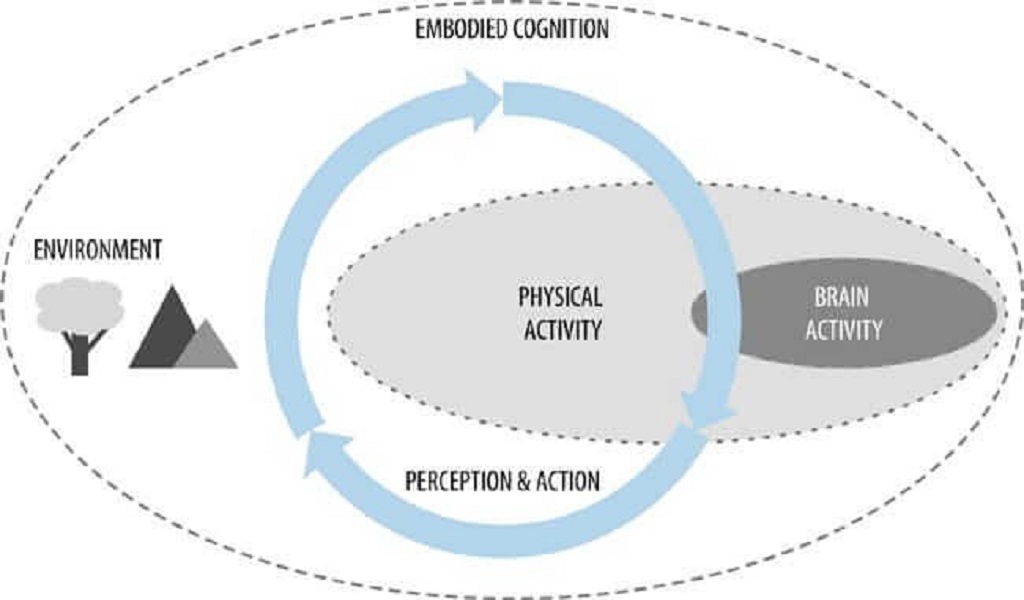
Embodiment refers to the idea that cognition is influenced by the body’s interactions with the physical world. It challenges the traditional notion that the mind operates independently of the body. Instead, our thoughts, memories, and learning processes are deeply connected to bodily actions, sensory experiences, and environmental interactions.
Studies have shown that engaging the body during learning can enhance memory retention, improve problem-solving skills, and deepen comprehension. This is especially relevant in educational settings where active learning methods—such as role-playing, interactive simulations, and kinesthetic learning—are proving to be more effective than traditional passive learning approaches.
Even in higher education, where students often face rigorous academic challenges like completing dissertations, understanding the role of embodiment can be invaluable. If you’re pursuing advanced studies and wondering about the average length of PhD, you can check out https://www.careerbeez.com/career-building-ideas/how-long-does-it-take-to-obtain-a-phd/ to get a clearer picture of the time commitment involved.
The Science Behind Embodied Cognition
Research in cognitive science and neuroscience supports the idea that bodily movements shape cognitive functions. According to a study published in Cognitive Science, learners who use hand gestures while solving math problems perform better than those who rely solely on verbal explanations. This is because gestures create an external representation of abstract concepts, making them easier to grasp and remember.
Neuroscientific studies have also shown that when people engage in physical activities while learning, brain regions associated with both motor control and memory are activated simultaneously. This dual activation strengthens neural pathways, making information more accessible for future recall.
The Link Between Movement and Memory Retention
Why Does Physical Activity Enhance Memory?
Memory retention is closely tied to physical movement. When we engage in activities such as walking, dancing, or even simple hand movements while learning, we activate multiple brain regions, including the hippocampus, which is crucial for memory formation.
- A study by the American Psychological Association (APA) found that students who studied while walking had better recall than those who remained seated.
- Another study in Nature Neuroscience highlighted that moderate exercise increases the production of brain-derived neurotrophic factor (BDNF), a protein that supports memory and cognitive function.
The Role of Muscle Memory in Learning
Muscle memory is another key aspect of embodiment in learning. When individuals repeatedly perform an action, whether it’s playing a musical instrument, practicing a sport, or typing on a keyboard, their bodies encode these movements into long-term memory. This allows for faster and more efficient recall of skills over time.
Embodied Learning in Education: A Game-Changer for Students
How Schools and Universities Are Adopting Embodied Learning
Many educational institutions are integrating embodied learning techniques into their curricula to enhance student engagement and comprehension.
- STEM Education: Robotics and hands-on experiments allow students to interact physically with concepts, making them easier to understand.
- Language Learning: Acting out words and phrases improves vocabulary retention and pronunciation.
- Mathematics: Using hand gestures or movement-based games strengthens conceptual understanding.
Virtual Reality (VR) and Augmented Reality (AR) in Learning
With advancements in technology, VR and AR are revolutionizing embodied learning. These tools create immersive experiences where students can interact with digital objects, making abstract subjects more tangible. For example, medical students can perform virtual surgeries, and history students can explore ancient civilizations through virtual tours.
The Connection Between Sensory Experiences and Cognitive Processing
How Touch, Sound, and Vision Influence Learning
Sensory input plays a crucial role in how information is processed. Studies have shown that learning through multiple sensory modalities—such as sight, sound, and touch—leads to stronger memory retention than learning through a single modality.
- Haptic Learning: Touch-based interactions, such as using tactile learning tools, enhance spatial reasoning.
- Auditory Learning: Music and rhythmic patterns improve linguistic and mathematical skills.
- Visual Learning: Color-coded notes and diagrams strengthen memory recall.
The Role of Emotions in Embodied Cognition
Emotions also influence learning and memory. Positive emotions, such as excitement and curiosity, enhance neural connections and improve retention. Conversely, stress and anxiety can impair memory by increasing cortisol levels, which negatively impact the hippocampus.
Practical Applications of Embodied Learning in Everyday Life
Workplace Training and Skill Development
Many industries are leveraging embodied learning techniques to train employees. For example, flight simulators help pilots practice emergency procedures, while interactive workshops improve leadership and teamwork skills.
Mindfulness and Cognitive Enhancement
Practices such as yoga, Tai Chi, and meditation integrate movement with cognitive function, enhancing focus, memory, and problem-solving abilities. Research has shown that regular mindfulness exercises can improve both working memory and long-term retention.
Future Directions: How Embodied Cognition Will Shape Learning
AI and Robotics in Embodied Learning
The integration of artificial intelligence and robotics into education is opening new possibilities for embodied learning. Smart robots that mimic human gestures and interactions are being used to teach social skills to children with autism, demonstrating how movement-based learning can be tailored to individual needs.
Brain-Computer Interfaces (BCIs) and Learning
Emerging technologies such as BCIs allow direct communication between the brain and digital devices, potentially revolutionizing the way we learn by enhancing cognitive capabilities through real-time feedback and interaction.
Read More Also: How to Get Motivation Back: Unlocking Your Drive for Success
Conclusion
The impact of embodiment on learning and memory is profound, with research consistently showing that physical movement, sensory experiences, and environmental interactions enhance cognitive function. From improving classroom learning to optimizing workplace training, embodied cognition is transforming the way we acquire and retain knowledge.
As technology continues to evolve, incorporating movement-based and immersive learning experiences will be crucial in maximizing human potential. Whether you’re a student, educator, or professional, understanding and applying these principles can significantly enhance cognitive performance and memory retention.
FAQs
How does movement improve memory retention?
Physical activity increases blood flow to the brain and stimulates the hippocampus, a key area for memory formation. It also enhances neural connections, making recall more efficient.
What are some examples of embodied learning?
Examples include role-playing in language learning, using gestures in math, performing virtual dissections in biology, and practicing sports drills for skill mastery.
Can embodied learning benefit adults?
Yes, adults can improve memory and problem-solving skills through activities such as hands-on training, mindfulness exercises, and interactive learning experiences.
Is there scientific evidence supporting embodied cognition?
Yes, studies in neuroscience and psychology have shown that movement enhances learning and memory by activating multiple brain regions simultaneously.
How can teachers incorporate embodiment in classrooms?
Teachers can use interactive activities like storytelling with gestures, hands-on experiments, and movement-based games to engage students and reinforce learning.
Does stress affect embodied learning?
Yes, high levels of stress can impair memory and cognitive function. However, activities like deep breathing and mindful movement can counteract these effects.