
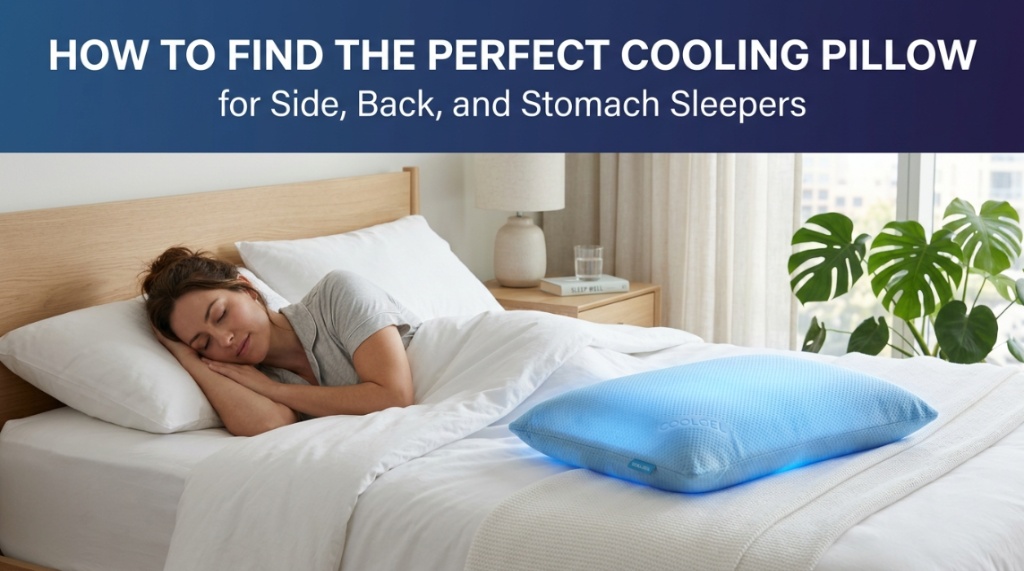
At exactly 2:43 a.m., many people experience the same frustration: they wake up sweaty, flip their pillow searching for a cooler side, and struggle to fall back asleep. The problem isn’t always the mattress or room temperature. In many cases, the pillow is trapping heat and failing to support proper neck alignment. The right cooling pillow can solve both issues by promoting airflow and supporting healthy sleep posture. Whether you’re a side sleeper, back sleeper, stomach sleeper, or someone who constantly changes positions throughout the night, choosing the right pillow can significantly improve sleep quality. A cooling pillow is specifically designed to regulate temperature while maintaining proper support, helping reduce overheating, discomfort, and interrupted sleep.
What Is a Cooling Pillow and Why Does It Matter?
A cooling pillow is a pillow designed with breathable materials, moisture-wicking fabrics, or heat-dissipating technologies that help regulate temperature throughout the night.
Unlike traditional pillows that can trap body heat, cooling pillows use specialized materials such as gel-infused memory foam, latex, bamboo-derived fabrics, and ventilated designs to improve airflow. This helps create a more comfortable sleep environment and reduces the chances of waking up overheated.
Sleep temperature plays a major role in overall sleep quality. Research consistently shows that maintaining a cooler sleeping environment helps support deeper and more restorative sleep cycles. Because the head and neck naturally release body heat, a cooling pillow can make a noticeable difference in comfort and sleep performance.
Why Does Your Sleep Position Affect Which Cooling Pillow You Need?
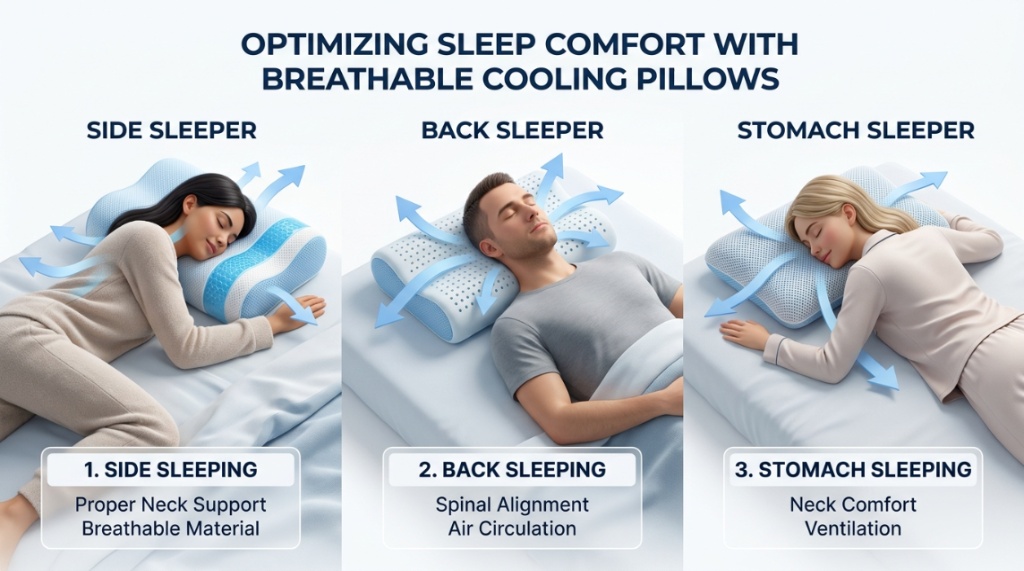
Your sleep position determines how much support, loft, and firmness your pillow should provide to maintain proper spinal alignment.
Different sleeping positions place varying levels of pressure on the neck, shoulders, and spine. Choosing the wrong pillow can contribute to stiffness, discomfort, and poor sleep quality. Understanding how proper pillow support helps maintain spinal alignment during sleep can help you make a more informed purchasing decision.
- Side sleepers require higher loft and firmer support.
- Back sleepers need medium loft and balanced support.
- Stomach sleepers benefit from lower loft and softer cushioning.
- Combination sleepers need adaptable support that accommodates movement.
The goal is always the same: keep the head, neck, and spine aligned in a neutral position.
What Features Should You Look for in a Cooling Pillow?
The best cooling pillows combine temperature regulation, support, durability, and pressure relief.
Not all cooling pillows use the same technology. Some focus on airflow, while others actively dissipate heat using advanced materials.
Breathable Fill Materials
- Gel-infused memory foam
- Shredded memory foam
- Natural latex
- Down alternative fibers
- Microfiber blends
Cooling Cover Materials
- Bamboo-derived rayon
- Tencel fabric
- Cotton percale
- Phase-change material covers
- Cooling polyester blends
Adjustable Loft Options
Many premium cooling pillows allow users to add or remove fill material. This makes them suitable for multiple sleeping positions and changing comfort preferences.
Pressure Relief and Support
The best cooling pillow should relieve pressure while supporting the natural curve of the neck.
Which Cooling Pillow Is Best for Side Sleepers?
Side sleepers typically need a high-loft cooling pillow with firm support to fill the space between the shoulder and head.
Side sleeping is one of the most common sleep positions. However, because the shoulder creates a larger gap between the mattress and the head, insufficient pillow height can cause neck strain.
Many shoppers compare different pillow materials before choosing a cooling option. Learning the differences between memory foam and cooling pillow technologies can help determine which construction best supports your sleep needs.
Ideal features for side sleepers include:
- High loft (4–6 inches)
- Firm support
- Pressure relief for shoulders
- Cooling gel technology
- Adjustable fill options
Shredded memory foam cooling pillows often perform particularly well because they offer both support and airflow.
Can a Cooling Pillow Reduce Shoulder Pain?
Yes. A properly sized cooling pillow can help reduce shoulder pressure by maintaining better neck and spinal alignment.
When the pillow supports the head correctly, pressure is distributed more evenly throughout the upper body.
Which Cooling Pillow Is Best for Back Sleepers?
Back sleepers generally need a medium-loft cooling pillow that supports the natural curvature of the cervical spine.
Back sleeping is often considered one of the healthiest sleeping positions because it distributes body weight evenly. However, excessive pillow height can push the head forward and create strain.
Back sleepers should prioritize:
- Medium loft
- Medium firmness
- Neck contouring support
- Cooling foam or latex
- Breathable cover materials
A contoured cooling pillow can be particularly effective because it supports the neck while keeping the head properly aligned.
Is Memory Foam Good for Back Sleepers?
Yes. Memory foam cooling pillows often provide excellent pressure relief and support for back sleepers when paired with the correct loft.
Which Cooling Pillow Is Best for Stomach Sleepers?
Stomach sleepers usually need a low-loft cooling pillow to minimize neck strain and maintain better spinal positioning.
Stomach sleeping naturally rotates the neck and can place stress on the spine. Thick pillows often worsen this issue by elevating the head too much.
Recommended features include:
- Low loft profile
- Soft cushioning
- Flexible support
- Lightweight construction
- Breathable cooling materials
Down alternative cooling pillows are often popular among stomach sleepers because they compress easily while remaining breathable.
Should Stomach Sleepers Sleep Without a Pillow?
Some stomach sleepers benefit from sleeping without a pillow, but a thin cooling pillow often provides a better balance of comfort and support.
What Is the Best Pillow for All Sleep Positions?
The best pillow for all sleep positions is an adjustable cooling pillow that adapts to movement and changing sleep posture throughout the night.
Combination sleepers frequently switch between side, back, and stomach sleeping. Because of this, they need a pillow capable of adapting to multiple support requirements.
Important features include:
- Adjustable loft
- Responsive fill materials
- Temperature regulation
- Pressure-relieving support
- Durable construction
If you regularly change positions during sleep, consider exploring a specialized pillow designed for combination sleepers that offers adaptable support throughout the night.
How Do Different Cooling Pillow Materials Compare?
Different materials offer unique benefits in cooling performance, support, durability, and comfort.
| Material | Cooling Performance | Support Level | Best For |
|---|---|---|---|
| Gel Memory Foam | High | Medium-Firm | Side & Back Sleepers |
| Shredded Memory Foam | High | Adjustable | Combination Sleepers |
| Natural Latex | Very High | Responsive | Hot Sleepers |
| Down Alternative | Moderate | Soft | Stomach Sleepers |
| Feather Blend | Moderate | Adjustable | Mixed Sleepers |
Do Cooling Pillows Actually Work?
Yes. Quality cooling pillows can significantly improve airflow and reduce heat retention compared to traditional pillows.
Although no pillow stays cold forever, advanced cooling technologies help dissipate heat more effectively.
Cooling pillows work through:
- Enhanced airflow
- Moisture management
- Heat dissipation
- Breathable fabrics
- Ventilated construction
Many hot sleepers report fewer nighttime awakenings and improved comfort after switching to a cooling pillow.

How Long Does a Cooling Pillow Last?
Most cooling pillows last between one and three years depending on material quality, maintenance, and frequency of use.
Signs it may be time for replacement include:
- Visible sagging
- Loss of support
- Persistent neck discomfort
- Flattened shape
- Reduced cooling performance
Replacing pillows at appropriate intervals helps maintain both hygiene and proper support.
Conclusion: How Do You Choose the Perfect Cooling Pillow?
The perfect cooling pillow depends on your sleep position, support needs, and temperature preferences.
Side sleepers typically need higher loft and firmer support. Back sleepers benefit from medium loft and balanced cushioning. Stomach sleepers require thinner profiles, while combination sleepers often achieve the best results with adjustable designs.
By focusing on cooling technology, pillow materials, loft, and spinal alignment, you can find a solution that supports better sleep quality and long-term comfort. If you frequently switch positions throughout the night, reviewing expert recommendations for choosing a pillow that accommodates multiple sleep styles can help narrow your options.
The right cooling pillow does more than keep you comfortable. It helps support healthier sleep habits, better recovery, and more energized mornings.
Frequently Asked Questions
What is a cooling pillow?
A cooling pillow is designed to regulate temperature using breathable materials, cooling fabrics, and airflow-enhancing construction.
Are cooling pillows worth buying?
Yes. Cooling pillows can improve comfort, reduce overheating, and support uninterrupted sleep, especially for hot sleepers.
Which cooling pillow is best for side sleepers?
High-loft, firm-support cooling pillows are generally best for side sleepers because they help maintain proper spinal alignment.
Can cooling pillows help with neck pain?
Yes. A properly fitted cooling pillow can improve neck alignment and reduce pressure that contributes to discomfort.
Do cooling pillows stay cool all night?
While they do not remain cold indefinitely, cooling pillows typically dissipate heat much better than traditional pillows.
What is the best pillow for all sleep positions?
An adjustable cooling pillow is often the best pillow for all sleep positions because it can adapt to changing support needs.
How often should I replace a cooling pillow?
Most cooling pillows should be replaced every one to three years depending on wear, support retention, and material quality.