
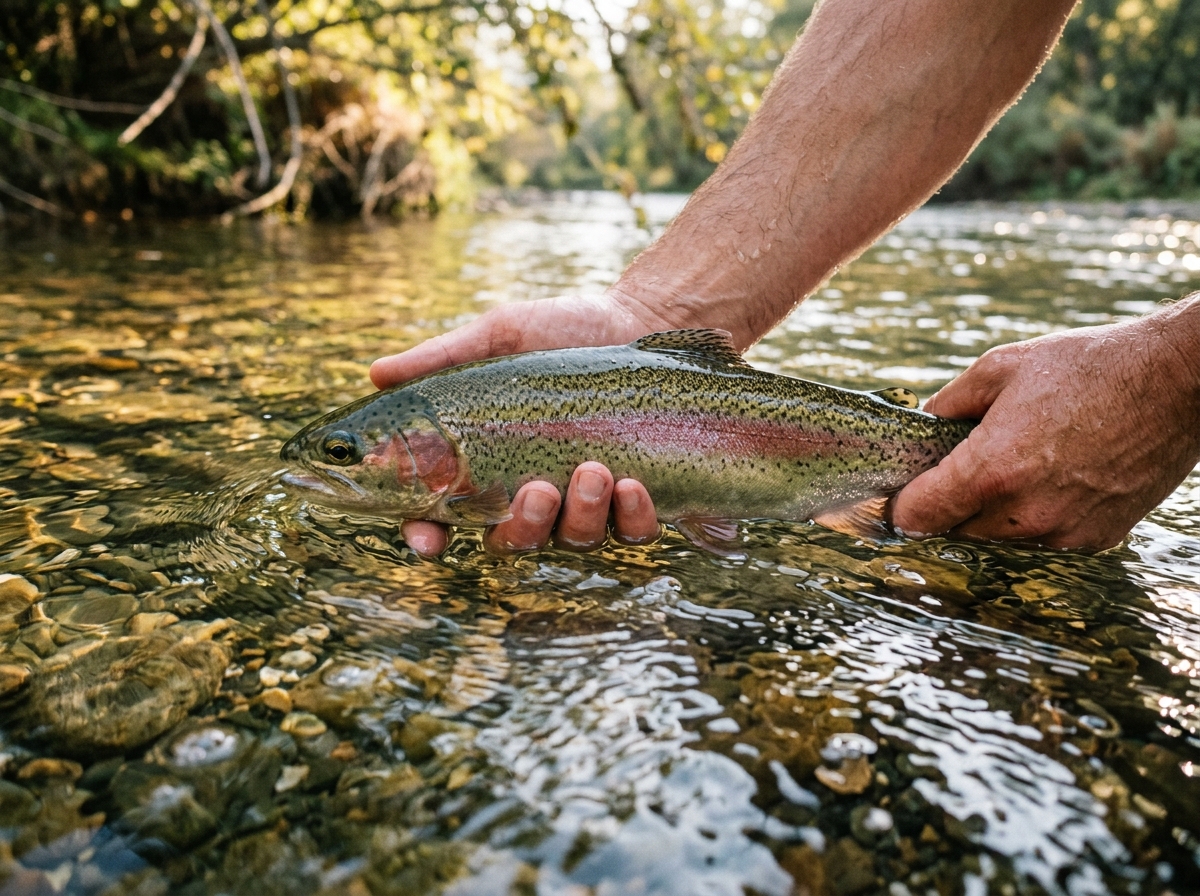
A fish that’s been fought, netted, and lifted for a photo has already spent a lot of energy. How you handle it in the next thirty seconds often decides whether it swims away strong or doesn’t swim away at all. Catch-and-release only works when the release part is done right, and one of the most overlooked details is weight. Knowing how to weigh a fish with a hook scale without harming it can mean the difference between a healthy release and a fatal one. This guide covers the handling practices, tools, and small decisions that make responsible release possible.
Quick Answer
Weigh a fish with a hook scale by wetting your hands and the scale, supporting the fish’s body horizontally (never vertically by the jaw), hooking the scale through the jaw or using a weigh sling, and reading the weight quickly. Keep the fish out of the air for no more than about 15–30 seconds, and release it immediately. If the fish is large or exhausted, skip the weight entirely—length and girth measurements are far gentler.
Key Takeaways
- Support a fish horizontally when weighing it; hanging a heavy fish vertically by the jaw can damage its spine and internal organs.
- Wet your hands, the scale, and any sling before touching the fish to protect its protective slime coat.
- Keep air exposure under roughly 30 seconds, and if the fish is large or tired, measure length and girth instead of weighing.
- A hook scale is fast and accurate, but a weigh sling is the safer tool for big or stressed fish.
- Revive the fish in the water before release—hold it upright until it kicks away under its own power.
Why Catch-and-Release Etiquette Matters More Than Most Anglers Think
Releasing a fish is not the same as saving it. A fish that swims off can still die hours later from stress, injury, or infection caused by rough handling.
According to widely cited fisheries research, a portion of released fish do not survive, and survival rates depend heavily on factors like water temperature, fight time, hook location, and handling. In warm water, for example, survival drops noticeably because fish are already stressed by low oxygen. A fish held out of the water for a long photo session in warm conditions faces far worse odds than one unhooked and released in seconds.
The practical takeaway: your handling choices—not just the fact that you released the fish—determine the outcome. Weighing is one part of that, and it’s the part most anglers get careless with.
How to Weigh a Fish with a Hook Scale Without Harming It
The correct method is quick, supported, and wet. Here is the step-by-step process.
- Prep the scale first. Zero it, set it to your preferred unit, and have it ready before the fish is out of the water. Every second of fumbling is a second the fish is exposed.
- Wet your hands and the scale. Dry hands strip the protective slime coat, which is the fish’s first defense against infection. Wet hands, a wet sling, and a wet hook reduce damage.
- Unhook the fish with forceps or pliers, ideally while it’s still in the net in the water.
- Attach the scale correctly. Hook the scale through the lower jaw or the corner of the mouth, or place the fish in a wet weigh sling and hang the sling. Never gill-hook or hang a fish by the eye sockets.
- Support the body. For heavier fish, cup one hand under the belly so the weight isn’t pulling entirely on the jaw.
- Read the weight fast. Let the fish hang for only a few seconds until the scale settles, then note the number. Don’t wait for the fish to stop moving completely.
- Lower it back into the water immediately and move to release or revive.
Why Vertical Hanging Is the Real Risk
The danger isn’t the hook scale itself—it’s hanging a large fish vertically by the jaw with no support. For big species, that position places unusual stress on the jaw, spine, and internal organs. Keeping the fish horizontal and supporting the belly spreads that load and dramatically reduces injury. For fish under a pound or two, the risk is lower, but supporting the body is still the better habit.
When to Skip the Scale Entirely
If a fish is exhausted, deeply hooked, bleeding, or unusually large, weighing adds risk for a number you don’t strictly need. In those cases, measure length and girth with a soft tape instead, then use a length-to-weight formula if you want an estimate. It’s gentler and often good enough.
Hook Scale vs. Weigh Sling: Which Should You Use?
Both tools work, but they suit different situations. A hook scale is compact and fast; a weigh sling is gentler and better for big fish.
| Factor | Hook Scale | Weigh Sling |
|---|---|---|
| Speed | Very fast | Slightly slower |
| Fish support | Jaw only unless you support the belly | Full body support |
| Best for | Small to medium fish, quick checks | Large or heavy fish |
| Portability | Clips to a lanyard or vest | Bulkier, often wet and heavy |
| Slime coat protection | Depends on technique | High if pre-wetted |
| Injury risk | Higher if fish hangs unsupported | Lower |
The practical rule: use a hook scale for quick weights on smaller fish, and switch to a sling whenever the fish is large enough that hanging it vertically feels wrong. If you fish for big species regularly, carrying both is worth the space.
Best Practices for Handling and Releasing Your Catch
Weighing is one piece of a larger routine. These habits cover the rest.
- Land fish fast. Prolonged fights exhaust fish and build up lactic acid, which lowers survival odds.
- Use a rubber or knotless net. These protect the slime coat far better than abrasive nylon.
- Keep the fish in the water as much as possible. Unhook in the net, in the water, whenever you can.
- Limit air exposure. Aim for under 30 seconds total, and less in warm water or for tired fish.
- Don’t touch the gills or eyes. Both are delicate and easily damaged.
- Wet everything the fish will contact—hands, net, sling, scale, and any measuring board.
- Revive before release. Hold the fish upright in the water, facing into the current if there is one, until it holds itself steady and swims off with strength.
- Use single, barbless, or circle hooks where legal—they tend to hook in the jaw and are easier to remove cleanly.
- Cut the line if the hook is deep. Trying to rip out a swallowed hook does more damage than leaving it. Cut as close to the hook as possible.
Common Mistakes That Undo a Good Release
Even well-meaning anglers make these errors.
- Dry hands and dry nets. This strips the slime coat and opens the door to infection.
- Laying a fish on hot, dry ground or a boat deck. The surface damages the fish and heats it rapidly. Use a wet mat or keep it in the net.
- Long photo sessions. A fish out of water for a minute or more in warm conditions may not recover.
- Holding a big fish vertically for the “trophy” shot. This is the single most common cause of jaw and organ injury in released fish.
- Dropping the fish. A fall onto a hard surface causes internal injuries that often prove fatal. Support the body and keep the fish low over the water.
- Releasing a fish that floats away. If a fish can’t stay upright, it needs more revival time, not a push downstream.
Weighing Accuracy: What Actually Affects Your Number
If you’re weighing a fish for a record, a tournament, or your own log, accuracy matters. A few things throw hook scales off.
- Not zeroing the scale. The weight of the hook, sling, or a wet net can add up. Tare it out first.
- Movement. A thrashing fish makes the reading jump. Wait for it to settle, but don’t wait long.
- Cold or low batteries. Digital scales can drift when cold. Check before you head out.
- Overloading. Every scale has a maximum. Exceeding it damages the scale and gives a wrong reading.
For anything record-eligible, confirm the scale is certified or calibrated, and read the rules of the relevant authority first—many require specific weighing procedures or witnesses.
Frequently Asked Questions
Is it cruel to weigh a fish?
Not if it’s done quickly and correctly. Weighing becomes harmful when a fish is hung vertically unsupported, kept out of water too long, or handled with dry hands. Support the body, wet everything, and keep it brief.
Can you weigh a fish by its jaw?
You can for small fish with minimal risk, but for larger fish it’s safer to support the belly with one hand while the scale takes the weight. A weigh sling avoids the problem entirely.
How long can a fish stay out of water?
Aim for under 30 seconds, and less in warm water or if the fish is tired. Every extra second increases stress and lowers the odds of a healthy release.
What’s the most accurate way to weigh a fish?
A calibrated digital scale with a wet weigh sling is generally the most accurate and gentlest method. Zero the scale with the sling attached first so you’re only measuring the fish.
Should I weigh a fish before or after reviving it?
Weigh it first if you must, but keep it quick, then revive the fish in the water before release. Never weigh a fish that’s already showing signs of exhaustion—revive and release it instead.
Does weighing a fish affect its survival?
The weighing itself isn’t the main risk; the handling time and how the fish is supported are. Fast, supported weigh-ins have little impact, while long, unsupported ones increase stress and injury.
Conclusion
Good catch-and-release comes down to speed, support, and wet hands. Weighing a fish correctly—jaw-hooked for small fish, sling-supported for large ones, and always brief—keeps a useful number from costing the fish its life. Pair that with a fast landing, limited air exposure, and a proper revive, and your release is genuinely responsible. When in doubt, err on the side of less handling. The best release is the one where the fish barely noticed it was caught at all.