

Frizzy hair can turn a good hair day into a frustrating one. You style it, walk outside, and within minutes the strands puff up. However, as hair experts at https://newjerseystylist.com/ warn, frizz is not a random problem—it is often a direct sign of underlying cuticle damage and moisture imbalance. It has clear causes, and most of them are fixable. In this post, you will learn why hair turns frizzy, what science says about it, and simple steps you can take today. You do not need expensive products or salon visits to see real change. Therefore, keep reading, because smooth hair is closer than you think.
Key Takeaways
- Frizz happens when the hair cuticle lifts and moisture enters the strand.
- Humidity, heat damage, and dryness are the three biggest frizz triggers.
- Sulfate-free shampoo and conditioner reduce dryness over time.
- Air drying or a diffuser causes far less frizz than rough towel drying.
- A silk pillowcase and a leave-in conditioner protect hair overnight.
- Regular trims remove split ends that make frizz look worse.
What Is Frizz and Why Does It Happen?
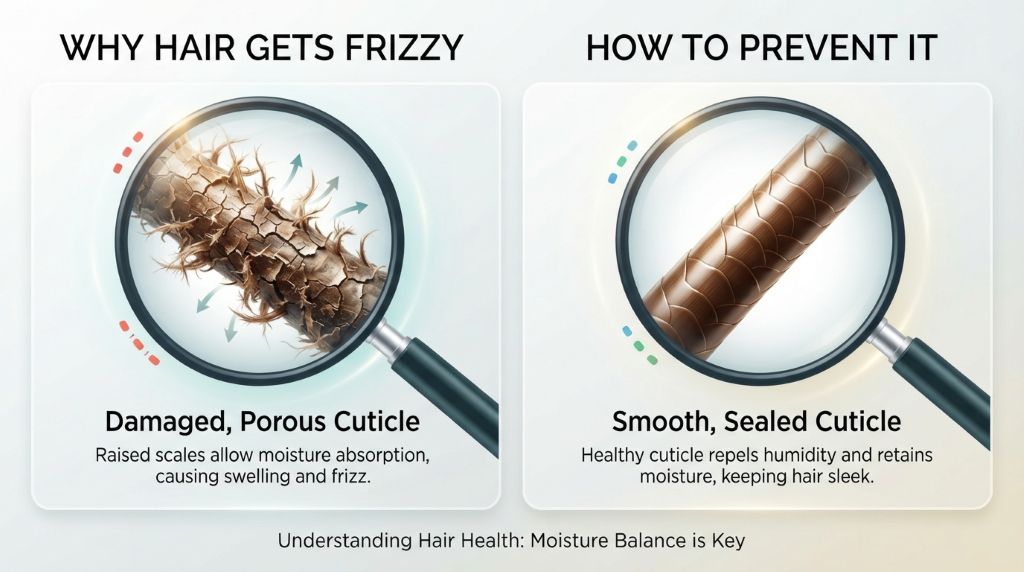
To fight frizz, you first need to understand your hair. Each strand has an outer layer called the cuticle. Think of it like roof shingles. When hair is healthy, these shingles lie flat. As a result, the strand looks smooth and reflects light evenly. When hair is dry or damaged, the shingles lift. Moisture from the air then rushes inside the strand. The strand swells in some spots and not others. Consequently, the hair bends, twists, and puffs outward. That uneven swelling is what you see as frizz.
Hair is mostly keratin, a protein held together by different bonds. Research shows that keratin also carries electric charge, and hair with more negative charge tangles and frizzes more easily. A study in the Journal of Cosmetology and Trichology noted that damaged hair shows higher surface charge than healthy hair. Additionally, curly and coily hair types frizz more than straight hair. The reason is simple. Natural oils from the scalp travel down straight hair easily. However, on a curly path, the oil cannot slide down. So curly hair is often drier and more prone to frizz.
In short, frizz is a moisture-balance problem. Too little water inside the strand, and hair soaks up humidity from the air. Too much humidity outside, and the strand swells unevenly. The fix, therefore, is to keep hair hydrated and the cuticle sealed.
The Main Causes of Frizzy Hair
Frizz rarely has one single cause. Instead, several habits and conditions work together. Below are the biggest culprits, and each one is within your control.
- Humidity. Water in the air enters a dry strand and makes it swell. This is why frizz strikes on rainy or muggy days.
- Heat damage. Flat irons and blow dryers above 185°C (365°F) weaken keratin. A study in the Journal of Cosmetic Science found that heat above this level changes the inner structure of hair and raises the risk of breakage.
- Harsh shampoos. Sulfates strip away the scalp’s natural oils. Therefore, the strand dries out and the cuticle lifts.
- Rough towel drying. Rubbing wet hair creates friction. Wet hair is also at its weakest state.
- Over-washing. Daily washing removes the oils that keep the cuticle sealed.
- Chemical treatments. Bleach, dye, and relaxers break protein bonds. Damaged spots absorb moisture faster than healthy spots.
- Split ends. Once a strand splits, the damage travels upward and the strand frizzes from the tip.
You can see a pattern here. Almost every cause either dries the hair out or damages the cuticle. Consequently, almost every fix does the opposite. Additionally, some people face frizz from genetics alone. If your hair is naturally coarse or curly, you will always need more moisture than someone with fine, straight hair. That is normal and not a flaw.
How Humidity and Weather Affect Your Hair
Weather plays a huge role in how your hair behaves. On humid days, the air is packed with water vapor. Dry hair acts like a sponge and pulls that water in. The strand then swells, but never evenly. Some parts swell more than others, and the strand loses its shape. That is why a blowout can collapse within hours on a muggy day.
Scientists have studied this process closely. Researchers at Yale University found that hair length changes with humidity. In high humidity, strands can stretch and swell as water bonds to keratin. In very dry air, hair shrinks and becomes brittle. Both extremes cause problems. Therefore, the goal is not to avoid weather, but to protect hair from it.
Here is what you can do about it:
- Use an anti-humidity serum or light oil to seal the cuticle before going out.
- Check the daily humidity forecast and plan heat styling on dry days.
- Braid or bun your hair on rainy days instead of fighting the air.
- Deep condition once a week so your hair holds less thirst for outside moisture.
However, do not blame the weather alone. Indoor heating in winter dries hair too. Consequently, a humidifier at home can help your skin and your strands at the same time. In addition, cold wind roughs up the cuticle, so a hat or scarf is smart protection. The key idea is balance. well-hydrated hair reacts less to the air around it.
Proven Ways to Fix and Prevent Frizz
Now for the good news. Frizz responds well to a few steady habits. You do not need a ten-step routine. Start with these, and give it two to three weeks.
Wash smarter, not more often. Choose a gentle, sulfate-free shampoo and condition every time you wash. Focus the conditioner on the mid-lengths and ends. Additionally, rinse with cool water. Cold water helps the cuticle lie flat.
Dry your hair gently. Press out water with a soft microfiber towel or an old t-shirt. Never rub. Moreover, let hair air dry when you can. If you use a blow dryer, keep it on medium heat and point the airflow downward along the strand.
Lower your heat settings. Keep flat irons and curling tools at or below 185°C. A review in the International Journal of Trichology reports that repeated high-heat styling degrades the hair’s protein and worsens frizz over time. Therefore, use heat tools two or three times a week at most, and always apply a heat protectant first.
Add moisture on schedule. Use a deep conditioner or hair mask weekly. A leave-in conditioner adds a second layer of defense on humid days. Ingredients like glycerin, shea butter, and argan oil are all solid picks.
Protect hair at night. Cotton pillowcases absorb oil and create friction. Swap to silk or satin, or wrap your hair in a satin bonnet. Additionally, sleep in a loose braid instead of a tight ponytail.
Trim every eight to twelve weeks. Removing split ends stops damage from spreading. As a result, the whole head looks smoother, even before products come into play.
Remember, small habits beat big spending. A consistent routine with affordable products will outperform one expensive emergency treatment.
Conclusion
Frizzy hair is not a life sentence. It is a signal that your strands need moisture and gentler handling. You now know that frizz starts when the cuticle lifts, and that humidity, heat, and harsh products lift it fastest. Therefore, focus on the basics. Wash less harshly, dry more gently, lower your heat tools, and condition every week. Additionally, protect your hair from the weather and from your pillowcase. If you have curly hair and live in a humid climate, exploring caring for curly hair in Houston top products & stylists can also help you find products and professional guidance suited to moisture-prone curls.
You do not need perfection. Pick two changes from this post and start tonight. Within a few weeks, you will feel the difference, and so will everyone who sees your hair. Therefore, take the first step now. Check your shampoo label, order a microfiber towel, or book that long-overdue trim. Your smoothest hair is waiting for you, one small habit at a time.
FAQs
What is the main cause of frizzy hair?
Dry, damaged hair with a lifted cuticle. When the protective outer layer lifts, moisture from the air enters the strand and makes it swell unevenly. Therefore, hydration and gentle handling are the best fixes.
Can frizzy hair become permanently smooth?
No treatment is truly permanent. However, keratin treatments and good daily care can keep hair smooth for months. Lasting results come from a steady routine, not a single product.
Is frizzy hair unhealthy?
Not always. Curly and coarse hair types frizz naturally because scalp oils cannot travel down the strand. However, sudden or worsening frizz can signal heat damage, over-washing, or split ends.
Does cold water really reduce frizz?
Yes, it helps. A cool rinse at the end of a shower helps the cuticle lie flat. Consequently, the strand reflects light better and holds its shape longer.
How often should I wash frizzy hair?
Most people with frizz-prone hair do well washing two or three times a week. Additionally, always follow shampoo with conditioner on the ends to keep the cuticle sealed.