
Key Takeaways
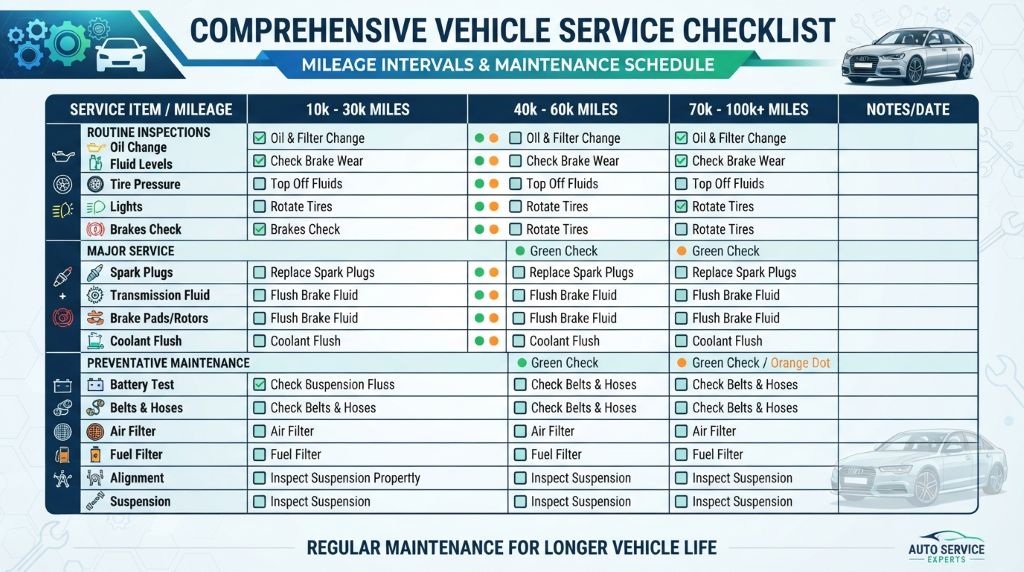
- A car maintenance schedule organized by mileage prevents guesswork and missed services.
- Early mileage marks focus on fluids, filters, and tire rotation.
- Mid-range mileage introduces belts, brakes, and transmission service.
- High mileage demands attention to suspension, battery, and drivetrain parts.
- Following mileage intervals protects resale value and prevents breakdowns.
Every vehicle comes with hidden deadlines. They’re not written on a calendar; they’re written in miles. A car maintenance schedule built around mileage tells you exactly when parts wear out. As automotive valuation and market specialists at https://vehicletradeus.com/ often warn, ignoring these markers leads to expensive surprises. According to AAA, average vehicle repair bills fall between $500 and $600, and that number climbs sharply for neglected vehicles.
This article breaks the schedule into clear mileage stages. Each stage includes the parts that need attention and why. Years ago, I drove a compact car past 90,000 miles without touching the timing belt. It snapped on a highway on-ramp, and the repair bill nearly matched the car’s value. That mistake taught me to respect mileage markers, not just birthdays on the calendar.
Why Mileage Matters More Than Time
Cars age through use, not through years sitting in a driveway. Friction, heat, and combustion wear parts down steadily. A car maintenance schedule based on mileage captures this reality better than a fixed yearly plan.
Consider brake pads as an example. A driver who commutes through heavy city traffic burns through pads faster than someone driving rural highways. Stop-and-go driving multiplies brake wear significantly. Time alone can’t measure that kind of stress.
Research from AAA also shows that roughly one in three U.S. drivers delay or skip recommended repairs. Many assume their car is fine simply because it still runs. However, running doesn’t mean healthy. Parts fail gradually, often without obvious warning signs until it’s too late.
There’s a safety dimension too. Vehicle neglect has been linked to a measurable share of crashes by transportation safety researchers, separate from the larger factor of driver error. That statistic alone justifies taking mileage-based service seriously. Skipping a scheduled brake inspection isn’t just a financial risk; it’s a physical one.
Manufacturers design these intervals using real testing data. Therefore, trusting your owner’s manual makes more sense than trusting instinct. Mileage-based planning removes emotion and habit from the equation, replacing them with data. That shift alone prevents most avoidable vehicle failures.
Early Mileage: 5,000 to 30,000 Miles
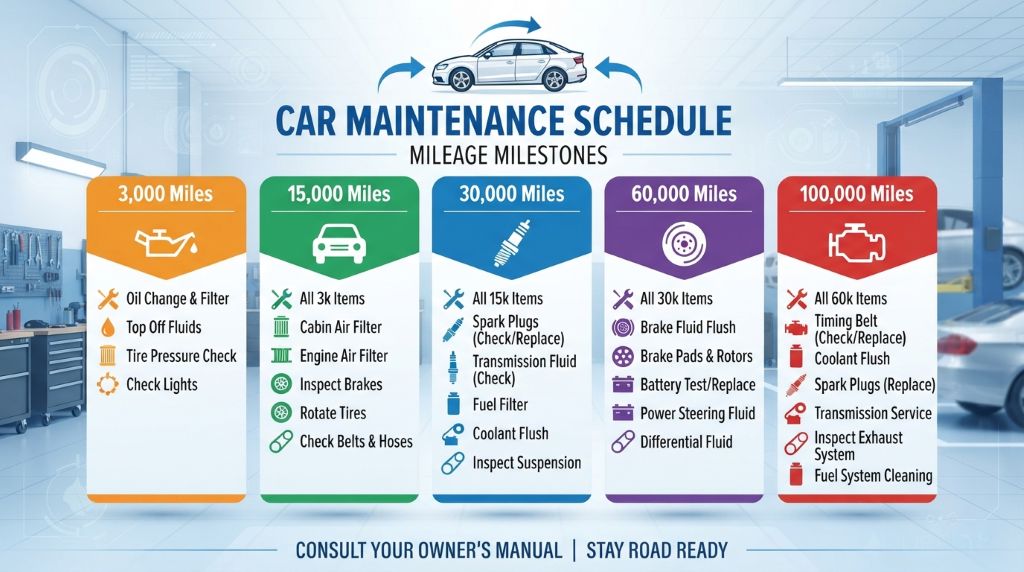
The early mileage range focuses on preventive basics. These services are inexpensive but critical for long-term reliability.
- Oil and filter change every 5,000 to 7,500 miles.
- Tire rotation at the same interval to promote even wear.
- Air filter inspection around 15,000 to 20,000 miles.
- Brake inspection near 20,000 miles, even without obvious noise.
- Fluid top-offs, including coolant, brake fluid, and power steering fluid.
This stage sets the tone for everything that follows. Skipping oil changes during this window accelerates engine wear dramatically. Dirty oil loses its ability to lubricate properly, increasing friction between moving parts.
Tire rotation matters just as much, though drivers often overlook it. Uneven wear during these early miles shortens tire lifespan and affects handling. Rotating tires evenly extends their life and improves fuel efficiency slightly.
Brake inspections at this stage catch problems before they become dangerous. Pads wear unevenly depending on driving style and terrain. A quick inspection now prevents rotor damage later, which costs significantly more to repair.
I’ve found that setting a phone reminder every 5,000 miles keeps this stage manageable. It removes the guesswork and turns maintenance into a habit rather than a scramble. That habit alone has kept every car I’ve owned running smoothly past 100,000 miles.
Mid-Range Mileage: 30,000 to 60,000 Miles
This stage introduces bigger, costlier components. Transmission fluid, spark plugs, and brake pads typically need attention here.
- Transmission fluid change, especially for vehicles towing or hauling loads.
- Spark plug replacement to maintain fuel efficiency and smooth acceleration.
- Brake pad replacement, often needed by 40,000 to 50,000 miles.
- Battery testing, since batteries typically last three to five years.
- Wheel alignment check, particularly after hitting potholes or curbs.
Spark plugs affect performance more than most drivers realize. Worn plugs cause misfires, rough idling, and reduced fuel economy. Replacing them on schedule keeps the engine running efficiently and smoothly.
Transmission fluid breaks down under heat and stress over time. Neglecting this service risks transmission failure, one of the most expensive repairs a car can need. Fluid changes here cost a fraction of a full transmission rebuild.
Battery health also becomes relevant during this stage. Batteries degrade gradually, then fail suddenly without warning. Testing voltage output prevents the frustration of an unexpected no-start situation, especially in cold weather.
High Mileage: 60,000 to 100,000+ Miles
High mileage vehicles demand closer attention to major systems. Ignoring this stage risks the most expensive repairs a car maintenance schedule aims to prevent.
- Timing belt replacement, typically between 60,000 and 90,000 miles.
- Coolant system flush to prevent overheating and corrosion.
- Suspension component check, including shocks, struts, and bushings.
- Fuel system cleaning to maintain efficient combustion.
- Drivetrain inspection for wear in CV joints and axles.
Timing belt failure remains one of the most preventable disasters in car ownership. A snapped belt can destroy pistons and valves in interference engines. Replacing it on schedule costs far less than engine reconstruction.
Suspension wear also becomes noticeable at this stage. Worn shocks affect braking distance and vehicle stability on wet roads. Drivers often mistake this wear for normal aging, delaying necessary repairs.
Fuel system cleaning improves efficiency, which matters more as fuel prices fluctuate. A clean system burns fuel more completely, reducing emissions and improving mileage. This service pays for itself over time through better fuel economy.
Sticking to the Schedule
A written or app-based log keeps this entire process organized. Note the mileage and date for every service performed. This record becomes valuable when selling the vehicle later.
Documented maintenance history reassures buyers and often raises resale value. It proves the car received consistent, professional care throughout ownership. Skipping this documentation weakens your negotiating position at resale time.
Set reminders based on your specific driving habits, not generic averages. Heavy city driving or frequent towing shortens most of these intervals. Adjust accordingly rather than assuming standard numbers apply universally.
Final Thoughts
Following a car maintenance schedule by mileage removes guesswork from vehicle ownership. Each stage targets the parts most likely to fail at that point. Skipping stages doesn’t save money; it only delays a bigger bill. Along with routine maintenance, drivers can also explore the overlooked benefits of automotive window tinting for daily drivers to improve everyday comfort and help protect the vehicle’s interior from prolonged sun exposure.
My own experience with a snapped timing belt still shapes how I maintain every vehicle today. Mileage markers aren’t arbitrary numbers; they’re warnings based on real wear patterns. Respecting them keeps cars safer and cheaper to run long term.
Share this checklist with someone who needs a maintenance refresher, or leave a comment with your own mileage story. Real experiences help other drivers avoid costly mistakes.
Frequently Asked Questions
What is the most important mileage marker to remember?
The timing belt replacement, usually between 60,000 and 90,000 miles, prevents major engine damage.
How does mileage-based service differ from time-based service?
Mileage tracks actual wear, while time-based schedules ignore how much a car is actually driven.
Should high-mileage vehicles follow a different schedule?
Yes, vehicles past 100,000 miles need closer attention to suspension, drivetrain, and fuel systems.
Can skipping transmission fluid changes really cause failure?
Yes, old transmission fluid loses lubrication ability, increasing the risk of costly transmission failure.
Does a documented maintenance schedule affect resale value?
Yes, buyers trust vehicles with clear service records and often pay more for them.