

There’s a specific sound that ruins a perfect desert morning: the harsh, metallic rattle of a golf cart bag vibrating against the cart frame. In Arizona, where the sun demands early tee times and the terrain can be unforgiving, the last thing you want is a bag that sounds like a toolbox falling down a staircase every time you hit a bump. You need a quiet golf cart bag that keeps your clubs secure, your cart scratch-free, and your round peaceful. This guide breaks down exactly what to look for, the common mistakes to avoid, and how to pick a bag that survives the unique conditions of Arizona golf.
Key Takeaways
- Prioritize bags with full-length dividers and padded tops to prevent club chatter, which is the primary source of noise.
- Look for a bag with a dedicated, padded putter well and a secure cart-strap pass-through system to eliminate rattling against the cart frame.
- Choose durable, weather-resistant materials that can handle Arizona’s intense UV rays and occasional monsoon winds without becoming brittle or noisy.
- Pay attention to the base design; a non-slip, rubberized base prevents the bag from shifting and scraping against the cart floor.
- Consider the number of pockets and their placement—quiet bags often have silent, magnetic closures instead of noisy zippers.
Why Your Current Bag Sounds Like a Percussion Set
Before you can fix the problem, you need to understand why golf cart bags make noise in the first place. It’s rarely the bag itself that is loud; it’s the interaction between the bag, the clubs, and the cart. The most common culprit is club chatter. When your irons and wedges are not separated by individual dividers, they clang against each other with every turn and bump. This is especially noticeable on Arizona’s cart paths, which often have uneven expansion joints and rough patches.
Another major source of noise is the bag shifting in the cart. A bag that doesn’t fit snugly into the cart’s base will slide back and forth, scraping against the plastic or metal. This creates a low, grinding sound that is incredibly annoying. Finally, loose accessories—like a rangefinder in an unsecured pocket or a towel clipped to a flimsy ring—can rattle against the bag’s body. A truly quiet golf cart bag addresses all three of these issues through design, not just padding.
The Anatomy of a Quiet Golf Cart Bag
Not all “quiet” bags are created equal. To ensure you get a genuinely silent round, you need to inspect specific features. Here is what separates a whisper-quiet bag from a noisy one.
Full-Length Dividers vs. Partial Dividers
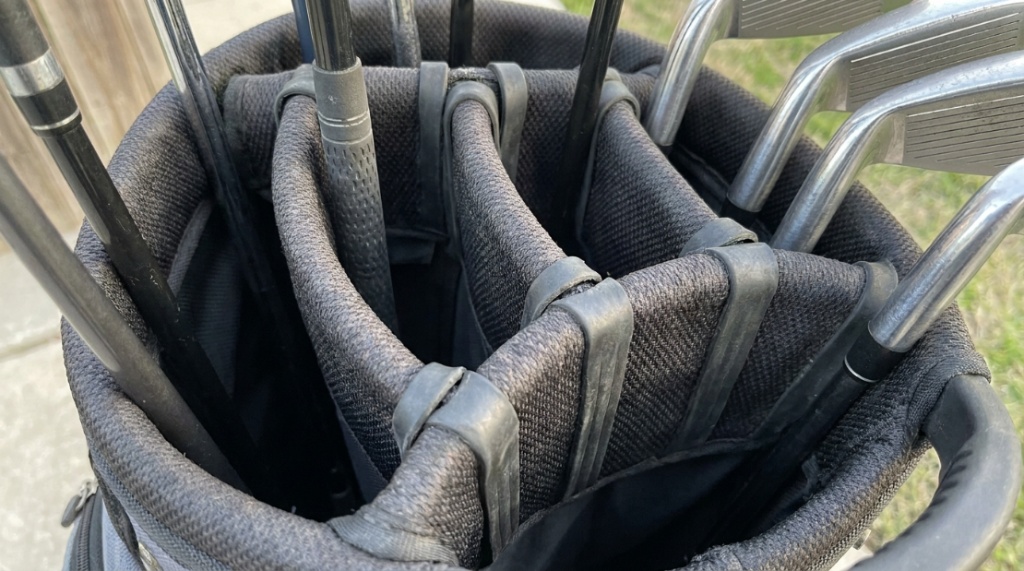
This is the single most important feature for noise reduction. Full-length dividers run the entire length of the bag, from the top opening down to the bottom. This creates individual “tubes” for each club, preventing them from crossing over and touching each other. Partial dividers, which only separate the clubs at the top of the bag, allow the clubheads to bunch up at the bottom, leading to constant clanking.
When shopping, look for a bag that offers at least a 14-way or 15-way top with full-length dividers. This ensures every club has its own space. While a 6-way top is lighter, it won’t provide the same level of silence. If you are serious about reducing noise, do not compromise on this feature.
Dedicated Putter Well and Padded Top
Even with full-length dividers, a putter can be problematic. Many bags feature a dedicated putter well that is slightly larger and often padded. This keeps the putter grip from rubbing against other grips and the putter head from hitting the bag’s top edge. A padded top is also crucial. The padding absorbs the impact of the club shafts as they settle into the bag, deadening the sound before it starts.
Cart Strap Pass-Through vs. Straps Over the Top
Traditional cart bags require you to strap the bag to the cart by running the strap over the top of the bag. This can compress the club shafts and cause them to press against each other. A better design is a cart strap pass-through system. This is a dedicated channel or sleeve on the back of the bag that the cart strap slides through. It secures the bag tightly to the cart without putting pressure on your clubs, keeping them separated and quiet.
Material and Build Quality: Surviving the Arizona Sun
Arizona golf is tough on equipment. The intense UV rays can degrade cheap plastics and fabrics, making them brittle and prone to cracking. A bag that is quiet on day one might become a rattling mess by August if the materials break down. You need a bag built to withstand the heat.
Durable Fabrics and UV Resistance
Look for bags made from high-denier nylon or polyester. These materials are not only durable but also resist UV fading and degradation. Avoid bags with large plastic components that are exposed to the sun, as these can become warped or brittle. The stitching is also important; double-stitched seams are less likely to fail under the stress of a moving cart.
Base Design and Stability
The base of the bag is often overlooked, but it is critical for noise reduction. A rigid, flat base that is slightly wider than the bag body helps the bag sit securely in the cart. Look for a base with a rubberized, non-slip texture. This prevents the bag from sliding around on the cart floor, eliminating the scraping and grinding noises. A bag that fits tightly in the cart is a quiet bag.
Pockets and Storage: The Silent Features
Zippers are a major source of noise. Every time you reach for a ball or a snack, the zipper pull clangs against the metal teeth. While you can’t eliminate zippers entirely, you can look for bags that minimize their use or use quieter alternatives.
Magnetic Closures vs. Zippers
Many modern bags feature magnetic pockets for frequently accessed items like balls, tees, and gloves. These are not only easier to use one-handed while riding in the cart, but they are also completely silent. For larger pockets, like the cooler pocket or the clothing pocket, zippers are still necessary, but look for bags with large, padded zipper pulls that don’t flap around.
Secure Storage for Accessories
Loose items in pockets can rattle. A good cart bag will have fleece-lined pockets for valuables and a dedicated, secure slot for a rangefinder. The rangefinder slot is particularly important; it should be snug enough to hold the device firmly without it bouncing around. Similarly, a towel ring that is integrated into the bag’s structure is better than a flimsy plastic clip that can snap and cause the towel to flap against the bag.
How to Test a Bag for Noise Before You Buy
You can’t always take a bag for a test drive on a cart, but you can perform a few simple checks in the store to gauge its potential for noise.
- The Shake Test: Hold the bag by the handle and give it a firm shake. Listen for any internal rattling. If the dividers are doing their job, you shouldn’t hear the clubs moving.
- The Cart Fit Test: If possible, place the bag in a display cart. Check how it sits in the base. Does it wobble? Does the cart strap align with the pass-through channel? A snug fit is essential.
- The Zipper Test: Open and close the main pockets. Are the zippers smooth? Do the pulls have a rubberized coating to prevent them from clanging against the bag body?
- The Material Test: Press on the sides of the bag. Does it feel rigid and sturdy, or does it flex and feel flimsy? A rigid structure is less likely to vibrate and create noise.
Top Considerations for Arizona Golfers
Beyond the general features of a quiet bag, there are specific considerations for golfers in the Grand Canyon State.
Weight and Hydration
In the summer, you will be carrying extra water. A heavy bag is a burden, but a lightweight bag that is too flimsy will be noisy. Look for a balance. A bag with a dedicated, insulated cooler pocket is essential for Arizona. Ensure the cooler pocket is large enough to hold a few bottles of water and is positioned so it doesn’t unbalance the bag on the cart.
Cart Compatibility
Arizona courses have a mix of cart types. Some use standard EZ-GO carts, while others use Yamaha or Club Car models. A bag with a versatile cart-strap system is crucial. The pass-through channel should be wide enough to accommodate different strap widths. Also, ensure the bag doesn’t have any protruding handles or pockets that might interfere with the cart’s wheel or brake mechanisms,while upgrading your gear for the desert heat, you can also add some personality to your game with these best funny golf ball markers that make golf more fun.
Common Mistakes to Avoid When Buying a Cart Bag
Many golfers make these errors, leading to buyer’s remorse and a noisy round.
- Prioritizing Looks Over Function: A sleek, minimalist bag might look great, but if it lacks full-length dividers, it will be noisy. Function must come first.
- Ignoring the Base: A bag with a narrow or rounded base will roll around in the cart. Always check the base width and stability.
- Forgetting About the Strap: If the cart strap goes over the top of the bag, it will compress your clubs. Always look for a pass-through design.
- Buying a Bag with Too Many Pockets: While storage is great, too many pockets can add unnecessary weight and provide more surfaces for items to rattle against. Choose a bag with the pockets you actually need.
Frequently Asked Questions
Are all cart bags noisy?
No. The noise level depends on the bag’s design. Bags with full-length dividers, a padded top, and a secure cart-strap system are significantly quieter than basic bags that rely on a simple 4-way top and straps over the clubs.
Can I make my current bag quieter?
Yes, to a degree. You can wrap a towel around the clubheads to prevent chatter, and you can use velcro straps to secure the bag to the cart more tightly. However, you cannot fix the fundamental issue of a lack of full-length dividers.
What is the best material for a golf cart bag in Arizona?
High-denier nylon or polyester is best. These materials are resistant to UV rays and abrasion. Avoid bags with large, exposed plastic parts that can become brittle in the intense desert sun.
Is a 14-way top better than a 6-way top for noise?
Yes, absolutely. A 14-way top with full-length dividers gives each club its own individual slot, preventing them from touching and clanking together. A 6-way top only separates clubs at the top, allowing them to bunch up and make noise at the bottom.
Do I need a bag with a cooler pocket in Arizona?
Yes, it is highly recommended. Staying hydrated is critical in the Arizona heat. A dedicated, insulated cooler pocket keeps water accessible and cold, reducing the need to stop and rummage through a main pocket.
Conclusion
Choosing a quiet golf cart bag for Arizona is about more than just peace and quiet; it’s about protecting your clubs, preserving your focus, and enjoying your round without distraction. By focusing on full-length dividers, a secure cart-strap system, durable materials, and smart storage solutions, you can eliminate the annoying rattles and clanks that plague most golfers. Don’t settle for a bag that sounds like a maraca on the back of your cart. Invest in a bag designed for silence, and you’ll notice the difference from the first tee to the final putt. Take your time, check the features, and choose a bag that will keep your round as serene as the desert landscape.