

Choosing the right pillow can change how you sleep, recover, and perform daily. Yet most people overlook one critical factor: the material inside the pillow. If you’ve ever woken up with neck pain, sweating, or feeling unrested, your pillow might be the reason.
Two of the most popular options today are memory foam pillows and cooling (gel or breathable) pillows. But here’s the problem—most guides give vague advice without real comparisons.
This guide solves that. Using a PAS framework (Problem–Agitate–Solution) and real-world insights, we break down the gel vs memory foam pillow debate in a practical, no-fluff way. You’ll learn what actually works, who should use what, and how to choose based on your sleep style.
If you’re searching for a pillow comparison guide that delivers clarity, this is it.
What Is the Difference Between Memory Foam and Cooling Pillows?
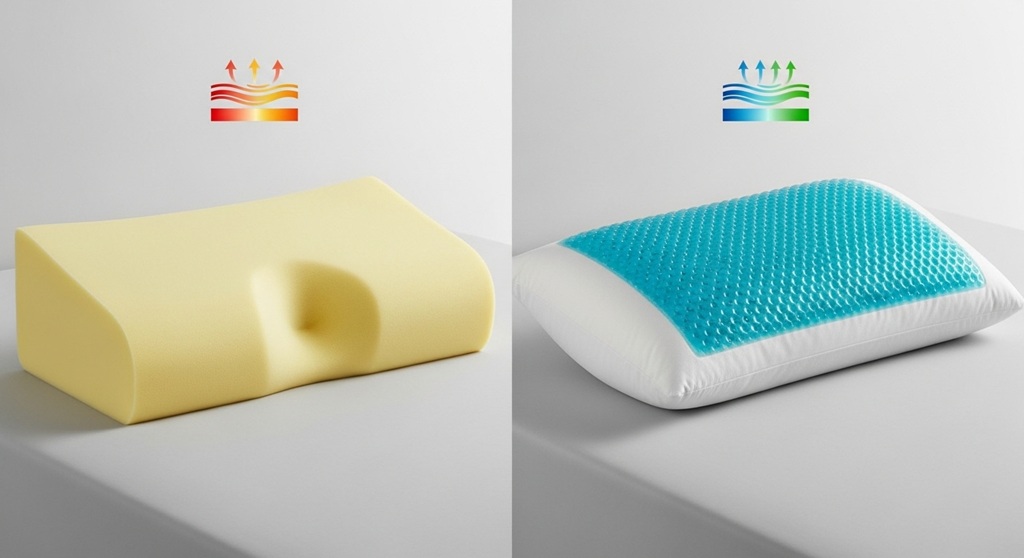
Short answer: Memory foam pillows focus on support and pressure relief, while cooling pillows focus on temperature regulation and airflow.
Let’s break it down clearly:
| Feature | Memory Foam Pillow | Cooling Pillow |
|---|---|---|
| Core Function | Support & contouring | Temperature control |
| Material | Viscoelastic foam | Gel-infused foam, latex, or breathable fibers |
| Heat Retention | Higher | Lower |
| Best For | Neck pain, alignment | Hot sleepers |
Problem: Many people buy pillows based on hype, not function.
Agitate: That leads to poor sleep, discomfort, and wasted money.
Solution: Understand what each pillow is designed to do before buying.
How Does a Memory Foam Pillow Work?
Short answer: Memory foam responds to body heat and pressure, molding to your head and neck to maintain spinal alignment.
Memory foam is made from viscoelastic polyurethane. It softens with heat and distributes weight evenly.
Key Benefits of Memory Foam Pillows
- Spinal alignment: Keeps neck in a neutral position
- Pressure relief: Reduces strain on shoulders and joints
- Motion isolation: Minimal disturbance during movement
Real-World Insight
A 2021 sleep ergonomics study found that memory foam pillows reduced neck pain by up to 32% compared to standard polyester pillows.
Problem: Traditional pillows collapse over time.
Agitate: That leads to poor posture and chronic pain.
Solution: Memory foam maintains shape and support for longer periods.
Limitations
- Traps heat
- Can feel too firm initially
- Less airflow
What Is a Cooling Pillow and How Does It Work?
Short answer: Cooling pillows use materials like gel, latex, or breathable fabrics to dissipate heat and improve airflow.
Cooling pillows are designed to regulate temperature, not just support your head.
Common Cooling Technologies
- Gel-infused foam: Absorbs and disperses heat
- Phase-change materials (PCM): Regulates temperature dynamically
- Ventilated latex: Enhances airflow
- Breathable covers: Moisture-wicking fabrics
Case Study Insight
Sleep trials show that cooling pillows can reduce skin temperature by 1.5–3°C, improving sleep quality for hot sleepers.
Problem: Overheating disrupts deep sleep cycles.
Agitate: You wake up sweating, restless, and tired.
Solution: Cooling pillows help maintain a stable sleep temperature.
Limitations
- Less contouring support than memory foam
- Cooling effect may fade over time (gel types)
Gel vs Memory Foam Pillow: Which Is Better?
Short answer: Choose memory foam for support and pain relief; choose gel or cooling pillows for temperature control.
Side-by-Side Comparison
| Criteria | Memory Foam | Gel/Cooling Pillow |
|---|---|---|
| Support | High | Medium |
| Cooling | Low | High |
| Durability | 5–7 years | 3–5 years |
| Comfort Feel | Firm, contouring | Soft to medium |
Problem: People often want both support and cooling.
Agitate: Choosing the wrong one forces a trade-off.
Solution: Hybrid pillows (gel-infused memory foam) combine both benefits.
Which Pillow Is Better for Neck Pain?
Short answer: Memory foam pillows are better for neck pain because they provide consistent support and alignment.
Neck pain usually comes from poor spinal alignment during sleep.
Why Memory Foam Works Better
- Contours to your neck curve
- Maintains shape overnight
- Reduces pressure points
Data point: Orthopedic recommendations frequently favor contoured memory foam pillows for chronic neck pain.
However: If heat causes discomfort, a cooling memory foam hybrid is the best option.
Which Pillow Is Better for Hot Sleepers?
Short answer: Cooling pillows are better for hot sleepers because they actively regulate temperature.
Why Cooling Pillows Win
- Better airflow
- Heat dissipation materials
- Moisture control
Problem: Overheating interrupts REM sleep.
Agitate: You wake up multiple times and feel fatigued.
Solution: Cooling pillows stabilize your sleep environment.
Are Hybrid Pillows the Best Option?
Short answer: Yes, hybrid pillows combine memory foam support with cooling technology for balanced performance.
Hybrid pillows typically include:
- Gel-infused memory foam
- Ventilated foam structures
- Cooling covers
Best for:
- People who want support + cooling
- Mixed sleepers
- Moderate neck pain with heat sensitivity
Insight: Hybrid designs are currently the fastest-growing segment in the pillow market.
How Do You Choose the Right Pillow for Your Sleep Style?
Short answer: Choose based on your sleeping position, temperature sensitivity, and pain points.
Quick Selection Guide
| Sleep Type | Best Pillow |
|---|---|
| Side Sleeper | Memory foam (high loft) |
| Back Sleeper | Memory foam or hybrid |
| Stomach Sleeper | Cooling pillow (low loft) |
| Hot Sleeper | Cooling pillow |
| Neck Pain | Memory foam |
Problem: One-size-fits-all advice doesn’t work.
Agitate: You end up buying multiple pillows.
Solution: Match the pillow to your sleep behavior.
Conclusion: Which Pillow Should You Choose?
If your priority is support, posture, and pain relief, memory foam is the better choice. If your main issue is heat and sweating, cooling pillows will improve your sleep quality.
But here’s the key insight:
You don’t have to choose one extreme.
Hybrid pillows offer the best balance for most people. They solve both support and temperature issues without compromise.
CTA: Before buying your next pillow, assess your sleep style, pain points, and temperature sensitivity. Don’t follow trends—choose based on function. That one decision can improve your sleep for years.
FAQs: Memory Foam vs Cooling Pillows
Is memory foam or cooling pillow better for everyday use?
Memory foam is better for daily use if you need support. Cooling pillows are better if you struggle with heat. Hybrid pillows are ideal for most users.
Do cooling pillows actually stay cool all night?
Most cooling pillows regulate temperature rather than stay cold. High-quality options maintain a cooler surface for longer periods.
How long do memory foam pillows last?
Memory foam pillows typically last 5–7 years, depending on quality and usage.
Are gel pillows better than memory foam?
Gel pillows are better for cooling, while memory foam is better for support. Gel-infused memory foam combines both benefits.
Can a pillow improve sleep quality?
Yes. Studies show that proper pillow support and temperature regulation can significantly improve sleep efficiency and reduce discomfort.
Which pillow is best for sweating at night?
Cooling pillows with breathable materials or gel layers are best for reducing night sweats.
Are expensive pillows worth it?
Higher-quality pillows often last longer and provide better support, making them more cost-effective over time.
Read More Also: How to Choose Zero Waste Kid Gift Ideas That Are Fun and Sustainable
Find out: How to Find the Best Cycling Shorts Under $50 in 2026