
Modern businesses face a common challenge. They need tools that work together seamlessly. Marketing platforms promise integration, but do they deliver? This study examines how enterprises can evaluate marketing toolkits effectively. We’ll also explore WellSaid AI’s vocal cloning technology and its role in comprehensive marketing strategies. Seller Spike provides insights into these evolving marketing solutions.
Understanding End-to-End Marketing Platforms
An end-to-end marketing platform handles everything from content creation to customer engagement. However, not all platforms live up to their promises. Therefore, conducting a usability study becomes essential. Enterprises need to test workflows, measure efficiency, and identify gaps. Additionally, understanding how different tools connect saves time and money. For comprehensive comparisons of leading platforms, check out these all-in-one marketing platform reviews to make informed decisions.
Usability studies reveal how real teams interact with software. They show where employees struggle and where processes flow smoothly. Moreover, these studies help companies avoid costly mistakes. A platform might look impressive in demos but fail during daily operations.
What Makes a Marketing Toolkit Usable
Several factors determine whether a marketing toolkit actually works for enterprises. First, the interface should be intuitive. Team members shouldn’t need weeks of training to complete basic tasks. Second, integration capabilities matter significantly. Your tools must connect with existing systems without constant technical support.
Speed also plays a crucial role. Platforms that lag during peak hours frustrate users and reduce productivity. Furthermore, customization options allow businesses to adapt tools to their specific workflows. A one-size-fits-all approach rarely works for large organizations.
WellSaid AI: Vocal Cloning for Enterprise Marketing
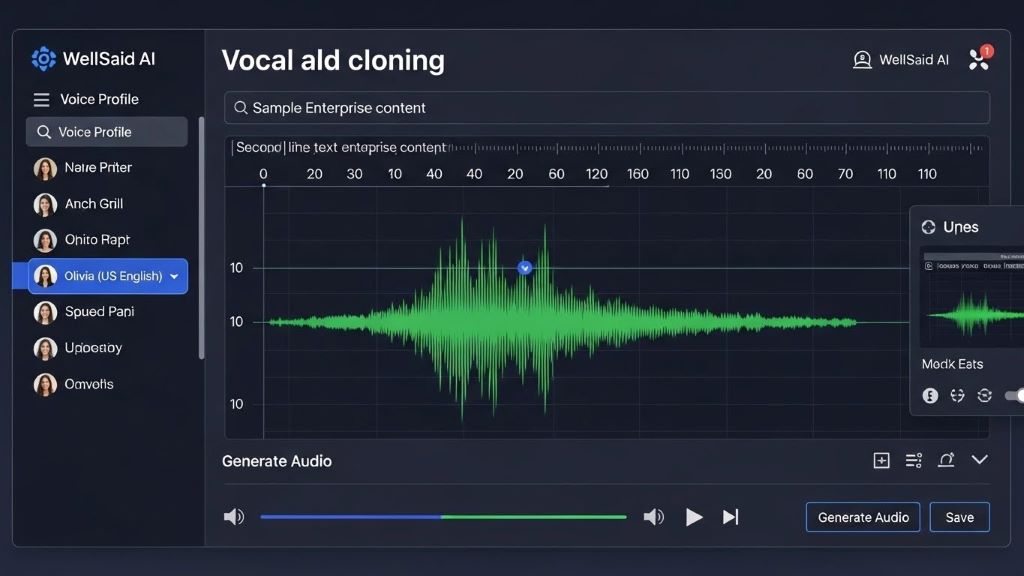
WellSaid AI offers vocal cloning technology that creates realistic voice content at scale. This technology transforms how businesses produce audio materials. Instead of hiring voice actors for every project, companies can generate consistent voice content quickly. According to Forbes, AI voice technology is revolutionizing content creation across industries.
Step-by-Step Implementation Guide
Implementing WellSaid AI’s vocal cloning requires careful planning. Here’s how enterprises can integrate this technology into their marketing toolkit:
Initial Setup Phase
First, enterprises must assess their audio content needs. How many voiceovers does your marketing team produce monthly? What languages do you need? These questions shape your implementation strategy. Next, select voice profiles that match your brand identity. WellSaid AI provides various voice options with different tones and styles.
Creating Your Voice Clone
The process begins with sample recordings. Your chosen voice talent records specific scripts that capture various emotional ranges. These samples train the AI system. Typically, you need about one to two hours of high-quality recordings. The AI then analyzes speech patterns, intonations, and unique vocal characteristics.
Quality Assurance Testing
After initial training, test the cloned voice extensively. Generate sample scripts across different contexts. Does the voice maintain consistency? Does it sound natural in various scenarios? Additionally, gather feedback from team members who regularly work with audio content. Their insights prove invaluable for refinement.
Integration with Marketing Workflows
Connect WellSaid AI to your content management systems. Many enterprises use APIs to automate voice generation for routine content. For example, product descriptions, training videos, and social media content can use cloned voices automatically. This integration streamlines production significantly.
Scaling Across Departments
Once your pilot program succeeds, expand to other departments. Customer service teams might use voice clones for automated responses. Training departments can create consistent instructional content. However, maintain clear guidelines about appropriate use cases.
Conducting Your Usability Study
A proper usability study follows structured methodology. Start by defining clear objectives. What specific aspects of your marketing toolkit need evaluation? Then, recruit participants who represent actual users. Include team members from different skill levels and departments.
Testing Methodology
Create realistic scenarios that mirror daily tasks. Participants should complete actual work assignments using the toolkit. Meanwhile, observers note where users hesitate or encounter problems. Record sessions when possible for later analysis. This documentation helps identify patterns across multiple users.
Task completion time serves as a key metric. How long does each process take? Compare these times against benchmarks or competitor tools. Furthermore, measure error rates. Frequent mistakes indicate design flaws or insufficient guidance.
Gathering Qualitative Feedback
Numbers tell part of the story. However, user opinions provide essential context. Conduct interviews after testing sessions. Ask open-ended questions about their experience. What frustrated them most? Which features felt most helpful? This qualitative data often reveals unexpected insights.
Additionally, use standardized questionnaires like the System Usability Scale. These tools provide comparable scores across different platforms. They also help track improvements over time as you optimize your toolkit.
Analyzing Results and Making Improvements
Data collection is just the beginning. Analysis transforms raw information into actionable insights. Look for patterns across participants. Do multiple users struggle with the same features? These common pain points should become priorities for improvement.
Create a prioritization matrix based on impact and effort. Some issues might significantly affect productivity but require minimal fixes. These quick wins build momentum. Other problems might be complex but affect few users. Balance short-term improvements with long-term strategic changes.
Security and Compliance Considerations
Enterprise marketing toolkits handle sensitive data. Therefore, security cannot be an afterthought. Evaluate how platforms protect customer information. Do they comply with regulations like GDPR or CCPA? Additionally, consider data residency requirements for international operations.
Voice cloning technology raises unique concerns. According to TechCrunch, companies must establish clear policies about AI-generated content. Who owns the voice rights? How will you prevent misuse? These questions require legal and ethical frameworks.
Cost-Benefit Analysis
Every enterprise considers return on investment. Marketing toolkits require significant financial commitment. However, the right platform pays for itself through efficiency gains. Calculate time saved across your organization. How many hours does automation reclaim? What’s the value of that reclaimed time?
Also factor in reduced errors and improved consistency. Mistakes cost money through wasted resources and damaged reputation. A reliable toolkit minimizes these risks. Furthermore, consider scalability. Can the platform grow with your business without proportional cost increases?
Training and Adoption Strategies
Even the best tools fail without proper adoption. Develop comprehensive training programs that address different learning styles. Some team members prefer video tutorials, while others want hands-on workshops. Additionally, create documentation that’s easy to search and understand.
Identify power users who can become internal champions. These advocates help colleagues overcome obstacles and discover useful features. Moreover, they provide valuable feedback for ongoing improvements. Their enthusiasm can transform reluctant users into engaged participants.
Measuring Long-Term Success
Usability studies shouldn’t be one-time events. Establish ongoing monitoring to track toolkit performance. Set key performance indicators that align with business goals. These might include content production speed, campaign conversion rates, or team satisfaction scores.
Regular check-ins help identify emerging issues before they become major problems. Technology evolves rapidly. Your toolkit must adapt accordingly. Therefore, schedule periodic reviews to assess whether your platform still meets organizational needs.
Conclusion
End-to-end marketing toolkits promise efficiency and integration. However, thorough usability studies separate truly effective platforms from disappointing investments. WellSaid AI’s vocal cloning technology exemplifies how specialized tools can enhance comprehensive marketing strategies. Enterprises must evaluate these technologies systematically, considering factors like ease of use, integration capabilities, and security requirements.
Successful implementation requires careful planning, rigorous testing, and ongoing optimization. By following structured methodologies and gathering both quantitative and qualitative feedback, organizations can make informed decisions. The right marketing toolkit doesn’t just automate tasks. It empowers teams to focus on creative strategy while technology handles repetitive execution.
Frequently Asked Questions
What is an end-to-end marketing toolkit?
An end-to-end marketing toolkit is a comprehensive platform that integrates multiple marketing functions into one system. It typically includes tools for content creation, campaign management, analytics, customer relationship management, and automation. These platforms aim to streamline workflows by eliminating the need to switch between multiple disconnected applications.
How long does a marketing toolkit usability study take?
Most comprehensive usability studies take four to eight weeks. This timeframe includes planning, recruiting participants, conducting tests, analyzing results, and preparing recommendations. However, smaller-scale studies focusing on specific features can be completed in two to three weeks. The timeline depends on your organization’s size and the toolkit’s complexity.
Is WellSaid AI vocal cloning difficult to implement?
WellSaid AI’s implementation complexity depends on your existing infrastructure and technical resources. Basic setup can be completed in a few days, while full integration with enterprise workflows might take several weeks. The platform provides APIs and documentation to facilitate integration. Most enterprises find the learning curve manageable with proper training and support.
How much does vocal cloning technology cost for enterprises?
Enterprise vocal cloning costs vary significantly based on usage volume and feature requirements. WellSaid AI and similar platforms typically offer tiered pricing starting around several hundred dollars monthly for basic plans. Enterprise plans with unlimited usage, custom voices, and dedicated support can reach several thousand dollars monthly. Most providers offer custom quotes based on specific organizational needs.
Can AI-generated voices replace human voice talent completely?
AI-generated voices excel at producing consistent, scalable content for routine applications. However, they currently cannot fully replace human talent for all scenarios. Complex emotional performances, highly creative projects, or content requiring nuanced interpretation still benefit from human voice actors. Many enterprises use a hybrid approach, reserving AI voices for high-volume routine content while employing human talent for premium projects.
Related Topics:
How to Install Nahimic 3 (And Fix Common Setup Issues)
How to Easily Sync Edits Across Multiple Lightroom Photos (Even as a Beginner!)