

Biophilic design, rooted in the innate human connection to nature, is revolutionizing interior spaces. By integrating natural elements into walls, ceilings, and floors, designers create environments that promote health, well-being, and productivity. This approach not only enhances aesthetic appeal but also offers tangible benefits supported by research.
Biophilic Walls: Bringing Nature to Vertical Surfaces
Living Walls and Vertical Gardens
Living walls, or vertical gardens, are dynamic installations that incorporate live plants into wall structures. These features improve air quality, reduce noise, and provide a visual connection to nature. For instance, the Gaylord Opryland Resort in Nashville boasts over 3,000 square feet of living walls, enhancing guest experience and indoor air quality .
Natural Materials and Textures
Incorporating materials like wood, stone, and bamboo into wall designs adds warmth and texture. These materials evoke natural settings, fostering a calming atmosphere. Wood finishes, for example, can range from rustic reclaimed planks to sleek, polished panels, each offering a unique tactile experience.
Nature-Inspired Patterns and Colors
Wall coverings that mimic natural scenes—such as forests, oceans, or skies—can create immersive environments. Earth-tone color palettes further reinforce this connection, promoting relaxation and comfort.
Biophilic Ceilings: Elevating Design with Nature
Skylights and Natural Light
Introducing skylights or light wells allows natural light to permeate spaces, regulating circadian rhythms and enhancing mood. Natural light has been linked to improved cognitive function and reduced stress levels.
Exposed Beams and Wooden Panels
Utilizing exposed wooden beams or ceiling panels adds a rustic charm and connects occupants to natural materials. Timber ceilings not only provide aesthetic appeal but also offer acoustic benefits, absorbing sound and reducing echo.
Hanging Plants and Green Installations
Suspending plants from ceilings introduces greenery without occupying floor space. This approach brings nature into view and can improve air quality. Integrated vegetation on ceilings creates a lush, immersive environment.
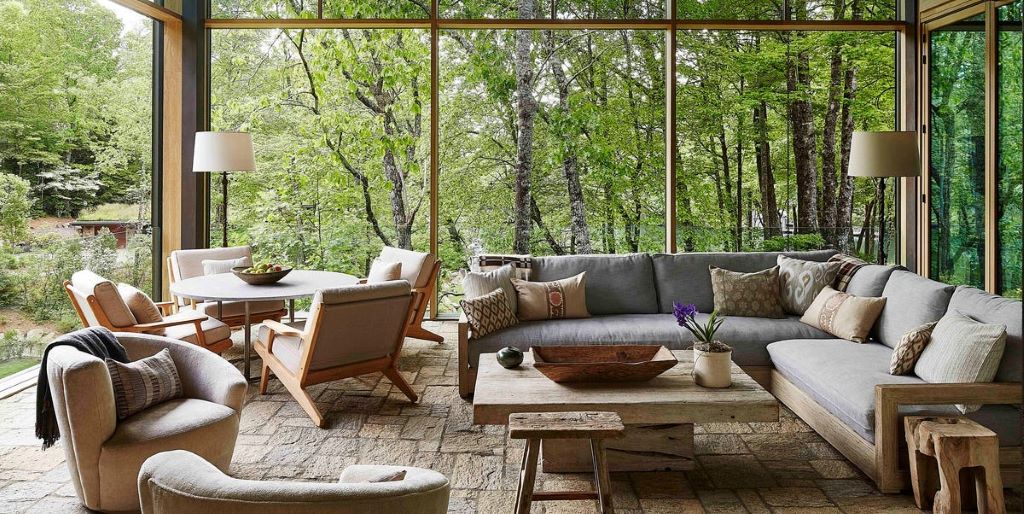
Biophilic Floors: Grounding Spaces in Nature
Natural Flooring Materials
Flooring choices like hardwood, bamboo, or natural stone provide tactile and visual connections to nature. These materials are durable and offer unique textures that synthetic options can’t replicate.
Organic Patterns and Textures
Incorporating patterns that mimic natural forms—such as leaf motifs or water ripples—into flooring designs can enhance the biophilic experience. Textured carpets or rugs with organic designs add depth and interest to spaces.
Transition Spaces with Natural Elements
Using natural materials in transitional areas, like entryways or corridors, sets a tone of nature immersion throughout the space. Stone tiles or wooden planks can guide occupants through environments, reinforcing the biophilic theme.
Benefits of Biophilic Design
Enhanced Well-being and Productivity
Studies have shown that biophilic design elements can reduce stress, improve mood, and increase productivity. For example, classrooms with natural light and views of greenery have seen students achieve 7–18% better test results.
Environmental Sustainability
Using natural, sustainably sourced materials reduces environmental impact. Biophilic design often incorporates energy-efficient features, like maximizing natural light to reduce electricity usage.
Economic Advantages
Implementing biophilic elements can lead to cost savings. For instance, retail spaces with skylights have experienced up to a 40% increase in sales, demonstrating the economic benefits of natural design.
Expert Tips for Implementing Biophilic Design
-
Start Small: Incorporate plants or natural materials in key areas before undertaking large-scale changes.
-
Use Local Materials: Sourcing materials locally reduces environmental impact and supports regional ecosystems.
-
Balance is Key: Ensure that natural elements complement the overall design without overwhelming the space.
-
Maintenance Matters: Choose plants and materials that are easy to maintain to ensure longevity and continued benefits.
Featured Snippet: How Does Biophilic Design Impact Mental Health?
Biophilic design positively affects mental health by reducing stress and enhancing mood. Exposure to natural elements, such as plants and natural light, has been linked to lower cortisol levels and improved cognitive function. Incorporating nature into interior spaces creates a calming environment, promoting relaxation and well-being. For example, hospitals with views of greenery have reported faster patient recovery times and reduced need for pain medication.
FAQs
Q1: What is biophilic design?
A1: Biophilic design integrates natural elements into built environments to enhance human connection with nature, promoting well-being and productivity.
Q2: How can I incorporate biophilic design into my home?
A2: Start by adding indoor plants, using natural materials like wood or stone, and maximizing natural light through windows or skylights.
Q3: Are there cost-effective ways to implement biophilic design?
A3: Yes, simple additions like potted plants, nature-inspired artwork, or using natural color palettes can be affordable ways to embrace biophilic design.
Q4: Does biophilic design have environmental benefits?
A4: Incorporating sustainable materials and energy-efficient features, biophilic design supports environmental conservation and reduces carbon footprints.
Q5: Can biophilic design improve workplace productivity?
A5: Yes, workplaces that incorporate natural elements have reported increased employee satisfaction, reduced stress, and higher productivity levels.
Q6: What are some common biophilic design elements?
A6: Common elements include natural materials (wood, stone), indoor plants, water features, natural light, and nature-inspired patterns.
Q7: Is biophilic design suitable for all types of buildings?
A7: Absolutely. Biophilic design principles can be adapted to various settings, including homes, offices, schools, and healthcare facilities.
By thoughtfully integrating biophilic design into walls, ceilings, and floors, spaces become more inviting, healthier, and aligned with our intrinsic connection to nature. This approach not only enhances aesthetic appeal but also fosters environments where individuals can thrive physically and mentally.
Read More: Painting Over Painted Walls: A Simple Guide for a Fresh Look